Content Menu
● What Is a Swivel Beam Clamp?
● Key Features of Swivel Beam Clamp Scaffolding
● How Do Swivel Beam Clamps Work with I-Beams?
>> Clamping Mechanism
>> Installation Process
● Advantages of Using Swivel Beam Clamp Scaffolding with I-Beams
>> 1. Flexibility in Scaffold Design
>> 2. Strong and Secure Attachment
>> 3. Versatility
>> 4. Corrosion Resistance
>> 5. Ease of Use
● Swivel Beam Clamp vs. Fixed Beam Clamp
>> Fixed Beam Clamp
>> Swivel Beam Clamp
>> Comparison Table
● Applications of Swivel Beam Clamp Scaffolding with I-Beams
● Safety and Standards
● Conclusion
● FAQ
>> 1. What is the maximum flange thickness a swivel beam clamp can secure?
>> 2. Can swivel beam clamps be used with scaffold tubes other than 48.3mm diameter?
>> 3. How do swivel beam clamps improve scaffold flexibility?
>> 4. Are swivel beam clamps suitable for offshore construction?
>> 5. How many swivel beam clamps are typically used to secure a scaffold tube to an I-beam?
● Citations:
In modern construction, scaffolding plays a vital role in providing safe and flexible access to elevated work areas. Among the many scaffolding accessories, swivel beam clamp scaffolding has become an essential component, especially when working with steel structures such as I-beams. These clamps enable scaffolding tubes to be securely attached to structural steel beams at various angles, facilitating complex scaffold configurations and enhancing safety.
What Is a Swivel Beam Clamp?
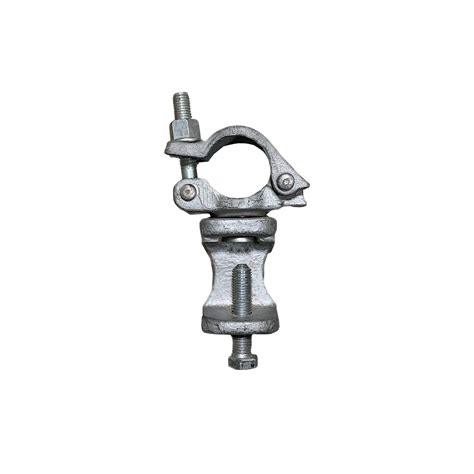
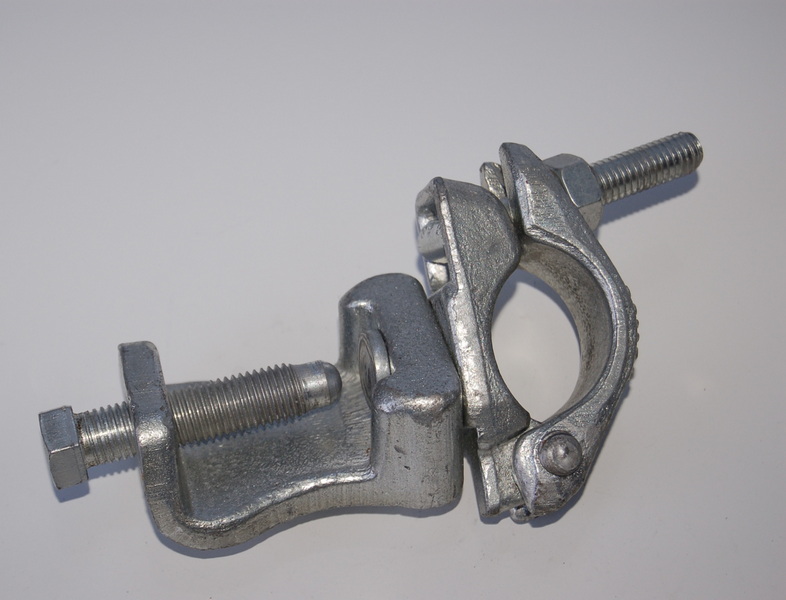
A swivel beam clamp is a specialized scaffolding coupler designed to attach scaffold tubes directly to steel beams, such as I-beams or girders, at any angle. Unlike fixed clamps that connect at a rigid 90-degree angle, swivel beam clamps allow 360-degree rotation, providing flexibility in scaffold design and assembly.
Key Features of Swivel Beam Clamp Scaffolding
- Made from high-quality forged or pressed steel for strength and durability.
- Typically hot-dip galvanized or zinc-plated for corrosion resistance.
- Designed to fit scaffold tubes with an outer diameter (O.D.) of 48.3mm, the standard size for scaffolding pipes.
- Adjustable to clamp onto steel beams with flange thicknesses up to 45mm (standard) or more with extended versions.
- Equipped with bolts, nuts, and washers to tighten securely around beams and tubes.
How Do Swivel Beam Clamps Work with I-Beams?
Clamping Mechanism
Swivel beam clamps consist of two main parts:
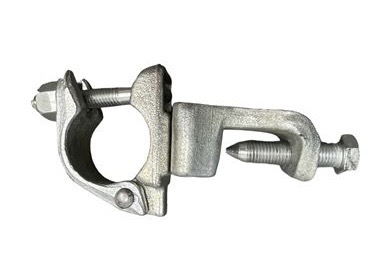
1. Beam Clamp Section: This part grips the flange of the I-beam securely. It typically has a C-shaped or U-shaped design to fit around the beam flange and tighten using a bolt and nut assembly.
2. Swivel Coupler Section: This connects the beam clamp to the scaffold tube and allows rotation, enabling the scaffold tube to be fixed at any angle relative to the beam.
When installed, the swivel beam clamp is tightened onto the I-beam flange, locking firmly in place. The scaffold tube is then inserted into the swivel coupler and secured with bolts. The swivel function allows the tube to be positioned precisely as needed, whether horizontally, vertically, or at any diagonal angle.
Installation Process
- Position the swivel beam clamp around the I-beam flange.
- Tighten the clamp bolt to securely grip the beam. The typical flange thickness supported is up to 45mm, with extended clamps accommodating up to 81mm.
- Insert the scaffold tube into the swivel coupler.
- Adjust the tube angle as required for the scaffold design.
- Tighten the coupler bolts to lock the tube firmly in place.
Advantages of Using Swivel Beam Clamp Scaffolding with I-Beams
1. Flexibility in Scaffold Design
Because swivel beam clamps allow tubes to be fixed at any angle, they provide unmatched flexibility in scaffolding layouts. This is particularly valuable when working around complex steel structures or irregularly shaped buildings.
2. Strong and Secure Attachment
Swivel beam clamps are made of high-strength steel and designed to meet international standards such as BS1139, EN74, AS1576, and JIS. They provide a secure grip on I-beam flanges, ensuring scaffold stability and worker safety.
3. Versatility
Swivel beam clamps can be used in various construction applications, including suspended scaffolding, bridge scaffolding, and high-rise building scaffolds. They are compatible with standard 48.3mm scaffold tubes and can be customized for different pipe sizes.
4. Corrosion Resistance
Most swivel beam clamps are hot-dip galvanized, providing excellent protection against rust and corrosion. This makes them suitable for outdoor and offshore construction environments.
5. Ease of Use
The clamp's design allows quick installation and adjustment, reducing scaffold erection time and labor costs.
Swivel Beam Clamp vs. Fixed Beam Clamp
Fixed Beam Clamp
- Connects scaffold tubes to I-beams at a fixed 90-degree angle.
- Provides rigid, non-adjustable joints.
- Suitable for straightforward scaffold designs requiring right-angle connections.
- Typically lighter and simpler but less flexible.
Swivel Beam Clamp
- Allows 360-degree rotation, enabling tubes to be fixed at any angle.
- Ideal for complex scaffold geometries and diagonal bracing.
- Slightly heavier due to the swivel mechanism.
- Provides greater adaptability but requires careful installation to maintain load capacity.
Comparison Table
| Feature |
Fixed Beam Clamp |
Swivel Beam Clamp |
| Connection Angle |
Fixed 90 degrees |
Adjustable 0-360 degrees |
| Flexibility |
Low |
High |
| Load Capacity |
High (rigid connection) |
High (with proper installation) |
| Weight |
Lighter |
Slightly heavier |
| Use Case |
Standard scaffold frames |
Complex scaffold layouts |
Applications of Swivel Beam Clamp Scaffolding with I-Beams
- Suspended Scaffolding: Attaching scaffold tubes to I-beams for suspended platforms.
- Bridge Construction: Securing scaffolds to girders and beams of bridges.
- High-Rise Buildings: Connecting scaffolding to steel frameworks at varying angles.
- Industrial Plants: Facilitating scaffold erection around complex piping and steel structures.
- Offshore Platforms: With corrosion-resistant finishes, swivel beam clamps are ideal for marine environments.
Safety and Standards
Swivel beam clamp scaffolding must comply with international safety standards to ensure reliable performance:
- BS1139 and EN74: European standards for scaffold couplers.
- AS1576: Australian standard for scaffolding components.
- JIS A 8951: Japanese Industrial Standard for scaffold fittings.
- Load Capacity: Typically rated to withstand at least 30 kN (kilonewtons) of load.
- Slip and Distortion Tests: Ensures clamps maintain grip under stress.
Regular inspection and maintenance are critical to prevent clamp loosening, corrosion, or damage that could compromise scaffold safety.
Conclusion
Swivel beam clamp scaffolding is a versatile and robust solution for attaching scaffold tubes to I-beams in construction. Its ability to rotate and lock tubes at any angle provides unmatched flexibility for complex scaffold designs, especially in high-rise buildings, bridges, and industrial projects. Made from durable materials and compliant with international standards, swivel beam clamps ensure secure, safe, and adaptable scaffolding structures.
FAQ
1. What is the maximum flange thickness a swivel beam clamp can secure?
Answer: Standard swivel beam clamps can secure flange thicknesses up to 45mm. Extended beam clamps are available for flanges up to 81mm thick[2][5].
2. Can swivel beam clamps be used with scaffold tubes other than 48.3mm diameter?
Answer: Yes, swivel beam clamps can be customized to fit other tube diameters such as 42mm, 60mm, 76mm, and 89mm depending on project requirements[2].
3. How do swivel beam clamps improve scaffold flexibility?
Answer: Their 360-degree rotation capability allows scaffold tubes to be fixed at any angle, enabling scaffolds to adapt to complex structural geometries[2][4].
4. Are swivel beam clamps suitable for offshore construction?
Answer: Yes, hot-dip galvanized swivel beam clamps offer excellent corrosion resistance, making them ideal for harsh offshore environments[2].
5. How many swivel beam clamps are typically used to secure a scaffold tube to an I-beam?
Answer: Swivel beam clamps are usually used in pairs to ensure a secure and stable connection between the scaffold tube and the beam[2][3].
Citations:
[1] https://www.thescaffoldwarehouse.com/Swivel-Beam-Clamp-p/psv-902s.htm
[2] https://www.wm-scaffold.com/swivel-beam-clamp/
[3] https://www.scaffoldstore.com/2-Swivel-Beam-Clamp-p/010008.htm
[4] https://www.at-pac.com/tube-and-clamp/beam-clamp-swivel
[5] https://www.wm-scaffold.com/scaffold-beam-clamp/
[6] https://www.kwikup.com.au/swivel-beam-clamp-girder-coupler/
[7] https://scaffoldexpress.com/collections/tube-and-clamp-scaffolding/products/2-inche-rigid-beam-i-bolt-scaffold-clamp
[8] https://www.alibaba.com/showroom/scaffolding-swivel-beam-clamp.html