Content Menu
● Introduction to Tube Scaffolding Design
● Key Components of Tube Scaffolding Design
>> 1. Standards (Vertical Tubes)
>> 2. Ledgers (Horizontal Tubes)
>> 3. Transoms (Cross Tubes)
>> 4. Base Plates and Sole Boards
>> 5. Couplers (Clamps)
>> 6. Bracing
>> 7. Platforms/Decking
● Structural Design Considerations in Tube Scaffolding Design
>> Load Capacity and Distribution
>> Spacing and Dimensions
>> Stability and Bracing
>> Foundation and Base Support
● Safety Considerations in Tube Scaffolding Design
>> Compliance with Standards
>> Guardrails and Toeboards
>> Inspection and Maintenance
>> Worker Training
● Advantages of Tube Scaffolding Design
● Common Challenges in Tube Scaffolding Design and Solutions
● Conclusion
● FAQ
>> 1. What are the main components of tube scaffolding design?
>> 2. How is load capacity determined in tube scaffolding design?
>> 3. Why is bracing important in tube scaffolding?
>> 4. What safety features are essential in tube scaffolding design?
>> 5. How often should tube scaffolding be inspected?
● Citations:
Tube scaffolding design is a fundamental aspect of construction and industrial projects, providing a safe and adaptable platform for workers to perform tasks at height. Known for its versatility, strength, and modularity, tube scaffolding is widely used across the globe for various applications, from simple maintenance work to complex high-rise construction.
Introduction to Tube Scaffolding Design
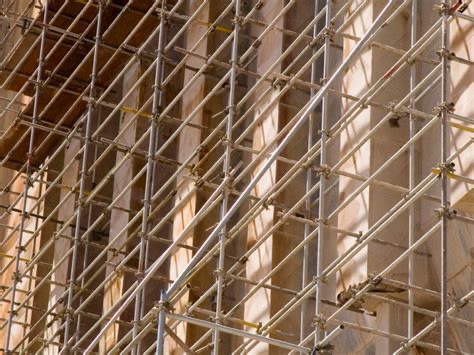
Tube scaffolding, often referred to as tube and coupler scaffolding, is a system built from steel tubes connected by couplers or clamps. Its modular nature allows it to be assembled in countless configurations, making it ideal for irregular structures or projects requiring customized scaffolding solutions.
The design of tube scaffolding involves careful planning and engineering to ensure stability, load-bearing capacity, and safety. Understanding the key elements that make up a robust tube scaffolding design is essential for engineers, contractors, and safety professionals.
Key Components of Tube Scaffolding Design
The strength and functionality of tube scaffolding largely depend on its core components and how they are arranged. Below are the essential elements:
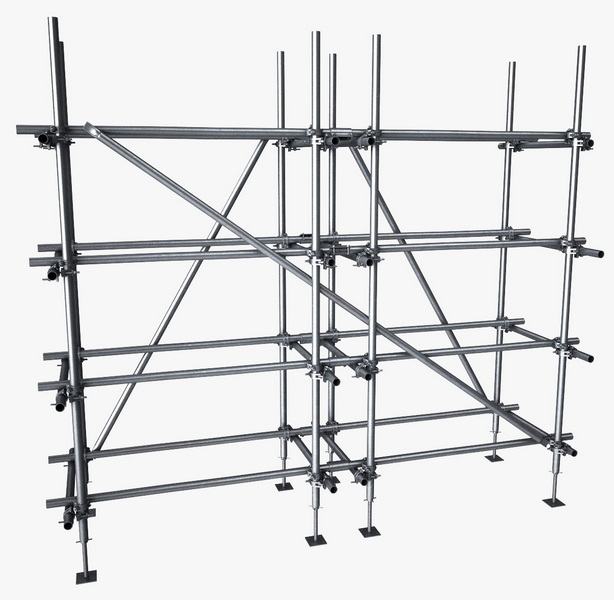
1. Standards (Vertical Tubes)
Standards, also called uprights or verticals, are the main vertical tubes that bear the load of the scaffolding structure. They transfer the weight from the platforms and workers down to the base plates and ultimately to the ground.
- Usually made from galvanized steel with a diameter of approximately 48.3 mm and wall thickness around 4 mm.
- Spaced at regular intervals to maintain stability.
- Connected at the base with base plates to distribute load evenly.
2. Ledgers (Horizontal Tubes)
Ledgers are horizontal tubes that connect the standards together laterally, providing horizontal support and distributing loads across the scaffold.
- Run parallel to the building facade.
- Help resist lateral forces such as wind.
- Support the scaffold platforms indirectly.
3. Transoms (Cross Tubes)
Transoms are horizontal tubes placed perpendicular to the ledgers. They provide direct support for the working platforms or scaffold boards.
- Increase the load-bearing capacity of the scaffold.
- Ensure platforms are stable and secure.
4. Base Plates and Sole Boards
Base plates are flat steel plates fixed at the bottom of standards to spread the load over a larger area. Sole boards (timber or steel plates) are placed under base plates when scaffolding is erected on soft or uneven ground to prevent sinking.
- Provide a stable foundation.
- Prevent displacement and uneven settling.
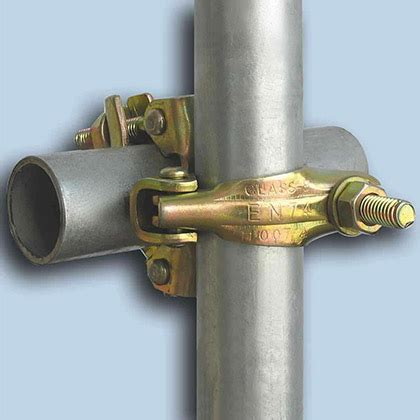
5. Couplers (Clamps)
Couplers are the connectors that join tubes together. They are critical to the scaffold's integrity and flexibility.
- Right-Angle Couplers: Connect tubes at 90 degrees, forming the scaffold's frame.
- Swivel Couplers: Allow tubes to be connected at variable angles, essential for diagonal bracing.
- Sleeve Couplers: Join two tubes end-to-end to extend length.
- Board Retaining Couplers: Secure scaffold boards in place.
6. Bracing
Bracing tubes are diagonal tubes that increase the rigidity of the scaffold, preventing sway and buckling.
- Installed both longitudinally and transversely.
- Essential for maintaining scaffold stability under load.
7. Platforms/Decking
Platforms are the working surfaces where personnel stand and place materials.
- Made from timber, aluminum, or steel.
- Fully decked platforms with guardrails and toeboards are standard for safety.
Structural Design Considerations in Tube Scaffolding Design
Load Capacity and Distribution
A critical aspect of tube scaffolding design is ensuring the scaffold can safely support the intended loads, including:
- Dead Loads: Weight of the scaffold structure itself.
- Live Loads: Workers, tools, and materials.
- Environmental Loads: Wind pressure and seismic forces.
Standards and ledgers must be designed to carry these loads without excessive deflection or failure. Typically, heavy-duty scaffolding supports loads of up to 75 lbs per square foot, while light-duty scaffolding supports around 25 lbs per square foot.
Spacing and Dimensions
- Bay Size: The horizontal spacing between standards (usually 6 to 8 feet).
- Lift Height: The vertical distance between ledger levels (commonly 6.5 feet).
- Width: Generally between 2 to 5 feet, depending on project requirements.
Proper spacing ensures stability and ease of access.
Stability and Bracing
Bracing is designed to resist lateral forces and prevent scaffold sway. It must be installed at regular intervals both vertically and horizontally.
- Diagonal bracing at approximately 45 degrees is common.
- Cross bracing enhances rigidity.
Foundation and Base Support
The foundation must be capable of supporting the scaffold loads without settlement or movement.
- Use of base plates and sole boards on soft ground.
- Leveling jacks may be used on uneven terrain.
Safety Considerations in Tube Scaffolding Design
Safety is paramount in any tube scaffolding design. Key safety elements include:
Compliance with Standards
Designs must comply with OSHA, ANSI, BS 1139, and EN 12811 standards, which govern load capacities, materials, assembly, and fall protection.
Guardrails and Toeboards
Guardrails prevent falls, while toeboards prevent tools or materials from falling off platforms.
Inspection and Maintenance
Regular inspections by competent persons ensure no damaged components or loose couplers compromise scaffold integrity.
Worker Training
Proper training on scaffold assembly, use, and dismantling is essential to prevent accidents.
Advantages of Tube Scaffolding Design
- Flexibility: Can be adapted to any building shape or height.
- Strength: High load capacity suitable for heavy-duty work.
- Modularity: Components can be reused across projects.
- Customizability: Allows for complex configurations on irregular sites.
- Safety: Designed to meet strict safety standards.
Common Challenges in Tube Scaffolding Design and Solutions
Challenge | Solution |
Uneven ground causing instability | Use base plates, sole boards, and leveling jacks |
Incorrect coupler tightening | Use torque wrenches to ensure proper clamp tension |
Insufficient bracing | Install diagonal braces at recommended intervals |
Overloading platforms | Adhere strictly to load limits and distribute loads evenly |
Lack of worker training | Provide comprehensive scaffold safety training |
Conclusion
The key elements of tube scaffolding design—including standards, ledgers, transoms, couplers, bracing, and platforms—work together to create a strong, flexible, and safe scaffolding system. Proper structural design, adherence to safety standards, and regular inspection ensure that tube scaffolding can support heavy loads and adapt to complex project requirements. Its modularity and versatility make it a preferred choice for a wide range of construction and maintenance projects. By understanding and applying these key elements, professionals can optimize safety and efficiency on-site.
FAQ
1. What are the main components of tube scaffolding design?
The main components include standards (vertical tubes), ledgers (horizontal tubes), transoms (cross tubes), base plates, couplers (clamps), bracing, and platforms.
2. How is load capacity determined in tube scaffolding design?
Load capacity is calculated based on dead loads, live loads, and environmental forces, ensuring the scaffold can safely support workers, materials, and wind pressures.
3. Why is bracing important in tube scaffolding?
Bracing prevents lateral movement and sway, maintaining scaffold stability under dynamic loads and environmental forces.
4. What safety features are essential in tube scaffolding design?
Guardrails, toeboards, proper coupler tightening, stable foundations, and compliance with safety standards are essential safety features.
5. How often should tube scaffolding be inspected?
Scaffolding should be inspected before each use, with detailed inspections monthly and after any modifications or adverse weather.
Citations:
[1] https://scal-academy.com.sg/courses/course_detail/Tubular-Scaffolds
[2] https://scaffoldtype.com/tube-and-coupler-scaffolding/
[3] https://www.osha.gov/sites/default/files/publications/OSHA_FS-3760.pdf
[4] https://scaffoldtype.com/tubular-scaffolding/
[5] https://aaitscaffold.com/blog/essential-scaffold-parts-every-construction-professional-should-know-about/
[6] https://www.youtube.com/watch?v=iPFkuAXw_PA
[7] https://brandsafway.com/uploads/files/orn402_bsl_tube_and_clamp_safety_guidelines.pdf
[8] https://www.ehsdb.com/scaffolding-components.php
[9] https://www.youtube.com/watch?v=ZM6Tlh_NAnQ