Content Menu
● Key Features of H-Frame Facade Modular System Scaffolding
● What Is H-Frame Facade Modular System Scaffolding Used For?
>> 1. Facade Construction and Maintenance
>> 2. High-Rise Building Access
>> 3. Renovation and Restoration Projects
>> 4. Elevator and Gallery Shaft Work
>> 5. Industrial and Infrastructure Projects
● Advantages of H-Frame Facade Modular System Scaffolding
● Components of H-Frame Facade Modular System Scaffolding
● How Does the H-Frame Facade Modular System Work?
● Safety Considerations When Using H-Frame Facade Modular System Scaffolding
● Applications of H-Frame Facade Modular System Scaffolding
● Conclusion
● FAQ
>> 1. What materials are used to make h-frame facade modular system scaffolding?
>> 2. How quickly can h-frame facade modular scaffolding be assembled?
>> 3. Is the h-frame facade modular system suitable for high-rise buildings?
>> 4. Can workers move safely between scaffold levels without additional stair towers?
>> 5. What safety features does the h-frame facade modular system include?
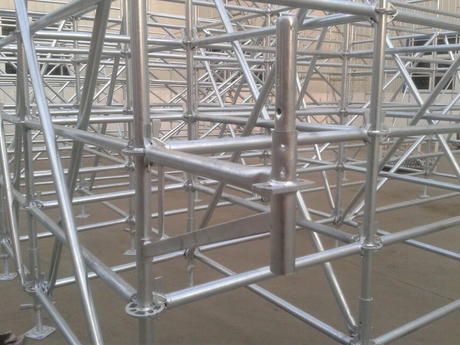
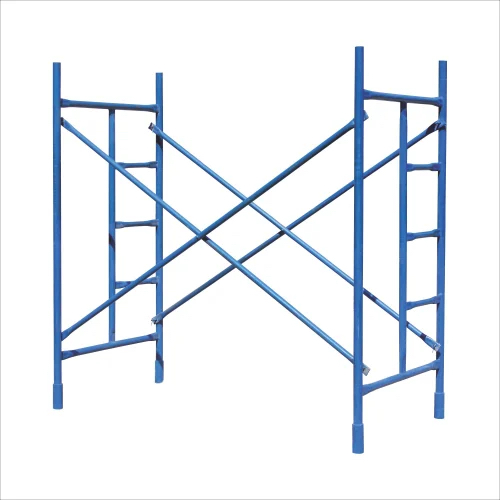
The h-frame facade modular system scaffolding is a prefabricated scaffolding system characterized by its distinctive "H"-shaped frames. These frames are connected by horizontal and diagonal braces to form a stable, modular structure that can be quickly assembled and dismantled. This system is designed primarily for facade work, providing safe and efficient access to building exteriors.
The system complies with European Standard EN 12810 and other international safety standards, ensuring high quality and reliability. The frames are often made of hot-dip galvanized steel for corrosion resistance and durability, suitable for outdoor use.
Key Features of H-Frame Facade Modular System Scaffolding
- Modular Design: The system is composed of standardized frames and components that can be combined to fit various building sizes and shapes.
- Quick Assembly and Disassembly: The frames lock together with durable cast pins, allowing erection and dismantling without specialized tools.
- High Load Capacity: Steel decks and toe boards manufactured with roll-form machines provide high strength and a secure working platform.
- Integrated Access: Platforms with ladders enable safe movement between scaffold levels without additional stair towers.
- Corrosion Resistance: Hot-dip galvanizing protects the system from rust and extends its service life.
- Space Efficiency: The system is lightweight and stackable, reducing storage space requirements.
What Is H-Frame Facade Modular System Scaffolding Used For?
1. Facade Construction and Maintenance
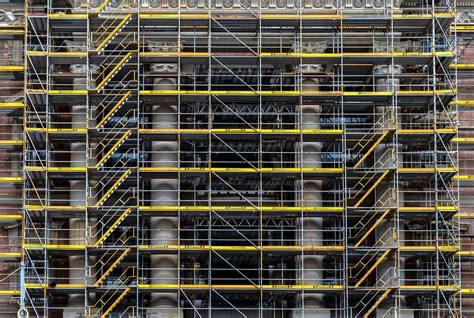
The primary use of the h-frame facade modular system scaffolding is to provide safe access to building facades during construction, repair, or maintenance. It supports workers performing tasks such as:
- Masonry work
- Painting and plastering
- Installation of cladding and insulation
- Cleaning and restoration
Its modular nature allows it to adapt to various facade geometries, including flat, curved, or irregular surfaces.
2. High-Rise Building Access
Due to its stable and secure structure, the system can be erected to heights exceeding 100 meters, making it suitable for high-rise buildings and large commercial complexes.
3. Renovation and Restoration Projects
The scaffolding is ideal for restoration works on historical buildings, hospitals, stadiums, and shopping centers, where careful access and minimal structural impact are necessary.
4. Elevator and Gallery Shaft Work
The system can be configured to safely access elevator shafts and gallery areas for repairs, painting, and insulation.
5. Industrial and Infrastructure Projects
It is also used in industrial facilities for maintenance and inspection, as well as infrastructure projects such as bridges and tunnels where facade access is required.
Advantages of H-Frame Facade Modular System Scaffolding
| Advantage | Description |
| Safety | Certified to EN 12810, with secure locking pins and guardrails for worker protection. |
| Speed | Tool-free assembly and disassembly save time and labor costs. |
| Flexibility | Modular components allow customization to fit complex building shapes and heights. |
| Durability | Hot-dip galvanized frames resist corrosion, suitable for long-term outdoor use. |
| Space-Saving Storage | Lightweight, stackable components reduce storage and transportation costs. |
| Integrated Access | Built-in ladders and platforms eliminate the need for separate stair towers. |
| Load Capacity | Steel decks and toe boards provide strong, stable working surfaces for heavy materials and tools. |
Components of H-Frame Facade Modular System Scaffolding
- H Frames: The main structural elements shaped like an "H," available in various sizes to fit different facade heights.
- Horizontal and Diagonal Braces: Provide lateral stability and rigidity.
- Steel Decks: Platforms where workers stand and place tools; equipped with hooks that lock into the frames.
- Toe Boards: Prevent tools and materials from falling off the platform.
- Guardrails: Installed on open sides to protect workers from falls.
- Ladders: Integrated into platforms to allow safe vertical movement.
- Console and Lattice Beams: Extend the scaffold outward to reach difficult facade areas.
- Couplers and Pins: Secure connections between components.
How Does the H-Frame Facade Modular System Work?
The system operates on the principle of overlapping frames vertically, connected by horizontal braces at waist and knee levels. Each frame locks into place with durable cast pins, ensuring a rigid and safe structure. Steel decks are placed on each floor, their hooks locking securely between frames to prevent displacement during work.
Workers can move safely between levels using the built-in ladder platforms, eliminating the need for separate stair towers. Side elements like consoles and lattice beams enable access to recessed or protruding facade sections.
Safety Considerations When Using H-Frame Facade Modular System Scaffolding
- Load Limits: Always adhere to manufacturer-specified load capacities to avoid overloading.
- Proper Assembly: Ensure all locking pins and braces are correctly installed and secured.
- Guardrails and Toe Boards: Must be installed on all open sides to prevent falls and falling objects.
- Regular Inspections: Conduct daily inspections for wear, damage, or loosening of components.
- Training: Workers should be trained on scaffold use, fall protection, and emergency procedures.
- Weather Conditions: Avoid scaffold use during high winds or severe weather.
- Anchoring: Secure scaffolding to the building structure at recommended intervals for enhanced stability.
Applications of H-Frame Facade Modular System Scaffolding
| Application Area | Description |
| Residential Buildings | Safe access for facade painting, plastering, and repairs. |
| Commercial Complexes | High-rise facade work including window installation and cladding. |
| Industrial Facilities | Maintenance and inspection of large structures and equipment. |
| Historical Restoration | Careful scaffolding for preservation and restoration projects. |
| Infrastructure Projects | Bridge and tunnel facade access for repair and coating. |
| Event Structures | Temporary scaffolding for stages, platforms, and exhibitions. |
Conclusion
The h-frame facade modular system scaffolding is a versatile, safe, and efficient solution widely used in facade construction, maintenance, and restoration projects. Its modular design allows for quick assembly and disassembly, adaptability to various building shapes and heights, and provides a secure working environment for construction professionals. With its high load capacity, corrosion resistance, and integrated access features, it remains a preferred choice for contractors worldwide. Proper installation, adherence to safety standards, and regular maintenance ensure the longevity and safety of the scaffolding system.
FAQ
1. What materials are used to make h-frame facade modular system scaffolding?
The frames and components are typically made from high-quality hot-dip galvanized steel, providing strength, durability, and corrosion resistance suitable for outdoor use.
2. How quickly can h-frame facade modular scaffolding be assembled?
Thanks to its modular design and tool-free locking pins, the system can be erected and dismantled quickly, often saving significant labor time compared to traditional scaffolding.
3. Is the h-frame facade modular system suitable for high-rise buildings?
Yes, the system is certified for secure erection up to heights exceeding 100 meters, making it ideal for high-rise facade work.
4. Can workers move safely between scaffold levels without additional stair towers?
Yes, the system includes integrated ladder platforms that allow safe vertical movement between floors without the need for separate stair towers.
5. What safety features does the h-frame facade modular system include?
It features guardrails, toe boards, secure locking pins, steel decks with anti-slip surfaces, and is designed to meet international safety standards such as EN 12810.