Content Menu
● What Are Scaffolding Aluminum Walk Boards?
● Load Capacity: Can Aluminum Walk Boards Handle Heavy-Duty Loads?
>> Industry Standards and Testing
● Safety Features of Aluminum Walk Boards
>> 1. Non-Slip Surfaces
>> 2. Reinforced Trusses
>> 3. Locking Mechanisms
>> 4. Corrosion Resistance
>> 5. Lightweight for Ergonomics
● Aluminum vs. Steel vs. Wood: Heavy-Duty Comparison
● Case Studies: Heavy-Duty Applications
>> 1. Industrial Plant Maintenance
>> 2. Bridge Painting Project
>> 3. High-Rise Window Installation
>> 4. Shipyard Construction
● OSHA Compliance and Best Practices
>> Critical Guidelines
>> Common Violations
● Maintenance for Longevity
>> Daily Care
>> Repair Tips
● How to Choose Heavy-Duty Aluminum Walk Boards
● Environmental and Economic Benefits
>> Sustainability
>> Cost Efficiency
● Innovations in Aluminum Walk Board Design
>> Advanced Truss Engineering
>> Integrated Safety Features
>> Customizable Lengths and Widths
● Conclusion
● FAQ
>> 1. What is the maximum weight aluminum walk boards can hold?
>> 2. Are aluminum walk boards OSHA-compliant?
>> 3. Can aluminum walk boards be used outdoors?
>> 4. How often should I inspect aluminum walk boards?
>> 5. Are aluminum walk boards compatible with steel scaffolding?
Scaffolding aluminum walk boards have become a cornerstone of modern construction, offering a blend of lightweight design, durability, and adaptability. But when it comes to heavy-duty applications-such as industrial projects, bridge maintenance, or high-rise construction-questions about their safety and load-bearing capabilities arise. This article dives into the engineering, testing, and real-world performance of scaffolding aluminum walk boards, providing a data-driven analysis of their suitability for demanding environments.
What Are Scaffolding Aluminum Walk Boards?
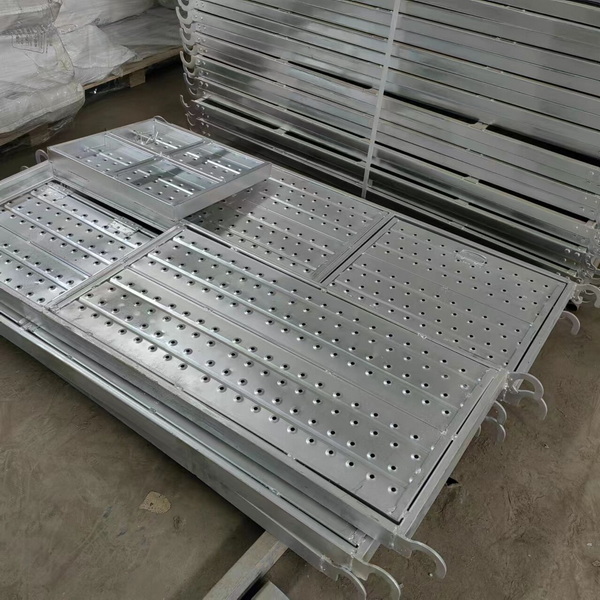
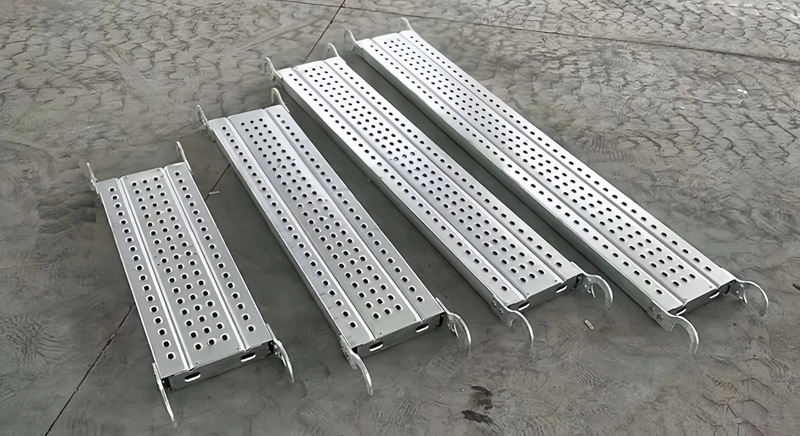
Scaffolding aluminum walk boards are modular platforms made from high-strength aluminum alloys (e.g., 6082-T6, 6061-T6). Designed to replace traditional wood or steel planks, they feature non-slip surfaces, reinforced trusses, and locking mechanisms for secure attachment to scaffolding frames. Their lightweight construction (e.g., 29–40 lbs for 7–10 ft boards) allows for rapid assembly and repositioning, while their corrosion resistance ensures longevity in harsh conditions.
Load Capacity: Can Aluminum Walk Boards Handle Heavy-Duty Loads?
Industry Standards and Testing
According to OSHA, heavy-duty scaffolding must support at least 75 lbs per square foot (psf). Modern aluminum walk boards not only meet but often exceed this standard:
| Brand/Model | Load Capacity (Uniform) | Max Concentrated Load | OSHA Rating |
| ScaffoldMart 7' Board | 9,195 lbs (tested) | 212 psf | Heavy Duty |
| MetalTech 7' Board | 830 lbs | 75 psf | General Duty |
| Bil-Jax 7' Board | 500 lbs | 50 psf | Medium Duty |
| Werner Aluminum 7' Board | 250 lbs | 25 psf | Light Duty |
Key Takeaway: Not all aluminum walk boards are equal. High-quality models like ScaffoldMart's can safely hold over 4.5 tons in third-party tests, making them viable for heavy industrial use.
Safety Features of Aluminum Walk Boards
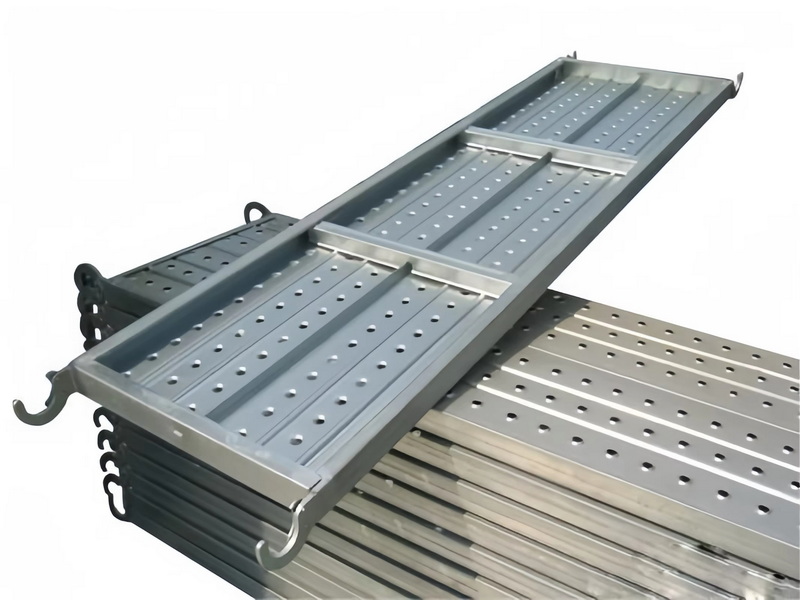
1. Non-Slip Surfaces
Aluminum walk boards are engineered with textured, grooved, or perforated surfaces to prevent slips, even in wet or oily conditions. The grooves also channel away water and debris, reducing fall risks.
2. Reinforced Trusses
Lattice or truss designs beneath the platform enhance rigidity. For example, ScaffoldMart's boards use triple trusses to distribute weight evenly, achieving a 75 psf rating.
3. Locking Mechanisms
Replaceable hooks and wind latches secure boards to scaffolding frames, preventing accidental dislodgement. Some models include auto-locking ends for rapid installation.
4. Corrosion Resistance
Aluminum's natural oxide layer protects against rust, unlike steel. This makes aluminum walk boards ideal for coastal sites, chemical plants, or rainy environments.
5. Lightweight for Ergonomics
The reduced weight of scaffolding aluminum walk boards means less strain on workers during installation and repositioning, which contributes to overall site safety by reducing fatigue and risk of manual handling injuries.
Aluminum vs. Steel vs. Wood: Heavy-Duty Comparison
| Feature | Aluminum Walk Boards | Steel Walk Boards | Wood Walk Boards |
| Weight | 29–40 lbs (7–10 ft) | 80–120 lbs (7–10 ft) | 50–70 lbs (7–10 ft) |
| Load Capacity | Up to 212 psf | Up to 250 psf | Up to 50 psf |
| Corrosion | Rust-proof | Prone to rust | Rot-resistant with treatment |
| Lifespan | 10+ years | 5–8 years (with coating) | 2–3 years |
| Maintenance | Minimal (wash and inspect) | Regular painting required | Frequent replacement |
Verdict: Aluminum walk boards outperform wood in durability and match steel in load capacity while being 60–70% lighter. They are the optimal choice for projects requiring frequent repositioning or exposure to moisture.
Case Studies: Heavy-Duty Applications
1. Industrial Plant Maintenance
A petrochemical plant in Texas used ScaffoldMart's aluminum walk boards to support crews repairing 50-foot-high storage tanks. The boards' 75 psf rating allowed workers to safely carry welding equipment and materials, while their corrosion resistance withstood chemical exposure.
2. Bridge Painting Project
In a New York DOT project, aluminum walk boards were suspended over a river for bridge repainting. Their lightweight design reduced stress on support cables, and the non-slip surface prevented accidents during rain.
3. High-Rise Window Installation
A Dubai construction firm utilized aluminum boards rated for 212 psf to install floor-to-ceiling windows on a 60-story tower. The boards' locking mechanisms ensured stability in high winds, and their modularity sped up adjustments as work progressed.
4. Shipyard Construction
Shipyards often face harsh, salty environments. Aluminum walk boards have proven invaluable in these settings, as their corrosion resistance far surpasses that of steel, and their high load capacity allows for safe movement of heavy parts and tools.
OSHA Compliance and Best Practices
Critical Guidelines
- Load Limits: Never exceed the manufacturer's stated capacity (e.g., 75 psf for heavy-duty boards).
- Inspections: Check for cracks, bent hooks, or loose locks daily. Document findings in a maintenance log.
- Fall Protection: Use guardrails or personal arrest systems when working above 10 feet.
- Assembly: Secure boards with hooks at both ends, and ensure frames are level before loading.
Common Violations
- Overloading boards with materials or workers.
- Using damaged boards without repairs.
- Failing to lock wheels or stabilize scaffolding on uneven ground.
Maintenance for Longevity
Daily Care
- Clean Surfaces: Pressure-wash debris to maintain traction.
- Lubricate Hinges: Apply silicone spray to locking mechanisms.
- Store Indoors: Keep boards in a dry, covered area to prevent UV degradation.
Repair Tips
- Replace bent hooks immediately to avoid detachment.
- Weld cracks in trusses only with manufacturer approval.
- Retire boards with structural warping or deep corrosion.
How to Choose Heavy-Duty Aluminum Walk Boards
| Factor | Recommendation |
| Load Rating | Select boards rated ≥75 psf for heavy-duty use. |
| Material | Choose 6082-T6 alloy for maximum strength (yield strength: 260 MPa). |
| Length | 7–10 ft boards balance portability and span capacity. |
| Surface | Opt for grooved or perforated designs for slip resistance. |
| Brand Reputation | Trusted manufacturers include ScaffoldMart, Werner, and Bil-Jax. |
Environmental and Economic Benefits
Sustainability
Aluminum is highly recyclable, and most scaffolding aluminum walk boards are made from recycled materials. At the end of their service life, they can be fully recycled, reducing environmental impact compared to wood or coated steel, which often end up in landfills.
Cost Efficiency
Although the initial investment for scaffolding aluminum walk boards is higher than wood, their longevity, reduced maintenance, and lower replacement frequency lead to lower total cost of ownership over time.
Innovations in Aluminum Walk Board Design
Advanced Truss Engineering
Some manufacturers now use computer-aided design (CAD) and finite element analysis (FEA) to optimize truss structures, further increasing the load capacity and reducing weight.
Integrated Safety Features
Modern boards may include built-in toe boards, quick-release locking mechanisms, and color-coded ends for easy identification and safe installation.
Customizable Lengths and Widths
Aluminum walk boards can be ordered in custom sizes, making them suitable for unique or complex scaffolding layouts in heavy-duty environments.
Conclusion
Scaffolding aluminum walk boards are unequivocally safe for heavy-duty use when selected and maintained properly. High-quality models exceed OSHA's 75 psf standard, offering strengths comparable to steel at a fraction of the weight. Their corrosion resistance, non-slip surfaces, and modular design make them indispensable for industrial, construction, and maintenance projects. By adhering to load limits, conducting daily inspections, and choosing reputable brands, contractors can leverage aluminum walk boards to enhance safety and efficiency on even the most demanding job sites.
FAQ
1. What is the maximum weight aluminum walk boards can hold?
Heavy-duty aluminum walk boards like ScaffoldMart's can hold up to 212 lbs per square foot (9,195 lbs total), while general-duty models typically support 75–100 lbs per square foot.
2. Are aluminum walk boards OSHA-compliant?
Yes, boards rated for 75+ lbs per square foot meet OSHA's heavy-duty standard. Always verify the manufacturer's certification.
3. Can aluminum walk boards be used outdoors?
Absolutely. Their rust-proof design makes them ideal for outdoor use, even in coastal or rainy environments.
4. How often should I inspect aluminum walk boards?
Inspect before each use for cracks, bent hooks, or surface damage. Perform a detailed monthly check of all components.
5. Are aluminum walk boards compatible with steel scaffolding?
Yes. Most aluminum boards have standardized hooks (e.g., 19” width) that fit steel frames like ringlock, cuplock, and kwikstage systems.