Content Menu
● What Is a Swivel Scaffolding Clamp?
● How Does a Swivel Scaffolding Clamp Work?
● Are Swivel Scaffolding Clamps Adjustable for All Angles?
● Applications of Swivel Scaffolding Clamps
● Advantages of Using Swivel Scaffolding Clamps
● Limitations and Safety Considerations
● Comparison: Swivel Clamps vs Fixed Right Angle Clamps
● Installation Tips for Swivel Scaffolding Clamps
● Maintenance and Durability
● Integration with Various Scaffolding Systems
● Conclusion
● FAQ
>> 1. Are scaffolding clamp swivel adjustable for all angles?
>> 2. Can swivel clamps replace fixed right angle clamps?
>> 3. What materials are swivel scaffolding clamps made from?
>> 4. How do I ensure the swivel clamp is safely tightened?
>> 5. Can swivel clamps be reused?
Swivel scaffolding clamps are indispensable components in modern scaffolding systems, offering flexibility and adaptability in connecting scaffold tubes at various angles. But a common question arises among construction professionals and scaffolders: Are scaffolding clamp swivel adjustable for all angles? This article provides an in-depth exploration of swivel scaffolding clamps, their design, functionality, limitations, and practical applications.
What Is a Swivel Scaffolding Clamp?
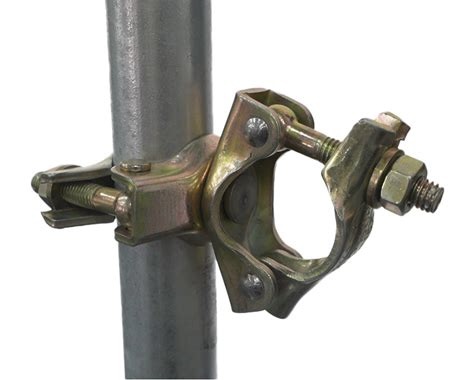
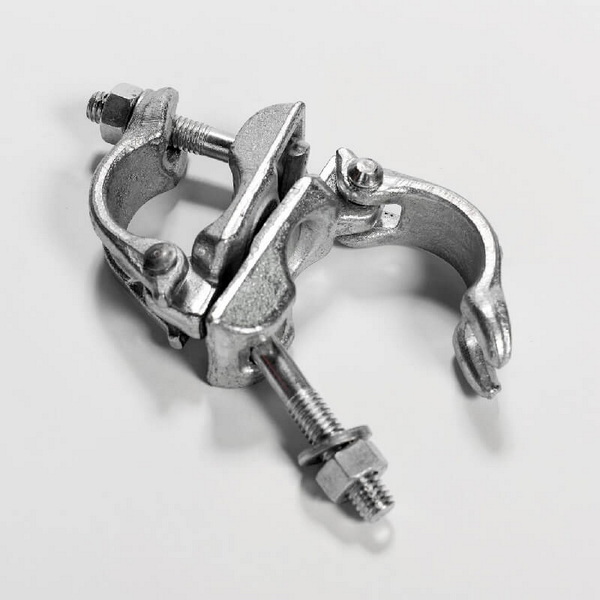
A scaffolding clamp swivel is a type of coupler designed to connect two scaffold tubes at any angle, unlike fixed clamps that only connect tubes at a right angle (90 degrees). Made typically from heavy-duty steel, swivel clamps feature a pivot mechanism allowing the connected tubes to rotate relative to each other within a range of motion.
How Does a Swivel Scaffolding Clamp Work?
The swivel clamp consists of two halves connected by a bolt and nut assembly that acts as a pivot point. By loosening or tightening the bolt, the clamp can be adjusted to the desired angle between the tubes. Once tightened, it locks the tubes securely in place.
- Material: Usually low carbon steel with zinc coating for corrosion resistance.
- Load Capacity: Tested to withstand loads up to 17.7kN or more, depending on design.
- Slip Resistance: Designed to prevent slippage under load.
Are Swivel Scaffolding Clamps Adjustable for All Angles?
Swivel scaffolding clamps allow for variable angle connections, which means they can connect tubes at almost any angle necessary for complex scaffolding structures, including staircases, ramps, and diagonal bracing. However, the adjustment is typically limited to a range of approximately 0° to 180° or slightly more, depending on the clamp design.
- Typical Adjustment Range: Most swivel clamps allow movement up to about 180°, enabling connections from parallel alignment to perpendicular or acute angles.
- Limitations: Full 360° rotation is generally not possible because the clamp must lock firmly to provide structural stability.
Applications of Swivel Scaffolding Clamps
Swivel clamps are widely used in scenarios where fixed right-angle connections are impractical:
- Staircases and Ramps: Where scaffold tubes must follow sloping surfaces.
- Diagonal Bracing: To provide lateral stability at various angles.
- Curved or Irregular Structures: Allowing scaffold tubes to align with non-linear architectural features.
- Temporary Structures: Where flexibility in assembly and disassembly is required.
Advantages of Using Swivel Scaffolding Clamps
- Flexibility: Accommodate a variety of angles, reducing the need for custom fittings.
- Ease of Assembly: Simplify complex scaffolding designs.
- Strength: Made of forged or pressed steel, providing high load-bearing capacity.
- Versatility: Compatible with standard scaffold tubes (usually 48.3mm diameter).

Limitations and Safety Considerations
- Not Infinite Rotation: Swivel clamps do not allow free rotation; they lock at the set angle.
- Proper Tightening Required: To ensure safety, clamps must be tightened to manufacturer specifications.
- Load Capacity: While strong, swivel clamps may have slightly lower load ratings than fixed clamps.
- Inspection: Regular inspection for wear, corrosion, and damage is essential.
Comparison: Swivel Clamps vs Fixed Right Angle Clamps
| Feature | Swivel Scaffolding Clamp | Fixed Right Angle Clamp |
| Angle Adjustment | Adjustable between ~0° to 180° | Fixed at 90° |
| Use Case | Staircases, ramps, diagonal bracing, irregular angles | Straight vertical and horizontal connections |
| Load Capacity | High, but sometimes slightly less than fixed clamps | Very high |
| Flexibility | High | Low |
| Price | Slightly higher due to complexity | Generally lower |
Installation Tips for Swivel Scaffolding Clamps
1. Position Tubes: Align scaffold tubes at the desired angle.
2. Place Clamp: Open the swivel clamp and position it around both tubes.
3. Adjust Angle: Loosen the bolt to allow rotation and set the desired angle.
4. Tighten Securely: Use the appropriate wrench (usually 21mm or 23mm) to tighten the bolt firmly.
5. Check Stability: Ensure no movement occurs after tightening.
6. Regular Inspection: Periodically check clamps during use for loosening or damage.
Maintenance and Durability
- Material Protection: Zinc coating or galvanization prevents rust.
- Cleaning: Remove dirt and debris regularly.
- Lubrication: Apply anti-seize lubricant on bolts to prevent galling.
- Replacement: Replace clamps showing cracks, deformation, or excessive wear.
Integration with Various Scaffolding Systems
Swivel scaffolding clamps are compatible with many scaffolding systems, including:
- BS Standard Scaffold Tubes: Often used with tube and clamp scaffolding.
- Cuplock Scaffolding Fittings: While Cuplock uses specialized couplers, swivel clamps can complement bracing.
- Layher Metric Allround System: Swivel clamps can be used for custom connections.
- Liba Scaffolding System: Modular design benefits from swivel clamp flexibility.
Conclusion
Swivel scaffolding clamps are highly versatile and essential for creating adjustable angle connections in scaffolding systems. While they do not allow infinite rotation, their ability to lock securely at various angles makes them invaluable for complex scaffold designs involving staircases, ramps, and diagonal bracing. Understanding their capabilities, limitations, and proper use ensures safe and efficient scaffolding assembly.
FAQ
1. Are scaffolding clamp swivel adjustable for all angles?
Answer: Swivel scaffolding clamps allow adjustment across a wide range of angles, typically from 0° up to about 180°, but they do not provide full 360° rotation. They lock securely at the set angle to maintain scaffold stability.
2. Can swivel clamps replace fixed right angle clamps?
Answer: While swivel clamps offer flexibility, fixed clamps provide higher stability for right-angle connections. It's best to use each clamp type according to the scaffold design requirements.
3. What materials are swivel scaffolding clamps made from?
Answer: They are typically made from low carbon steel with zinc coating or galvanization for corrosion resistance and durability.
4. How do I ensure the swivel clamp is safely tightened?
Answer: Use the correct sized spanner (usually 21mm or 23mm) and tighten bolts to manufacturer specifications. Avoid over-tightening to prevent damage.
5. Can swivel clamps be reused?
Answer: Yes, swivel clamps can be reused if they are inspected and found to be free from damage, corrosion, or wear that could compromise safety.