Content Menu
● What Are Scaffolding Couplers?
● Understanding the Concept of Scaffolding Coupler Grade
● Types of Scaffolding Couplers and Their Grades
>> 1. Right-Angle Couplers (Double Couplers)
>> 2. Swivel Couplers
>> 3. Sleeve Couplers
>> 4. Putlog Couplers
>> 5. Board Retaining and Girder Couplers
● Materials Used in Different Grades of Couplers
● Manufacturing Processes and Their Impact on Grade
● Load Capacity and Safety Standards by Grade
● How to Choose the Right Grade for Your Project
● Maintenance and Inspection of Different Grades
● Safety Measures and Hazard Prevention
>> Hazard Assessments and Safety Protocols
>> Qualified Scaffold Design
>> Guardrails, Toeboards, and Fall Protection
● Common Mistakes to Avoid
● Conclusion
● FAQ
>> 1. What does scaffolding coupler grade mean?
>> 2. Are all scaffolding couplers made from the same material?
>> 3. How does the grade affect load capacity?
>> 4. Can low-grade couplers be used for heavy scaffolding?
>> 5. How can I identify the grade of a scaffolding coupler?
Scaffolding couplers are vital components in the construction industry, used to connect scaffold tubes and create stable, safe working platforms at various heights. But are all scaffolding couplers created equal? Do different grades exist, and what impact do they have on safety, durability, and compliance? This comprehensive article explores the concept of scaffolding coupler grades, their types, materials, manufacturing standards, load capacities, and how to select the right grade for your project.
What Are Scaffolding Couplers?
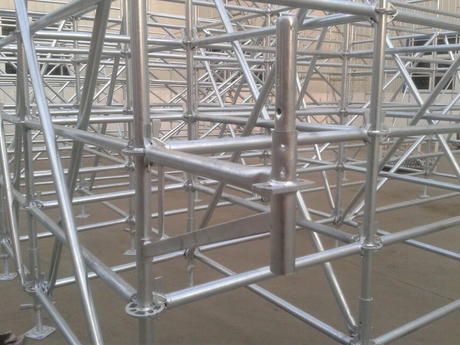
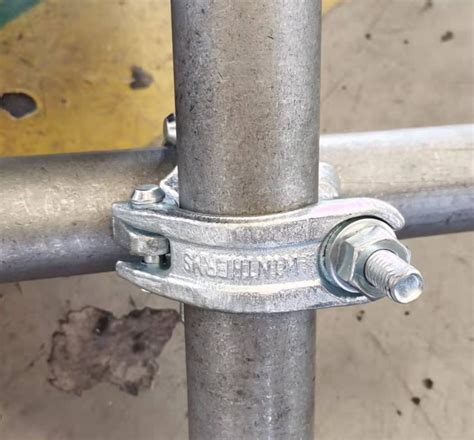
Scaffolding couplers, also known as scaffolding clamps, are mechanical fittings used to join two scaffold tubes securely. They come in various types such as right-angle (double) couplers, swivel couplers, sleeve couplers, putlog couplers, and board retaining couplers. These couplers form the backbone of tube and clamp scaffolding systems, ensuring structural integrity and worker safety .
Tube and coupler scaffolding is known for its adaptability, capable of conforming to irregular work surfaces and project specifications .
Understanding the Concept of Scaffolding Coupler Grade
The term scaffolding coupler grade refers to the classification of couplers based on their material quality, manufacturing process, mechanical properties, and compliance with industry standards. Different grades reflect varying levels of strength, durability, corrosion resistance, and suitability for specific applications.
Grades are important because they help users:
- Ensure safety by selecting couplers with appropriate load-bearing capacity
- Match couplers to project requirements and environmental conditions
- Comply with regulatory and industry standards such as BS 1139, EN 74, OSHA, and AS/NZS 1576
- Optimize cost-effectiveness by choosing the right grade for the intended use
Types of Scaffolding Couplers and Their Grades
1. Right-Angle Couplers (Double Couplers)
- Grade: Typically manufactured to high-grade standards such as BS 1139 or EN 74 Class B
- Material: Drop-forged steel or malleable iron
- Load Capacity: Around 6.25 kN working load limit (WLL)
- Use: Fixed 90-degree connections for standards and ledgers
2. Swivel Couplers
- Grade: Available in various grades, including EN 74 Class A and B
- Material: Drop-forged steel preferred for higher grades
- Load Capacity: 14 kN (Class A) to 20 kN (Class B)
- Use: Flexible angle connections, bracing
3. Sleeve Couplers
- Grade: Usually high-grade forged steel for maximum axial load resistance
- Load Capacity: Up to 12.5 kN or more
- Use: Joining scaffold tubes end-to-end
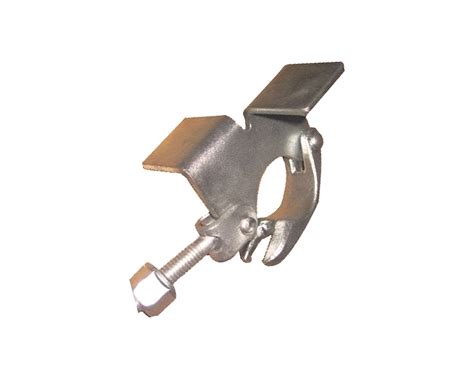
4. Putlog Couplers
- Grade: Often lower grade, pressed steel or cast iron
- Load Capacity: Typically lower, around 0.62 kN
- Use: Supporting scaffold boards, non-structural connections
5. Board Retaining and Girder Couplers
- Grade: High-grade forged steel with corrosion-resistant finishes
- Use: Securing boards and attaching scaffolds to structural beams
Materials Used in Different Grades of Couplers
The material quality significantly influences the grade of scaffolding couplers:
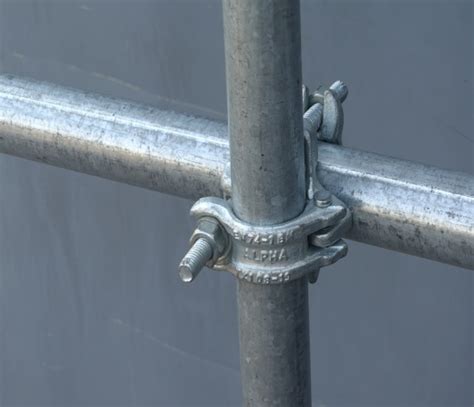
- Drop-Forged Steel: Considered the highest grade due to superior strength and toughness. Couplers made from drop-forged steel comply with stringent safety standards and are suitable for heavy-duty applications.
- Malleable Iron: Offers good strength and ductility, commonly used in mid-grade couplers.
- Pressed Steel: More economical, used in light to medium-duty couplers but less durable than forged steel.
- Cast Iron: Generally lower grade, used in some older or less critical applications.
Manufacturing Processes and Their Impact on Grade
- Forging: Produces couplers with excellent mechanical properties and uniform grain structure. Forged couplers are tougher, more reliable, and have higher load capacities.
- Pressing: Suitable for mass production of lighter couplers but results in lower strength and durability compared to forging.
- Casting: Less common for couplers, often results in brittleness and lower impact resistance.
Standards such as BS 1139 and EN 74 require couplers to be manufactured by forging or pressing processes that meet strict quality and testing criteria.
Load Capacity and Safety Standards by Grade
Different scaffolding coupler grades correspond to different load capacities and compliance levels:
Coupler Grade | Typical Material | Load Capacity (WLL) | Compliance Standards | Typical Applications |
High Grade (Class B) | Drop-forged steel | 6.25 kN - 20 kN | BS 1139, EN 74 Class B | Primary load-bearing joints |
Mid Grade (Class A) | Drop-forged or malleable iron | 14 kN (swivel) | EN 74 Class A | Bracing and flexible connections |
Low Grade | Pressed steel, cast iron | 0.62 kN - 6 kN | Some meet minimum standards | Non-structural, light-duty applications |
Proper tightening torque (typically 54 Nm) is essential to achieve the rated load capacities . All tube and coupler scaffolds must be constructed and erected to support four times the maximum intended loads as set forth in tables D-13, 14, and 15 within the OSHA 1910.28 standard .
How to Choose the Right Grade for Your Project
1. Assess Load Requirements: Heavy-duty scaffolding requires high-grade forged steel couplers with high load capacity .
2. Evaluate Environmental Conditions: Outdoor and corrosive environments demand couplers with corrosion-resistant finishes like hot-dip galvanizing.
3. Consider Regulatory Compliance: Ensure couplers meet local and international standards relevant to your project location.
4. Match Coupler Type to Application: Use high-grade couplers for primary structural joints, mid-grade for bracing, and low-grade only for non-structural uses.
5. Budget and Availability: Balance cost with safety; avoid compromising on grade for price.
Maintenance and Inspection of Different Grades
- High-Grade Couplers: Require regular inspection for corrosion, cracks, and wear. Maintain proper lubrication and storage to prolong life.
- Mid-Grade Couplers: Inspect more frequently due to lower durability; replace if any damage is detected.
- Low-Grade Couplers: Use only in appropriate applications; replace often to avoid failure risks.
Safety Measures and Hazard Prevention
Ensuring safety when working with tube and coupler scaffolding requires robust safety measures and hazard prevention strategies .
Hazard Assessments and Safety Protocols
Scaffolding safety protocols begin with comprehensive hazard assessments to identify and mitigate potential risks . These protocols cover fall prevention, structural stability, and environmental factors .
Qualified Scaffold Design
A qualified scaffold design is crucial, especially for structures over 125 feet, ensuring all safety standards are met by certified professionals .
Guardrails, Toeboards, and Fall Protection
The integration of guardrail systems and toeboards is a fundamental aspect of fall protection . Active fall protection measures include personal fall arrest systems, regularly inspected and maintained .
Guardrail Systems | Prevent falls from height | OSHA 1926.502(b) |
Toeboards | Protect from falling objects | OSHA 1926.451(f)(1) |
Personal Fall Arrest Systems | Catch workers in the event of a fall | OSHA 1926.500-503 |
Common Mistakes to Avoid
- Using Dissimilar Metals: Avoid using dissimilar metals together, as this can cause corrosion .
- Inadequate Spacing: Ensure posts are accurately spaced and maintained plumb .
- Lack of Bracing: Plumb and brace poles, legs, posts, frames, and uprights to prevent swaying and displacement .
- Unstable Footings: Use footings that are level, sound, rigid, and capable of supporting the load without settlement or displacement .
Conclusion
Yes, there are different grades of scaffolding couplers, each designed for specific applications, load requirements, and environmental conditions. High-grade couplers, typically made from drop-forged steel, offer superior strength, durability, and compliance with stringent safety standards. Mid and low-grade couplers serve lighter or non-structural purposes but must be selected carefully to ensure safety. Understanding these grades helps construction professionals make informed decisions, ensuring scaffold safety and project success.
FAQ
1. What does scaffolding coupler grade mean?
Scaffolding coupler grade refers to the classification based on material quality, manufacturing process, mechanical properties, and compliance with safety standards.
2. Are all scaffolding couplers made from the same material?
No. Couplers can be made from drop-forged steel, malleable iron, pressed steel, or cast iron, with drop-forged steel being the highest grade.
3. How does the grade affect load capacity?
Higher-grade couplers generally have higher load capacities and better durability, making them suitable for primary structural connections.
4. Can low-grade couplers be used for heavy scaffolding?
No. Low-grade couplers are intended for light-duty or non-structural applications and should not be used where high loads are expected.
5. How can I identify the grade of a scaffolding coupler?
Check the manufacturer's specifications, certifications (BS 1139, EN 74), material type, weight, and finish. High-grade couplers are usually drop-forged and hot-dip galvanized.