Content Menu
● Introduction to Ringlock Scaffolding Stair Systems
● Standard Ringlock Scaffolding Stair Dimensions
>> 1. Custom Bay Sizes
>> 2. Adjustable Stair Stringers and Treads
>> 4. Platform and Landing Sizes
>> 5. Modular and Pre-Configured Packages
● Key Factors in Customizing Ringlock Scaffolding Stair Dimensions
>> 1. Project Requirements
>> 2. Safety and Ergonomics
>> 3. Compliance with Standards
>> 4. Supplier Capabilities
>> 5. Site Preparation
>> 6. Base Assembly
>> 7. Erect Standards and Ledgers
>> 8. Install Custom Stringers and Treads
>> 9. Tie-Ins and Final Checks
● Case Studies: Custom Ringlock Stair Solutions
>> Case Study 1: Urban High-Rise Access
>> Case Study 2: Bridge Maintenance
>> Case Study 3: Event Staging
● Maintenance and Inspection of Custom Stairs
● Conclusion
● FAQ
>> 1. Can ringlock scaffolding stair dimensions be customized for any bay size?
>> 2. What is the typical riser height and tread depth for ringlock scaffolding stairs?
>> 3. How do I ensure my custom stair tower is safe and compliant?
>> 4. Are there limitations to customizing ringlock scaffolding stair dimensions?
>> 5. Can I retrofit custom stairs into an existing ringlock scaffold system?
Choosing the right ringlock scaffolding stair dimensions is essential for both safety and adaptability on modern construction sites. As project requirements become more complex, the demand for customized solutions-including stair towers that fit unique spaces, load needs, and access points-continues to grow. This comprehensive guide explores whether and how ringlock scaffolding stair dimensions can be customized, what factors influence those choices, and how to ensure safety and compliance throughout the process.
Introduction to Ringlock Scaffolding Stair Systems
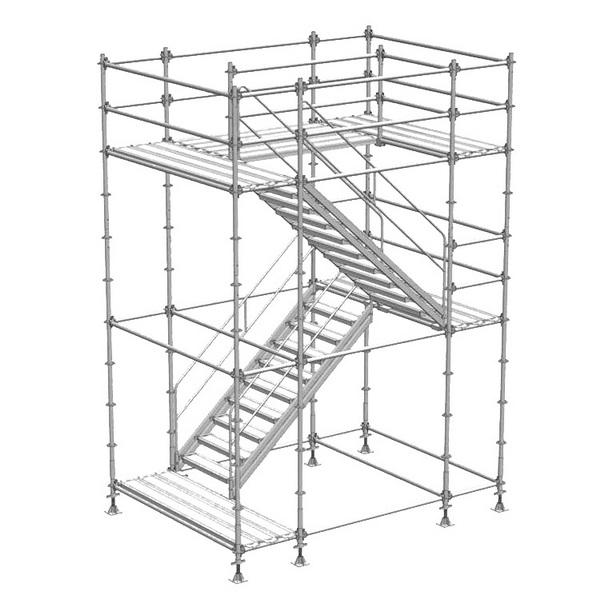
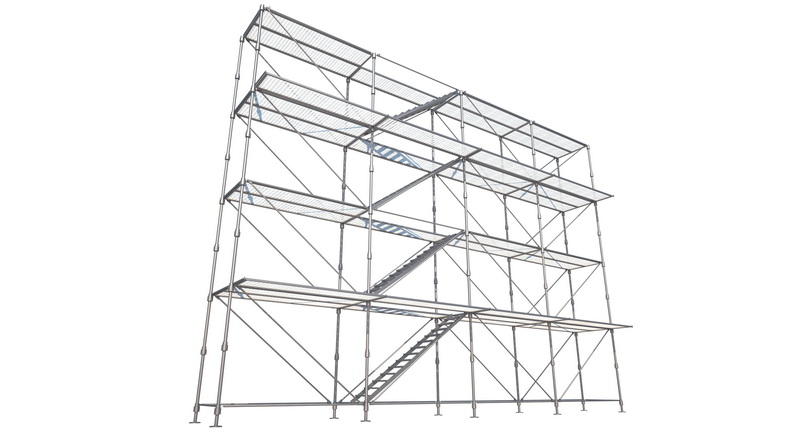
Ringlock scaffolding is a modular system used worldwide for its flexibility, strength, and rapid assembly. Stairs are a critical component, providing safe vertical access for workers and materials. The stair towers can be integrated into the main scaffolding structure or used as independent access towers.
Standard Ringlock Scaffolding Stair Dimensions
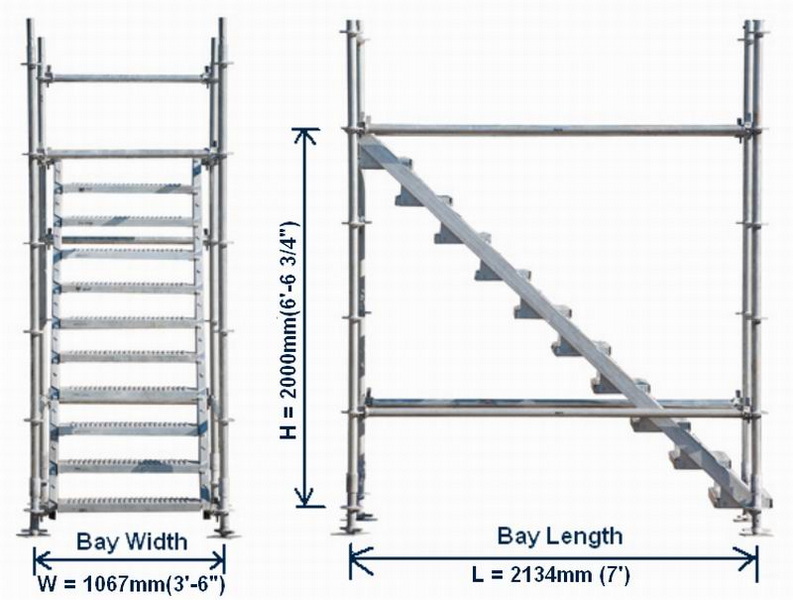
Most manufacturers offer a range of standard dimensions for ringlock scaffolding stairs, designed to fit common bay sizes and meet regulatory requirements. Typical measurements include:
| Component | Standard Dimension Example | Notes |
| Bay Length | 2.07m, 2.57m, 3.07m | Matches common scaffold module sizes |
| Bay Width | 1.03m, 1.40m | Extra wide options for two-way traffic |
| Stair Height | 2.0m per lift, up to 20m+ | Modular stacking for desired tower height |
| Tread Width | 813mm, 1067mm | Accommodates single or double file |
| Riser Height | 200mm (typical) | Comfortable and safe step height |
| Tread Depth | 275mm | Standard for safe footing |
While standard sizes suit many projects, customization is often necessary for:
- Irregular site layouts: Fitting stairs into tight or uniquely shaped spaces.
- Specific access needs: Accommodating equipment, high traffic, or special tasks.
- Regulatory compliance: Meeting local codes that differ from international standards.
- Safety optimization: Adjusting dimensions for safer access based on project risk assessments.
- Integration with other systems: Ensuring compatibility with existing structures or non-standard scaffold modules.
1. Custom Bay Sizes
Manufacturers can produce stair towers to fit non-standard bay lengths and widths, such as 1.5m x 3.0m or other bespoke dimensions. This allows stair towers to integrate seamlessly with unique scaffold layouts.
2. Adjustable Stair Stringers and Treads
- Some systems offer adjustable stringers and treads, allowing on-site modification of step height, width, or depth to suit project requirements.
- Customization can extend to material (steel, aluminum) and surface treatments (hot-dip galvanized, powder-coated, painted) for durability and visual integration.
4. Platform and Landing Sizes
Landings can be customized for larger rest areas, equipment staging, or to meet code requirements for maximum stair run without a break.
5. Modular and Pre-Configured Packages
Suppliers can pre-configure stair towers to a project's exact height, footprint, and access needs, including multi-level towers with custom platform spacing.
Key Factors in Customizing Ringlock Scaffolding Stair Dimensions
1. Project Requirements
- Site measurements: Accurate site surveys ensure stairs will fit and function as intended.
- Traffic volume: Wider stairs may be needed for busy sites or two-way traffic.
- Load capacity: Custom stairs must be engineered for expected loads, including workers and materials.
2. Safety and Ergonomics
- Step riser and tread: Both must fall within safe ergonomic ranges (typically 150–200mm riser, 250–300mm tread).
- Guardrails and toeboards: Must be included and properly dimensioned for all custom stairs.
- Landing intervals: Long flights require intermediate landings for rest and safety.
3. Compliance with Standards
- EN12810, ANSI A10.8, OSHA: Custom stairs must comply with relevant local and international standards.
- Documentation: Always request engineering drawings and test certificates for custom components.
4. Supplier Capabilities
- Experience: Choose suppliers with a track record in custom ringlock stair solutions.
- Quality control: Ensure all custom parts are manufactured to strict tolerances and inspected before delivery.
Customizing ringlock scaffolding stair dimensions must never compromise safety. Key considerations include:
- Structural integrity: Custom stairs must maintain or exceed the strength of standard components.
- Stability: Proper bracing, tie-ins, and base support are essential, especially for tall or narrow towers.
- Safe access: Entrances and exits should be clear, and stairs must not be obstructed by scaffold components or materials.
- Routine inspection: Custom stairs require the same rigorous inspection as standard systems.
While the assembly process is similar to standard systems, custom stair towers may require extra care in layout and verification. A typical process includes:
5. Site Preparation
- Ensure a flat, stable base. Use sole plates or base jacks as needed.
6. Base Assembly
- Place adjustable screw jacks and base collars, ensuring level alignment.
7. Erect Standards and Ledgers
- Assemble vertical posts and horizontal ledgers to create the stair tower frame.
8. Install Custom Stringers and Treads
- Fit custom stringers into the rosettes at each platform level. Secure stair treads between stringers, ensuring proper fit and alignment.
- Install landings at required intervals. Fit double guardrails and toeboards for fall protection.
9. Tie-Ins and Final Checks
- Secure the stair tower to adjacent scaffolding or structures at specified intervals (typically every 4m vertically for towers above 4m).
- Inspect all connections and components before use.
Case Studies: Custom Ringlock Stair Solutions
Case Study 1: Urban High-Rise Access
A contractor needed stair towers to fit a narrow alley between two buildings. The supplier provided a custom 1.2m x 2.5m stair tower, with reduced width but standard step height and depth. This allowed safe, code-compliant access in a tight space.
Case Study 2: Bridge Maintenance
For a bridge with uneven terrain, custom stair stringers were fabricated to accommodate variable base heights, ensuring each stair flight was level and safe.
Case Study 3: Event Staging
A large outdoor event required extra-wide stairs (1.5m tread width) for high-traffic access. Modular landings were also customized for equipment staging.
Customizing ringlock scaffolding stair dimensions typically incurs higher costs than using standard components. Factors affecting cost include:
- Design and engineering fees: Custom stairs require detailed drawings and calculations.
- Manufacturing: Non-standard parts may have higher production costs due to smaller batch sizes or specialized fabrication.
- Lead time: Custom orders may take longer to deliver, impacting project schedules.
- Logistics: Custom stairs may require special handling or shipping arrangements.
Maintenance and Inspection of Custom Stairs
Custom stairs require the same, if not more, attention to maintenance and inspection as standard systems:
- Routine checks: Inspect for deformation, corrosion, loose connections, and wear on treads or landings.
- Documentation: Keep records of inspections, repairs, and replacements.
- Training: Ensure workers are trained to identify issues specific to custom components.
Advancements in technology have made customizing ringlock scaffolding stair dimensions easier and more precise:
- 3D modeling and BIM integration: Allows for accurate planning and visualization of custom stair towers within complex site layouts.
- Laser measurement tools: Ensure site measurements are precise, reducing the risk of errors in custom fabrication.
- Modular design software: Enables suppliers to quickly generate custom configurations and engineering drawings.
Conclusion
Can you customize ringlock scaffolding stair dimensions? Absolutely. Today's leading scaffolding manufacturers and suppliers offer extensive customization options for stair towers, including bay size, stair width, riser height, tread depth, material, and surface finish. Customization ensures that your stair towers fit unique site conditions, comply with local codes, and optimize safety and efficiency.
However, customization must always be guided by engineering best practices and safety standards. Work with experienced suppliers, insist on documentation and certification, and conduct thorough site planning and inspection. By doing so, you can create safe, practical, and code-compliant access solutions for any construction or industrial project.
FAQ
1. Can ringlock scaffolding stair dimensions be customized for any bay size?
Yes, most reputable manufacturers can produce stair towers to fit a wide range of bay sizes, including non-standard dimensions. Always provide precise measurements and project requirements when ordering.
2. What is the typical riser height and tread depth for ringlock scaffolding stairs?
Standard riser heights are around 200mm, and tread depths are typically 275mm, but these can be adjusted within safe ergonomic and code limits to suit project needs.
3. How do I ensure my custom stair tower is safe and compliant?
Work with suppliers who provide engineering drawings and test certificates. Verify compliance with standards such as EN12810, ANSI A10.8, or OSHA. Inspect all custom components before use.
4. Are there limitations to customizing ringlock scaffolding stair dimensions?
While most dimensions can be customized, changes must not compromise structural integrity or safety. Extremely narrow or steep stairs may not be allowed by code. Always consult with engineers and regulatory authorities.
5. Can I retrofit custom stairs into an existing ringlock scaffold system?
Yes, custom stair modules can often be integrated into existing ringlock scaffolding, provided they are engineered for compatibility and safety. Consult your supplier for guidance and installation instructions.