Content Menu
● What Is BRC Clamp Scaffolding?
● Core Safety Features of BRC Clamps
>> 1. Anti-Slip Design
>> 2. Corrosion Resistance
>> 3. Compatibility
>> 4. Material Integrity
● How BRC Clamps Prevent Common Hazards
● Step-by-Step Installation Best Practices
>> Step 1: Inspect Components
>> Step 2: Position Boards
>> Step 3: Attach BRC Clamps
>> Step 4: Install Toe Boards
● Compliance with Safety Standards
● Case Studies: BRC Clamps in Action
>> Case Study 1: High-Rise Facade Repair (London, UK)
>> Case Study 2: Bridge Maintenance (Sydney, Australia)
>> Case Study 3: Petrochemical Plant Overhaul (Texas, USA)
● Maintenance and Inspection Protocols
>> Daily Checks:
>> Monthly Maintenance:
>> Annual Overhaul:
● Comparison with Other Scaffold Clamps
● Advanced Safety Technologies Integrated with BRC Systems
>> Smart Clamps with IoT Sensors
>> RFID Tracking
● Common Mistakes and Risk Mitigation
● Environmental and Economic Benefits
>> Environmental Impact
>> Cost Savings
● Conclusion
● FAQ
>> 1. Are BRC clamps compatible with aluminum scaffolding tubes?
>> 2. How often should BRC clamps be replaced?
>> 3. Can BRC clamps be used on uneven surfaces?
>> 4. Do BRC clamps require specialist training for installation?
>> 5. Are there lightweight BRC clamps for temporary setups?
BRC (Board Retaining Coupler) clamp scaffolding has become a cornerstone of modern construction safety, offering robust solutions to prevent accidents, stabilize platforms, and ensure regulatory compliance. These specialized clamps secure scaffolding boards and toe boards to structural tubes, creating reliable working surfaces at height. This article explores how BRC clamp scaffolding enhances safety while meeting the demands of complex projects, supported by technical insights, visual guides, and real-world applications.
What Is BRC Clamp Scaffolding?
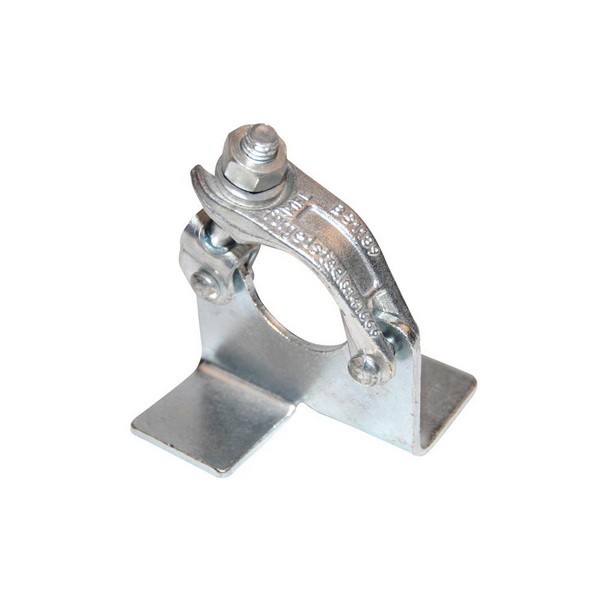
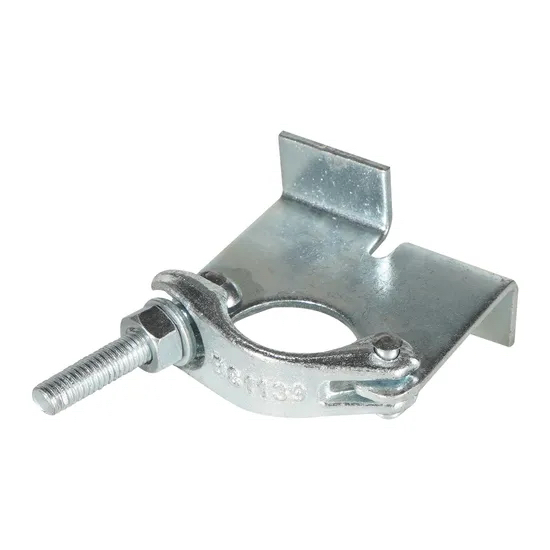
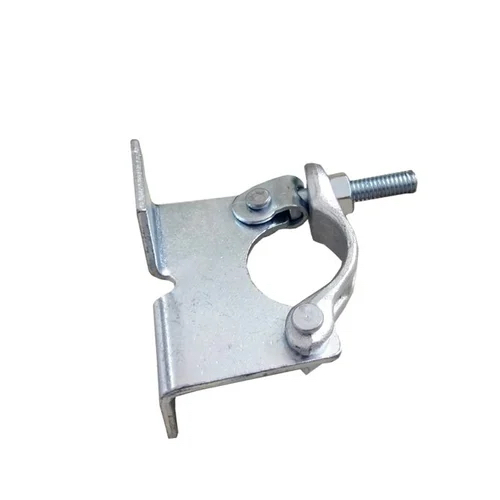
BRC clamp scaffolding refers to a system where board retaining couplers securely fasten scaffolding planks (wooden or metal) and toe boards to vertical or horizontal scaffold tubes. These clamps are engineered to prevent boards from slipping or shifting, ensuring a stable platform for workers.
Key Components:
- BRC Clamps: Drop-forged steel or galvanized couplers with adjustable jaws.
- Scaffold Tubes: Typically 48.3mm diameter steel or aluminum tubes.
- Boards: LVL (laminated veneer lumber) or steel planks (38–50mm thick).
- Toe Boards: Vertical barriers to prevent tools/materials from falling.
Core Safety Features of BRC Clamps
1. Anti-Slip Design
- Interlocking Jaws: BRC clamps feature serrated grips that bite into boards and tubes, resisting lateral movement even under dynamic loads.
- Load Capacity: Rated for up to 240 kg per clamp (medium-duty) .
2. Corrosion Resistance
- Hot-Dip Galvanizing: Protects against rust in outdoor environments, extending service life to 10–15 years .
3. Compatibility
- Fits standard 48.3mm tubes and boards up to 63mm thick .
4. Material Integrity
- Drop-Forged Construction: Ensures uniform strength and reduces the risk of micro-fractures.
- High-Tensile Bolts: Class 8.8 bolts withstand extreme stress without shearing.
How BRC Clamps Prevent Common Hazards
| Hazard | BRC Clamp Solution |
| Platform Collapse | Prevents board displacement, even when overloaded or exposed to vibrations. |
| Falling Objects | Secures toe boards to contain tools/materials, reducing drop risks. |
| Worker Slips/Trips | Eliminates gaps between boards and tubes for even surfaces. |
| Structural Failure | Distributes weight evenly across multiple clamps and tubes. |
Step-by-Step Installation Best Practices
Step 1: Inspect Components
- Check clamps for cracks, rust, or deformation.
- Ensure boards are undamaged and within thickness tolerances .
Step 2: Position Boards
- Align boards parallel to tubes, leaving no gaps exceeding 1cm.
Step 3: Attach BRC Clamps
1. Place clamp jaws over the board and tube.
2. Tighten bolts to 45 ft.-lbs of torque using a calibrated wrench .
3. Verify clamp alignment and board stability.
Step 4: Install Toe Boards
- Secure toe boards vertically using additional BRC clamps every 1.5 meters.
Compliance with Safety Standards
BRC clamps must adhere to:
- EN 74: European standard for coupler load capacity and slip resistance .
- OSHA 1926.451: U.S. regulations for scaffold stability and fall protection .
- BS 1139: British specifications for materials and manufacturing .
Case Studies: BRC Clamps in Action
Case Study 1: High-Rise Facade Repair (London, UK)
- Challenge: Frequent board shifts on a 25-story scaffold exposed workers to fall risks.
- Solution: BRC clamps were installed at 1m intervals, eliminating movement.
- Result: Zero platform-related incidents over 6 months.
Case Study 2: Bridge Maintenance (Sydney, Australia)
- Challenge: Strong winds dislodged toe boards, risking debris falls.
- Solution: Heavy-duty BRC clamps with galvanized coatings were applied.
- Result: Toe boards remained secure despite 80 km/h winds.
Case Study 3: Petrochemical Plant Overhaul (Texas, USA)
- Challenge: Corrosive chemicals degraded traditional clamps.
- Solution: Stainless steel BRC clamps were deployed.
- Result: Scaffolding remained intact for 12 months with no replacements.
Maintenance and Inspection Protocols
Daily Checks:
- Tighten loose clamps (re-torque to 45 ft.-lbs).
- Replace corroded or cracked clamps immediately.
Monthly Maintenance:
- Clean clamps with a wire brush to remove dirt/debris.
- Apply anti-corrosion spray on threads.
Annual Overhaul:
- Test 10% of clamps for load capacity (≥240 kg).
- Re-galvanize worn clamps if feasible.
Checklist:
- Verify jaw alignment.
- Inspect bolt threads for wear.
- Test clamp grip strength with a torque tester.
Comparison with Other Scaffold Clamps
| Clamp Type | Best For | Limitations |
| BRC Clamps | Securing boards/toe boards | Requires precise board thickness. |
| Swivel Clamps | Angled connections | Less effective for horizontal loads. |
| Beam Clamps | Steel I-beam attachments | Not designed for wooden boards. |
Advanced Safety Technologies Integrated with BRC Systems
Smart Clamps with IoT Sensors
- Load Monitoring: Sensors alert supervisors if clamps exceed safe load limits.
- Vibration Detection: Alerts for instability due to wind or machinery.
RFID Tracking
- Asset Management: Track clamp usage and maintenance history via embedded RFID tags.
Common Mistakes and Risk Mitigation
| Mistake | Risk | Solution |
| Under-tightened clamps | Board slippage | Use torque wrenches; re-check hourly. |
| Mixing clamp types | Incompatible grip strength | Standardize to BRC clamps. |
| Ignoring corrosion | Sudden clamp failure | Replace corroded clamps immediately. |
Environmental and Economic Benefits
Environmental Impact
- Recyclability: Steel BRC clamps are 100% recyclable.
- Reduced Waste: Long lifespan minimizes scaffold replacement frequency.
Cost Savings
- Labor Efficiency: Faster assembly reduces man-hours.
- Lower Maintenance: Galvanized clamps require no painting or rust treatment.
Conclusion
BRC clamp scaffolding is a non-negotiable safety asset for modern construction. Its anti-slip design, corrosion resistance, and compliance with global standards make it indispensable for preventing platform collapses, falls, and equipment drops. By integrating advanced technologies like IoT sensors and adhering to rigorous maintenance protocols, BRC systems elevate safety while delivering long-term economic and environmental benefits.
FAQ
1. Are BRC clamps compatible with aluminum scaffolding tubes?
Yes, BRC clamps are designed for standard 48.3mm tubes, whether steel or aluminum.
2. How often should BRC clamps be replaced?
With proper maintenance, BRC clamps last 10–15 years. Replace immediately if cracks or severe corrosion are detected.
3. Can BRC clamps be used on uneven surfaces?
Yes, but always pair them with adjustable base plates to ensure stability.
4. Do BRC clamps require specialist training for installation?
Workers should receive training on torque settings and alignment, but no advanced certification is needed.
5. Are there lightweight BRC clamps for temporary setups?
Yes, aluminum BRC clamps are available for projects requiring frequent repositioning.