Content Menu
● Introduction to A-Frame Scaffolding
● Benefits of A-Frame Scaffolding
● Materials Needed
● Step-by-Step Construction Guide
>> Step 1: Design and Planning
>> Step 2: Cutting the Lumber
>> Step 3: Assembling the Legs
>> Step 4: Adding Crossbars and Spacers
>> Step 5: Connecting the Ladders
>> Step 6: Adding the Platform
>> Step 7: Final Assembly and Testing
● Safety Considerations
● Applications of A-Frame Scaffolding
● Adjusting Dimensions for Height
● Customizing Your A-Frame Scaffolding
● Maintenance and Storage
● Conclusion
● FAQ
>> 1. What Materials Are Needed to Build an A-Frame Scaffolding?
>> 2. How Do I Ensure the A-Frame Scaffolding Is Stable?
>> 3. Can I Use A-Frame Scaffolding for Stucco Work?
>> 4. How Do I Adjust the Dimensions for a Higher Platform?
>> 5. What Safety Precautions Should I Take When Using A-Frame Scaffolding?
● Citations:
Building a sturdy A-frame homemade scaffolding is a cost-effective and versatile solution for various DIY projects, such as painting, stucco work, or general home repairs. This guide will walk you through the process of constructing an A-frame scaffolding using readily available materials like framing lumber.
Introduction to A-Frame Scaffolding
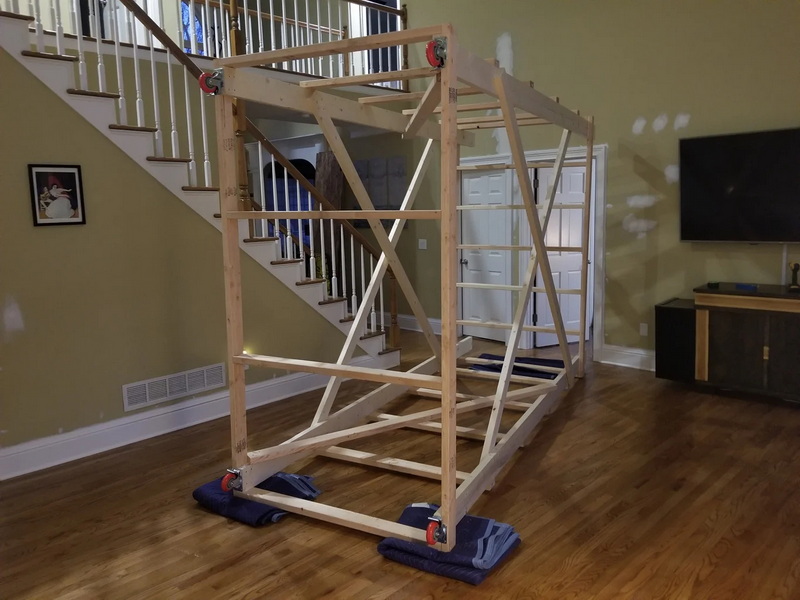
A-frame scaffolding is essentially a pair of ladders connected at the top with carriage bolts, creating a stable and foldable structure. This design allows for easy setup and teardown, making it ideal for projects that require temporary access to elevated areas.
Benefits of A-Frame Scaffolding
- Cost-Effective: Building your own A-frame scaffolding can save you money compared to renting traditional scaffolding.
- Versatile: A-frames can be used as sawhorses, temporary supports, or even as a base for other scaffolding systems.
- Portable: They are lightweight and foldable, making them easy to transport and store.
Materials Needed
To build an A-frame scaffolding, you will need the following materials:
- 2x4 Lumber: For the legs and crossbars.
- Carriage Bolts: To connect the two ladders at the top.
- Washers: To improve the hinge action.
- Plywood or Oriented Strand Board (OSB): For the platform.
- Screws and Nails: For assembling the structure.
- Safety Harness: For personal safety while working at heights.
- Leveling Tools: To ensure the scaffolding is perfectly level.
Step-by-Step Construction Guide
Step 1: Design and Planning
Before starting, ensure your design meets your project's requirements. Consider the height and width needed for your scaffolding. For safety, the base width should be at least half the height of the A-frame.
Example:
If your A-frame is 6 feet tall, the base should be at least 3 feet wide.
Step 2: Cutting the Lumber
Cut the 2x4 lumber into the required lengths for the legs and crossbars. Use a miter saw or a circular saw for precise cuts.
Step 3: Assembling the Legs
Lay out the legs on a flat surface, such as a table or plywood sheet, to ensure consistency. Drill holes for the carriage bolts at the top of each leg. Align the legs using a chalk line to ensure they are identical.
Step 4: Adding Crossbars and Spacers
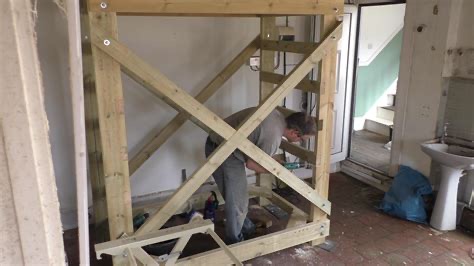
Attach crossbars and spacers to the legs using screws. This will provide additional stability to the structure. Use glue and nails for quick assembly, then secure with screws for durability.
Step 5: Connecting the Ladders
Use carriage bolts to connect the two ladders at the top. Ensure a washer is placed between the legs to facilitate smooth opening and closing.
Step 6: Adding the Platform
Cut a piece of plywood or OSB to fit on top of the A-frame. Secure it with screws to create a stable working platform.
Step 7: Final Assembly and Testing
Assemble all parts and test the scaffolding on a flat surface. Ensure it is stable and level before use.
Safety Considerations
When using your A-frame scaffolding, always ensure:
- The structure is level and stable.
- The platform is securely attached.
- You are wearing appropriate safety gear, such as a harness.
- The area around the scaffolding is clear of obstacles.
Applications of A-Frame Scaffolding
A-frame scaffolding is versatile and can be used in various projects:
- Stucco Work: Ideal for applying stucco to walls.
- Painting: Provides easy access to high areas for painting.
- General Repairs: Useful for tasks like changing light fixtures or repairing gutters.
- Roofing: Can be used for minor roofing repairs or inspections.
Adjusting Dimensions for Height
To safely place the platform 10 feet off the ground, you would need to adjust the dimensions accordingly. Ensure the base is wide enough to maintain stability.
Example:
For a 10-foot height, the base should be at least 5 feet wide.
Customizing Your A-Frame Scaffolding
You can customize your scaffolding to fit specific needs:
- Adding Wheels: For easier mobility around the work site.
- Extending the Platform: For more working space.
- Using Different Materials: Such as aluminum for lighter weight.
Maintenance and Storage
Regularly inspect your scaffolding for damage and store it in a dry area when not in use. This will extend its lifespan and ensure safety.
Conclusion
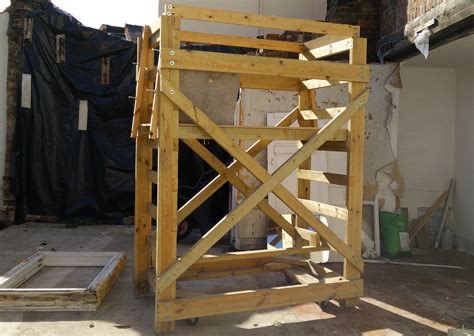
Building an A-frame homemade scaffolding is a practical and cost-effective solution for DIY projects. By following these steps and considering safety guidelines, you can create a sturdy and reliable structure for your needs.
FAQ
1. What Materials Are Needed to Build an A-Frame Scaffolding?
To build an A-frame scaffolding, you will need 2x4 lumber, carriage bolts, washers, plywood or OSB for the platform, and screws and nails for assembly.
2. How Do I Ensure the A-Frame Scaffolding Is Stable?
Ensure the base is wide enough (at least half the height of the scaffolding), and the structure is level. Use crossbars and spacers to add stability.
3. Can I Use A-Frame Scaffolding for Stucco Work?
Yes, A-frame scaffolding is ideal for stucco work. It provides stable access to walls, making it easier to apply stucco.
4. How Do I Adjust the Dimensions for a Higher Platform?
To place the platform higher, increase the length of the legs proportionally while ensuring the base remains wide enough to maintain stability.
5. What Safety Precautions Should I Take When Using A-Frame Scaffolding?
Always ensure the scaffolding is level, wear safety gear like a harness, and secure the platform properly before use.
Citations:
[1] https://www.finehomebuilding.com/2004/01/01/simple-homemade-scaffolding
[2] https://www.youtube.com/watch?v=_HTs2LL8664
[3] https://www.bbc.com/learningenglish/chinese/features/q-and-a/ep-200318
[4] https://scaffoldtype.com/how-to-make-a-scaffold-step-by-step-guide-for-diy-projects/
[5] https://www.gettyimages.in/videos/scaffolding-frames
[6] https://www.163.com/dy/article/G4QTSTT70532B1LX.html
[7] https://dss.net/frame-scaffolding-system/
[8] https://www.istockphoto.com/photos/frame-scaffolding
[9] https://www.instructables.com/Wooden-Scaffolding-Tower/