Content Menu
● Introduction to Cuplock Scaffolding
● Key Components of Cuplock Scaffolding
● Standard Material for Cuplock Scaffolding
● Importance of Material Quality
● Identifying High-Quality Cuplock Scaffolding Parts
● Additional Considerations
>> Safety Features
>> Maintenance and Inspection
>> Environmental Considerations
● Comparison with Other Scaffolding Systems
● Conclusion
● FAQ
>> 1. What is the typical diameter and thickness of cuplock scaffolding standards?
>> 2. How does the cuplock locking mechanism work?
>> 3. What are the common applications of cuplock scaffolding?
>> 4. What is the significance of hot-dip galvanization in cuplock scaffolding?
>> 5. How does cuplock scaffolding compare to traditional scaffolding systems?
● Citations:
Cuplock scaffolding is a widely used modular scaffolding system in the construction industry, known for its efficiency, safety, and versatility. Identifying high-quality cuplock scaffolding parts is crucial to ensure the stability and safety of the structure. In this article, we will explore the standard materials used for cuplock scaffolding and provide guidance on how to identify high-quality components.
Introduction to Cuplock Scaffolding
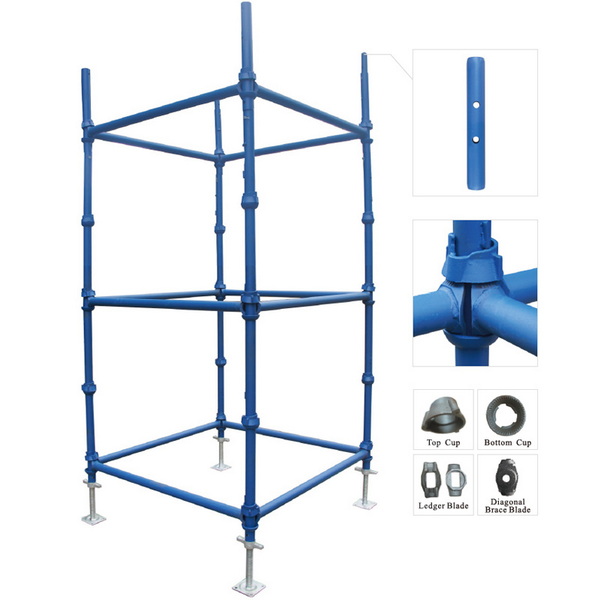
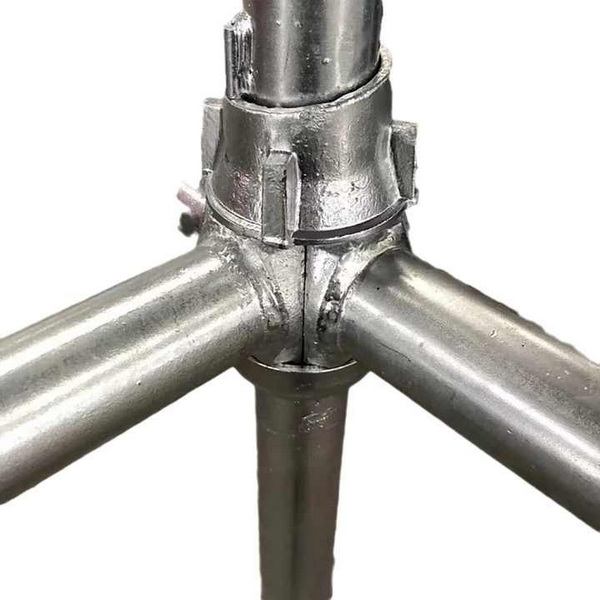
Cuplock scaffolding is characterized by its unique locking mechanism, which allows for quick and secure assembly without the need for nuts and bolts. The system consists of vertical standards with fixed lower cups and movable top cups that rotate to lock onto horizontal ledgers and transoms. This design makes it easier to set up and dismantle scaffolding structures, saving time and labor costs.
Key Components of Cuplock Scaffolding
1. Vertical Standards: These are the vertical parts of the scaffolding system, made from high-strength steel tubes with a diameter of 48.3 mm and a thickness of 3.2 mm or 4.0 mm. The standards are available in various lengths to accommodate different project requirements.
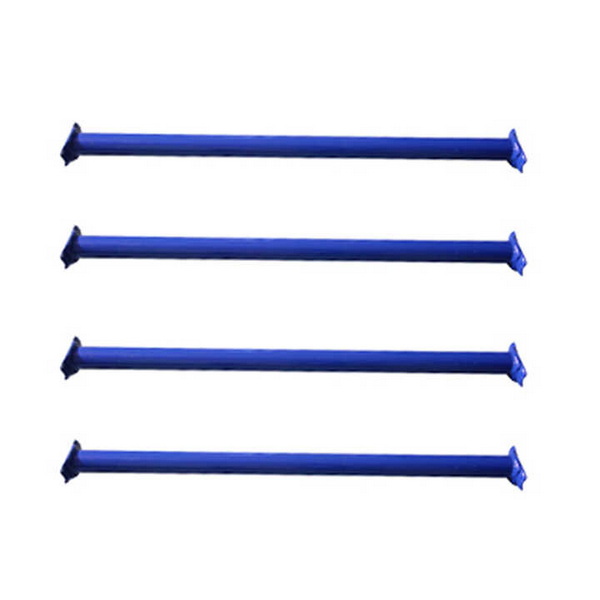
2. Ledgers and Transoms: These are the horizontal components that connect to the vertical standards using the cuplock mechanism. They are also made from steel tubes with the same diameter and thickness as the verticals. Ledgers provide the main horizontal support, while transoms are used to support the decking.
3. Diagonal Braces: These provide additional stability to the scaffolding structure and are typically made from thinner steel tubes. They are essential for preventing sway and ensuring the structure remains stable under load.
4. Base and Head Plates: These are used to stabilize the base and top of the scaffolding structure. Base plates distribute the weight evenly on the ground, while head plates secure the top of the scaffolding to prevent it from shifting.
Standard Material for Cuplock Scaffolding
The standard material for cuplock scaffolding parts is high-strength steel, typically S355 or Q345, which offers a yield strength of more than 235 N/mm². The tubes are usually hot-dip galvanized to provide a durable and corrosion-resistant finish. This coating not only protects the steel from rust but also extends the lifespan of the scaffolding components.
Importance of Material Quality
Using high-quality materials ensures that the scaffolding can support heavy loads safely and withstand harsh environmental conditions. The galvanized finish not only protects the steel from corrosion but also enhances the aesthetic appeal of the scaffolding structure.
Identifying High-Quality Cuplock Scaffolding Parts
To identify high-quality cuplock scaffolding parts, consider the following factors:
1. Material Strength: Ensure that the components are made from high-strength steel grades like S355 or Q345. This ensures that the scaffolding can support heavy loads without compromising safety.
2. Surface Treatment: Look for components with a hot-dip galvanized finish for durability and corrosion resistance. A well-coated surface will have a uniform, smooth appearance.
3. Manufacturing Standards: Ensure that the components comply with international standards such as EN 12810. Compliance with these standards ensures that the scaffolding meets safety and performance requirements.
4. Assembly Ease: High-quality components should fit together smoothly and securely using the cuplock mechanism. If the parts are difficult to assemble, it may indicate poor manufacturing quality.
5. Certifications: Check for certifications like ISO 9001 and CE to ensure the manufacturer adheres to quality management standards. These certifications indicate that the manufacturer follows rigorous quality control processes.
Additional Considerations
Safety Features
- Guardrails and Toeboards: Ensure that the scaffolding includes guardrails and toeboards to prevent falls and injuries. These components should be securely attached to the structure.
- Ladder Access: Use ladder access systems that are securely attached to the scaffolding. This ensures safe entry and exit from the working platform.
Maintenance and Inspection
Regular maintenance and inspection are crucial to extend the lifespan of cuplock scaffolding parts. Check for signs of wear, corrosion, or damage before each use. Components showing significant wear should be replaced promptly.
Environmental Considerations
Cuplock scaffolding can be used in various environmental conditions, from urban construction sites to coastal areas. However, in harsh environments, additional protective measures may be necessary to prevent corrosion.
Comparison with Other Scaffolding Systems
Cuplock scaffolding offers several advantages over traditional scaffolding systems:
- Ease of Assembly: Cuplock scaffolding is generally faster to assemble and disassemble compared to traditional systems.
- Cost-Effectiveness: While the initial cost may be higher, cuplock scaffolding is more cost-effective in the long term due to its durability and reusability.
- Versatility: The modular design allows for easy adaptation to different project requirements.
Conclusion
Identifying high-quality cuplock scaffolding parts is essential for ensuring the safety and efficiency of construction projects. By understanding the standard materials used and focusing on factors like material strength, surface treatment, and manufacturing standards, you can select components that meet your needs. Always opt for components from reputable manufacturers that adhere to international quality standards.
FAQ
1. What is the typical diameter and thickness of cuplock scaffolding standards?
Cuplock scaffolding standards typically have a diameter of 48.3 mm and a thickness of 3.2 mm or 4.0 mm.
2. How does the cuplock locking mechanism work?
The cuplock mechanism involves fixed lower cups and movable top cups that rotate to lock onto horizontal ledgers and transoms, allowing for quick and secure assembly.
3. What are the common applications of cuplock scaffolding?
Cuplock scaffolding is used in building and construction, industrial maintenance, event staging, formwork support, and more due to its versatility.
4. What is the significance of hot-dip galvanization in cuplock scaffolding?
Hot-dip galvanization provides a durable and corrosion-resistant finish, extending the lifespan of the scaffolding components and ensuring they remain safe and functional over time.
5. How does cuplock scaffolding compare to traditional scaffolding systems?
Cuplock scaffolding is generally faster to assemble and disassemble, lighter, and more cost-effective in the long term compared to traditional systems.
Citations:
[1] https://www.wm-scaffold.com/cuplock-scaffolding-standard.html
[2] https://www.youtube.com/watch?v=ojYR6MRAoEI
[3] https://www.youtube.com/watch?v=wBKilb9ALEY
[4] https://primesteeltech.co.in/what-is-cuplock-scaffolding.html
[5] https://www.alibaba.com/product-detail/HDG-Scaffold-Materials-Standard-for-Cuplock_60142891269.html
[6] https://www.wm-scaffold.com/cup-lock-scaffold.html
[7] https://www.youtube.com/watch?v=2FbwLFj1aFY
[8] https://www.youtube.com/watch?v=QSKy3RkmKs8
[9] https://rapid-scafform.com/cuplock-scaffold/
[10] https://www.durascf.com/product/cuplock-scaffolding-standard/
[11] https://www.youtube.com/watch?v=-ScFRrK-FKo
[12] https://www.youtube.com/watch?v=rdJ26vZ4CL4
[13] https://aaitscaffold.com/blog/cuplock-scaffolding-types-uses-benefits-and-safety/
[14] https://www.rscaffolding.com/product-detail/cuplock-scaffolding-standards/