Content Menu
● Introduction to Little Giant Ladders
● Components of Little Giant Ladders
● Converting Little Giant Ladder into Scaffolding
● Safety Considerations
● Best Practices for Scaffolding Use
● Design and Setup of Scaffolding
● Maintenance and Inspection
● Training and Certification
● Regulations and Standards
● Environmental Considerations
● Conclusion
● FAQ
>> 1. What are the key components needed to convert a Little Giant Ladder into scaffolding?
>> 2. How do you ensure stability when setting up scaffolding?
>> 3. What safety measures should be taken when using scaffolding?
>> 4. How often should scaffolding be inspected?
>> 5. What is the maximum load capacity for Little Giant scaffolding systems?
● Citations:
The Little Giant Ladder is a versatile tool that can be converted into a scaffolding system, providing a stable platform for working at heights. This conversion is particularly useful for tasks that require extensive time at elevated levels, such as painting, construction, or renovation projects. In this article, we will explore how to transform a Little Giant Ladder into scaffolding, highlighting the necessary steps, safety considerations, and best practices.
Introduction to Little Giant Ladders
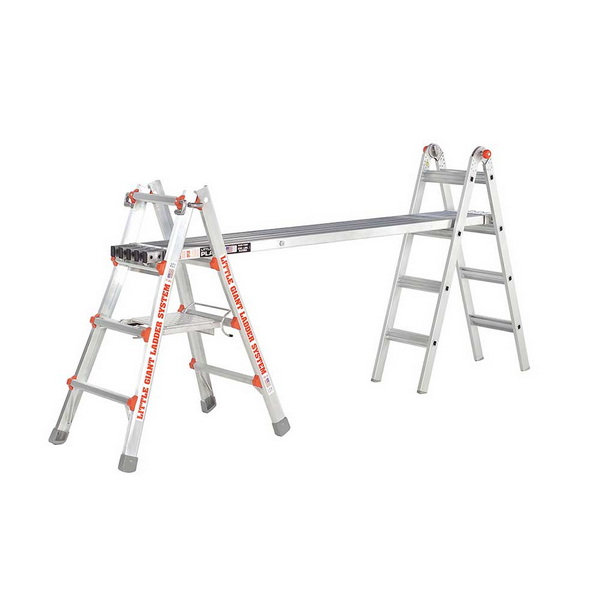
Little Giant Ladders are renowned for their multi-purpose design, allowing users to configure them into various positions, including scaffolding. These ladders consist of inner and outer assemblies that can be adjusted to form trestles, which support planks to create a stable work platform.
Components of Little Giant Ladders
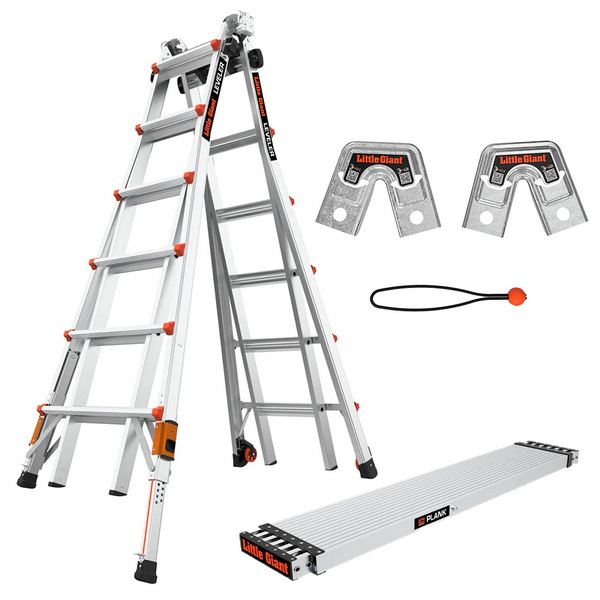
- Inner and Outer Assemblies: These are the primary components of the ladder. The outer assemblies telescope over the inner section, allowing for height adjustments and conversion into scaffolding.
- Trestle Brackets: These are used to convert the ladder into secure trestles that support scaffolding planks.
- Work Plank: A wide, slip-resistant platform that provides a comfortable working surface.
Converting Little Giant Ladder into Scaffolding
Converting a Little Giant Ladder into scaffolding involves several steps:
1. Unlock the Hinges: Begin by unlocking the Triple-Locking hinges on the ladder. This allows you to separate the inner and outer assemblies.
2. Separate the Assemblies: Pull the inner ladder assembly completely out of the outer sections. Open the inner assembly to form the first trestle.
3. Configure the Outer Assemblies: Turn one outer assembly around so both are facing the same direction. Lock them together using the lock tabs on the nearest outer assembly.
4. Install Trestle Brackets: Fit the Trestle Brackets inside the top of the ladder with the flange facing out. Lock the ladder into place to secure the brackets.
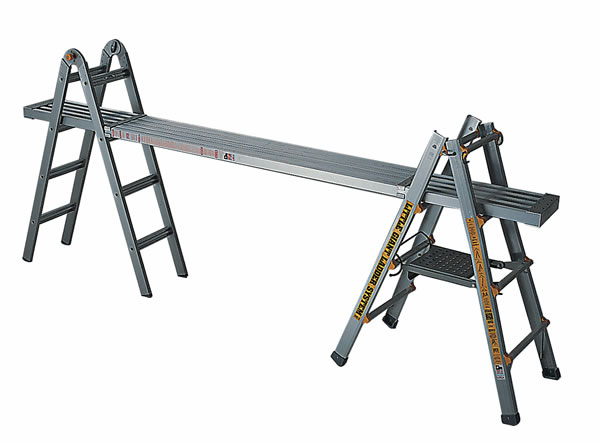
5. Attach the Work Plank: Place the work plank across the trestles. Ensure it is securely locked in place to prevent movement.
Safety Considerations
Safety is paramount when using scaffolding:
- Stability: Ensure the scaffolding is set up on a level surface and securely tied off to prevent tipping.
- Fall Protection: Use personal fall arrest systems (PFAS) when working at heights.
- Load Capacity: Do not exceed the load capacity of the scaffolding.
- Regular Inspections: Conduct daily inspections of the scaffolding and ladder components for signs of wear or damage.
Best Practices for Scaffolding Use
To maximize efficiency and safety:
- Proper Training: Ensure all workers are trained in scaffolding setup and use.
- Regular Maintenance: Regularly inspect and maintain scaffolding components.
- Secure Planks: Ensure planks are securely locked into place to prevent movement.
Design and Setup of Scaffolding
Scaffolding design and setup are critical for safety and efficiency:
- Platform Width: Ensure the work platform is wide enough to provide stable footing.
- Guardrails: Use guardrails to prevent falls from the scaffolding.
- Tie-Offs: Securely tie off the scaffolding to the building to prevent it from tipping over.
Maintenance and Inspection
Regular maintenance and inspection of scaffolding are essential:
- Daily Inspections: Conduct daily visual inspections for signs of wear or damage.
- Weekly Inspections: Perform more detailed inspections weekly to ensure structural integrity.
- Repair and Replacement: Address any issues promptly to prevent accidents.
Training and Certification
Proper training and certification are vital for workers using scaffolding:
- Training Programs: Implement comprehensive training programs covering safety procedures and equipment use.
- Certification: Ensure workers are certified in scaffolding erection and use.
Regulations and Standards
In many countries, there are strict regulations governing the use of scaffolding. For example, in the United States, OSHA (Occupational Safety and Health Administration) sets standards for scaffolding safety, including requirements for fall protection and load capacity. In Canada, employers must comply with the Canada Occupational Health and Safety Regulations (COHSR) and provincial regulations.
Environmental Considerations
When setting up scaffolding, consider the environmental impact:
- Weather Conditions: Avoid setting up scaffolding in adverse weather conditions such as strong winds or heavy rain.
- Surrounding Structures: Ensure scaffolding does not damage nearby structures or vegetation.
Conclusion
Converting a Little Giant Ladder into scaffolding is a practical way to create a stable work platform for tasks at heights. By following the steps outlined and adhering to safety guidelines, workers can ensure a safe and efficient working environment.
FAQ
1. What are the key components needed to convert a Little Giant Ladder into scaffolding?
The key components include the inner and outer ladder assemblies, trestle brackets, and a work plank. The trestle brackets are used to secure the planks in place.
2. How do you ensure stability when setting up scaffolding?
Ensure the scaffolding is set up on a level surface and securely tied off to prevent tipping. Regular inspections are also crucial to identify any potential stability issues.
3. What safety measures should be taken when using scaffolding?
Use personal fall arrest systems (PFAS), ensure the scaffolding is securely tied off, and conduct regular inspections to check for wear or damage.
4. How often should scaffolding be inspected?
Scaffolding should be inspected daily for visual signs of wear or damage and more thoroughly on a weekly basis to ensure structural integrity.
5. What is the maximum load capacity for Little Giant scaffolding systems?
The load capacity varies depending on the specific model, but typically, Little Giant scaffolding systems have a one-man, 250-pound rating.
Citations:
[1] https://www.youtube.com/watch?v=2OhricCX38o
[2] https://www.tbdavies.co.uk/pdfs/manuals/little-giant-xtreme-manual.pdf
[3] https://www.youtube.com/watch?v=hwPSjN7FIV8
[4] https://images.thdstatic.com/catalog/pdfImages/5d/5d27233a-d396-450a-abb5-195b5f67e013.pdf
[5] https://www.fireprotectiononline.co.uk/little-giant-work-plank
[6] https://www.littlegiantladders.com/blogs/blog/fall-protection
[7] https://www.littlegiantladders.com/products/ladder-plank
[8] https://cdn.littlegiantladders.com/documents/425/56428%20v4%2011.14%20manual,%20safety%20step.pdf