Content Menu
● Understanding Ladders and Ladder with Scaffolding
>> What is a Traditional Ladder?
>> What is a Ladder with Scaffolding?
● Comparing Ladder with Scaffolding and Traditional Ladder
>> Stability and Safety
>> Ease of Setup and Portability
>> Work Efficiency and Accessibility
>> Cost Considerations
● Practical Applications of Ladder with Scaffolding
>> Construction and Maintenance
>> DIY Projects
>> Painting and Decorating
>> Industrial Use and Large-Scale Projects
● Safety Considerations When Using Ladder with Scaffolding
● Conclusion
● FAQ
>> 1. What is the main safety advantage of a ladder with scaffolding over a traditional ladder?
>> 2. Can ladder scaffolding support multiple workers at once?
>> 3. Is ladder scaffolding difficult to set up?
>> 4. For what types of projects is ladder scaffolding most suitable?
>> 5. Are there specific safety rules to follow when using ladder scaffolding?
When it comes to working at heights, choosing the right equipment is crucial for safety, efficiency, and productivity. Two common options are traditional ladders and ladders combined with scaffolding, often referred to as ladder scaffolding. This article explores whether a ladder with scaffolding is better than a traditional ladder, examining their differences, benefits, drawbacks, and safety considerations. Throughout the article, we will use the term ladder with scaffolding frequently to highlight this hybrid solution.
Understanding Ladders and Ladder with Scaffolding
What is a Traditional Ladder?
A traditional ladder is a portable structure consisting of two vertical supports connected by horizontal rungs, allowing a person to climb up or down to reach elevated areas. Ladders come in various types such as step ladders, extension ladders, and platform ladders, and are typically made from materials like aluminum, fiberglass, or wood. They are lightweight, easy to transport, and ideal for short-duration tasks at moderate heights.
What is a Ladder with Scaffolding?
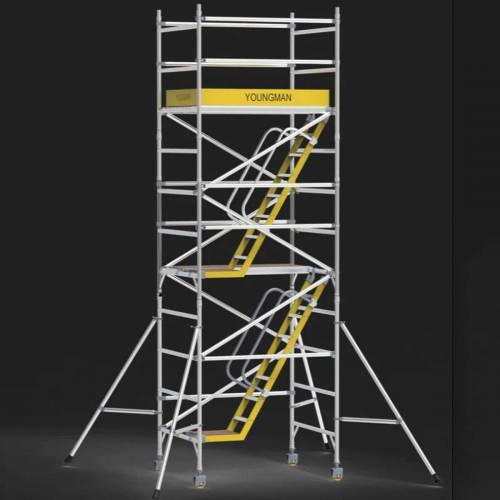
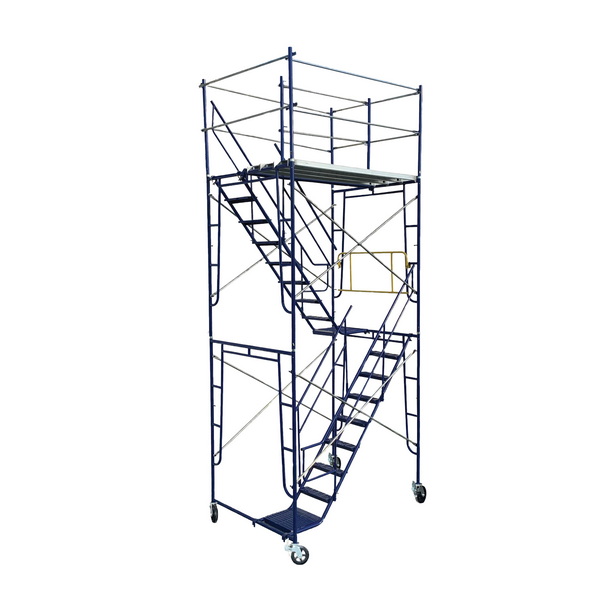
A ladder with scaffolding, or ladder scaffolding, is a temporary structure that combines the portability of a ladder with the stability and workspace of scaffolding. It usually involves a ladder framework that can be converted or extended into a scaffold platform, providing a larger, more stable working surface for multiple workers or tools. This setup is especially useful for tasks requiring movement along a horizontal plane or extended work periods at height.
Comparing Ladder with Scaffolding and Traditional Ladder
Stability and Safety
| Feature | Traditional Ladder | Ladder with Scaffolding |
| Stability | Depends on leaning against a structure; can be unstable at heights over 10 feet and on uneven surfaces | Provides a stable platform fixed to the ground, reducing risk of tipping and increasing safety for longer tasks |
| Safety Features | Limited; risk of falls if overreaching or improper use | Equipped with guardrails, toeboards, and anti-slip surfaces; safer for frequent or prolonged use |
| Capacity | Usually supports one person with limited tools | Supports multiple workers and heavier equipment simultaneously |
Traditional ladders rely on the user maintaining balance and proper angle (usually 75-80 degrees) to avoid falls, and are best for short tasks. Ladder scaffolding, however, offers a secure platform that minimizes fall hazards and allows safer movement, making it better suited for extended work at height.
Ease of Setup and Portability
- Traditional Ladder: Quick to set up, lightweight, easy to move around, ideal for confined spaces or quick jobs.
- Ladder with Scaffolding: Requires assembly and more space; setup can be time-consuming and may need some skill, but once set up, it offers a safer and more comfortable working environment.
Work Efficiency and Accessibility
- Traditional Ladder: Limited to vertical movement; requires frequent repositioning for horizontal tasks.
- Ladder with Scaffolding: Provides a larger work surface allowing workers to move horizontally without repositioning equipment, enhancing productivity especially on painting, maintenance, or construction projects.
Cost Considerations
- Traditional Ladder: Generally more affordable with lower upfront costs.
- Ladder with Scaffolding: Higher initial investment due to materials and setup labor, but can save time and reduce risks on larger or longer projects.
Practical Applications of Ladder with Scaffolding
Construction and Maintenance
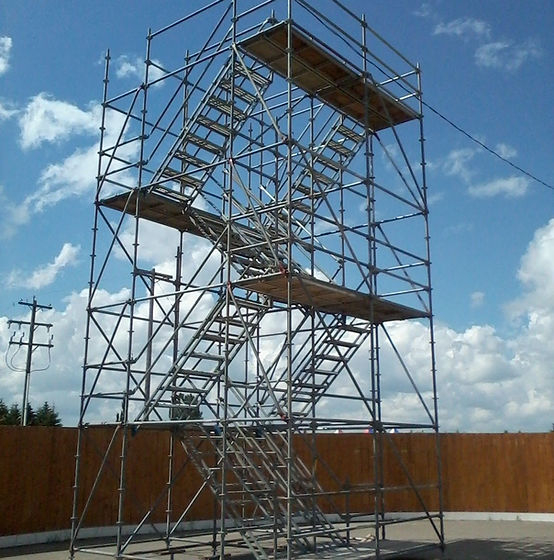
Ladder scaffolding is widely used in construction for tasks like painting, drywall installation, and repairs where workers need to access elevated areas safely and have room to move and place tools.
DIY Projects
For home improvement projects, ladder scaffolding offers a safer alternative to traditional ladders, especially when working on ceilings or exterior walls, allowing more freedom of movement and reducing the risk of falls.
Painting and Decorating
The ability to move horizontally on a stable platform without constant ladder repositioning makes ladder scaffolding a time-saver and reduces physical strain.
Industrial Use and Large-Scale Projects
In industrial settings, ladder scaffolding is often preferred for maintenance of machinery, electrical installations, and inspections where workers need a stable platform to carry tools and equipment. Its modular nature allows customization for various heights and configurations, making it adaptable for large-scale projects.
Safety Considerations When Using Ladder with Scaffolding
Safety is paramount when working at heights. While ladder scaffolding offers enhanced safety features compared to traditional ladders, users must still observe best practices:
- Proper Assembly: Ensure all components are securely locked and the scaffold is level.
- Weight Limits: Adhere strictly to manufacturer's load capacities to avoid structural failure.
- Guardrails and Toeboards: Always use guardrails and toeboards to prevent falls and dropped tools.
- Inspection: Regularly inspect the ladder scaffolding for damage or wear before use.
- Training: Workers should receive proper training on setup, use, and dismantling procedures.
- Personal Protective Equipment (PPE): Use harnesses, helmets, and non-slip footwear as required.
By following these guidelines, the risk of accidents is significantly reduced, making ladder scaffolding a safer alternative for many jobs.
Conclusion
A ladder with scaffolding generally offers superior stability, safety, and work efficiency compared to a traditional ladder, especially for tasks that require extended time at height or horizontal movement. While traditional ladders excel in portability and quick setup for short, simple jobs, ladder scaffolding provides a safer, more versatile platform for professional and DIY projects alike. Choosing between them depends on the specific project requirements, height, duration, number of workers, and safety considerations. For prolonged or complex tasks, investing in ladder scaffolding is often the better choice.
FAQ
1. What is the main safety advantage of a ladder with scaffolding over a traditional ladder?
A ladder with scaffolding offers a stable, flat platform with guardrails and anti-slip surfaces, reducing the risk of falls and allowing safer movement compared to the limited stability of a traditional ladder.
2. Can ladder scaffolding support multiple workers at once?
Yes, ladder scaffolding is designed to support multiple workers and heavier equipment simultaneously, unlike traditional ladders which are generally limited to one person.
3. Is ladder scaffolding difficult to set up?
It requires more time and some skill to assemble compared to a traditional ladder, but many systems are designed for easier setup and can be quickly converted from ladder to scaffold mode.
4. For what types of projects is ladder scaffolding most suitable?
Ladder scaffolding is ideal for construction, painting, maintenance, and any project requiring prolonged work at height with frequent horizontal movement.
5. Are there specific safety rules to follow when using ladder scaffolding?
Yes, users must ensure proper ladder angle (75-80 degrees), secure anchoring, use of guardrails, and adherence to OSHA safety standards to prevent accidents.