Content Menu
● Introduction to Scaffolding Couplers
● Importance of Scaffolding Couplers
● Types of Scaffolding Couplers
>> 1. Right-Angle Couplers
>> 2. Swivel Couplers
>> 3. Sleeve Couplers
>> 4. Putlog Couplers
>> 5. Girder Couplers
● Benefits of Using Scaffolding Couplers
● Safety Considerations
● Conclusion
● FAQ
>> 1. What is the primary function of scaffolding couplers?
>> 2. What are the most common types of scaffolding couplers?
>> 3. How do swivel couplers enhance scaffolding flexibility?
>> 4. What safety considerations should be taken when using scaffolding couplers?
>> 5. Why are girder couplers used in large-scale construction projects?
● Citations:
Scaffolding couplers are essential components in the construction industry, used to connect scaffolding tubes securely, ensuring the stability and safety of scaffolding structures. These couplers come in various types, each designed for specific applications and configurations. In this article, we will explore the different types of scaffolding couplers, their uses, and the benefits they provide in ensuring safe and efficient scaffolding systems.
Introduction to Scaffolding Couplers
Scaffolding couplers are devices that connect scaffolding tubes together, forming a sturdy framework for workers to perform tasks at heights. The primary function of these couplers is to provide a secure connection between the tubes, ensuring that the scaffolding structure can support the necessary loads without compromising safety.
Importance of Scaffolding Couplers
Scaffolding couplers are crucial for maintaining the structural integrity of scaffolding systems. They help in distributing the weight evenly across the structure, ensuring that it remains stable and secure. Without proper couplers, scaffolding can become unsafe, leading to potential accidents and injuries.
Types of Scaffolding Couplers
There are several types of scaffolding couplers, each serving a specific purpose in the construction of scaffolding systems.
1. Right-Angle Couplers
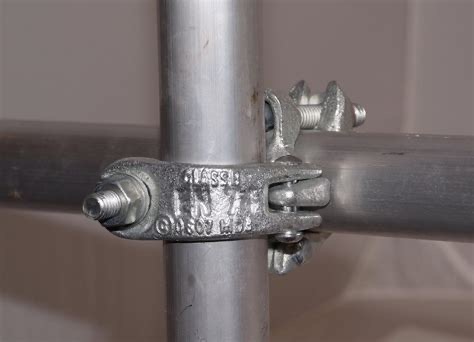
Right-angle couplers, also known as 90-degree couplers, are the most common type. They connect two scaffold tubes at a right angle, forming a perpendicular connection. These couplers are fundamental in constructing the basic framework of scaffolding structures, providing essential stability and support.
Right-angle couplers are critical for ensuring that the scaffolding can bear the necessary loads and maintain its structural integrity during use. They are typically used where tubes meet perpendicularly, ensuring the scaffolding remains firm and can support weight.
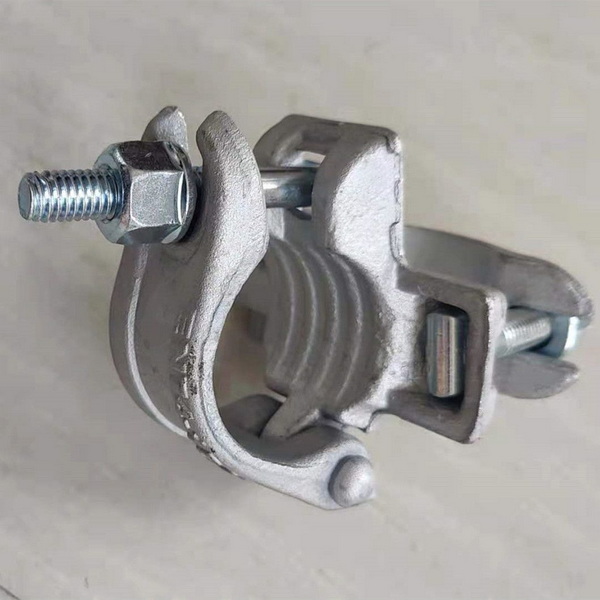
2. Swivel Couplers
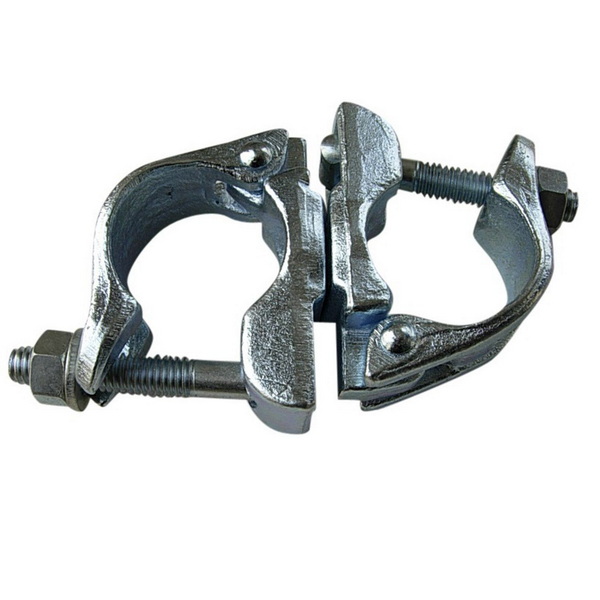
Swivel couplers are versatile connectors that allow scaffolding tubes to join at different angles. They can rotate, which is useful for creating scaffolding setups with unique angles or configurations. Swivel couplers feature two clamps that can be tightened to secure the tubes firmly, ensuring a stable connection that can withstand various loads and stresses.
Swivel couplers are particularly useful when constructing complex scaffold configurations that require flexibility and adaptability. They enable the connection of scaffold tubes at any angle within a 360-degree range, making them ideal for projects with irregular shapes or angles.
3. Sleeve Couplers
Sleeve couplers, also referred to as joiners or internal couplers, are employed to connect scaffold tubes end-to-end. These couplers slide over the tubes and are secured using bolts or pins, creating a robust connection. Sleeve couplers are commonly utilized when scaffolding requires longer spans or when two tubes need to be joined together to achieve the desired length.
Sleeve couplers are essential for extending the length of scaffolding tubes without compromising the structural integrity of the scaffolding system. They provide a seamless connection, allowing for the creation of longer scaffolding spans.
4. Putlog Couplers
Putlog couplers, also known as single couplers or single right-angle couplers, serve the purpose of attaching transoms or putlogs to ledger tubes. With a single clamp mechanism, they effectively secure the putlog or transom tube to the ledger tube, providing stability and support. Putlog couplers are typically used in scaffolding configurations where a scaffold platform is constructed on one side of a structure, such as during brickwork.
Putlog couplers are essential for ensuring that the scaffold platform remains stable and secure, especially in situations where the platform is not fully enclosed.
5. Girder Couplers
Girder couplers, also known as beam couplers, are used to connect scaffolding beams or girders. These couplers are designed to handle heavier loads and are typically used in large-scale construction projects where robust scaffolding structures are required.
Girder couplers are crucial for ensuring the stability of heavy-duty scaffolding systems, providing the necessary support for large construction projects.
Benefits of Using Scaffolding Couplers
Scaffolding couplers offer several benefits in the construction industry:
- Safety: They ensure that scaffolding structures are stable and secure, reducing the risk of accidents and injuries.
- Efficiency: Couplers allow for quick assembly and disassembly of scaffolding systems, saving time and labor costs.
- Versatility: Different types of couplers enable the construction of complex scaffolding configurations, adapting to various project requirements.
Safety Considerations
When using scaffolding couplers, it is essential to follow safety guidelines to ensure that the scaffolding structure remains safe and stable. This includes:
- Proper Installation: Couplers should be installed correctly, ensuring that all connections are secure.
- Regular Inspection: Scaffolding structures should be inspected regularly to identify any potential issues or damage to the couplers.
- Training: Workers should be trained on the proper use and handling of scaffolding couplers.
Conclusion
Scaffolding couplers are vital components in the construction industry, providing the necessary connections to ensure safe and stable scaffolding structures. Understanding the different types of scaffolding couplers and their applications is crucial for constructing efficient and secure scaffolding systems. By selecting the appropriate coupler for each project, construction teams can ensure that their scaffolding meets safety standards and supports the necessary loads without compromising structural integrity.
FAQ
1. What is the primary function of scaffolding couplers?
Scaffolding couplers are used to connect scaffolding tubes securely, ensuring the stability and safety of scaffolding structures. They distribute the weight evenly across the structure, maintaining its structural integrity.
2. What are the most common types of scaffolding couplers?
The most common types include right-angle couplers, swivel couplers, sleeve couplers, putlog couplers, and girder couplers. Each type serves a specific purpose in scaffolding construction.
3. How do swivel couplers enhance scaffolding flexibility?
Swivel couplers allow scaffolding tubes to connect at any angle within a 360-degree range, making them ideal for complex scaffold configurations that require flexibility and adaptability.
4. What safety considerations should be taken when using scaffolding couplers?
Proper installation, regular inspection, and worker training are essential safety considerations. Ensuring that all connections are secure and identifying potential issues early can prevent accidents.
5. Why are girder couplers used in large-scale construction projects?
Girder couplers are used in large-scale projects because they are designed to handle heavier loads, providing the necessary support for robust scaffolding structures required in such projects.
Citations:
[1] https://apacsafety.com/the-ultimate-guide-of-scaffolding-couplers/
[2] https://www.youtube.com/watch?v=a5VG7k_boDs
[3] https://grsscaffolding.com/blog/scaffolding-couplers-types/
[4] https://patents.google.com/patent/WO2003091512A1/zh
[5] https://www.scaffoldclamps.com/blog/types-of-scaffolding-couplers
[6] https://www.youtube.com/watch?v=D3U9C58KEpk
[7] https://www.scia.net/en/support/faq/scia-engineer/steel/scaffolding-coupler-interaction-3-check
[8] https://www.bbc.com/learningenglish/chinese/features/q-and-a/ep-200318
[9] https://www.linkedin.com/pulse/comprehensive-guide-types-couplers-scaffolding-abhishek-mishra
[10] https://www.youtube.com/watch?v=vEBTLNofcAY
[11] https://www.acrow.com.au/wp-content/uploads/2020/11/couplers-product-guide.pdf
[12] https://www.wm-scaffold.com/scaffolding-coupler.html