Content Menu
● Understanding the Self-Climbing Scaffolding System
● Key Benefits of a Self-Climbing Scaffolding System
>> 1. Enhanced Safety
>> 2. Increased Efficiency and Productivity
>> 3. Cost-Effectiveness
>> 4. Improved Quality
>> 5. Versatility and Adaptability
● Applications of Self-Climbing Scaffolding Systems
● Maintaining Safety in Self-Climbing Scaffolding Operations
● Safety and Intelligent Control
● Conclusion
● FAQ
>> 1. What is a self-climbing scaffolding system?
>> 2. What are the main advantages of a self-climbing scaffolding system compared to traditional scaffolding?
>> 3. Is a self-climbing scaffolding system suitable for all types of construction projects?
>> 4. How does a self-climbing scaffolding system improve safety on a construction site?
>> 5. What are some of the key components of a self-climbing scaffolding system?
● Citations:
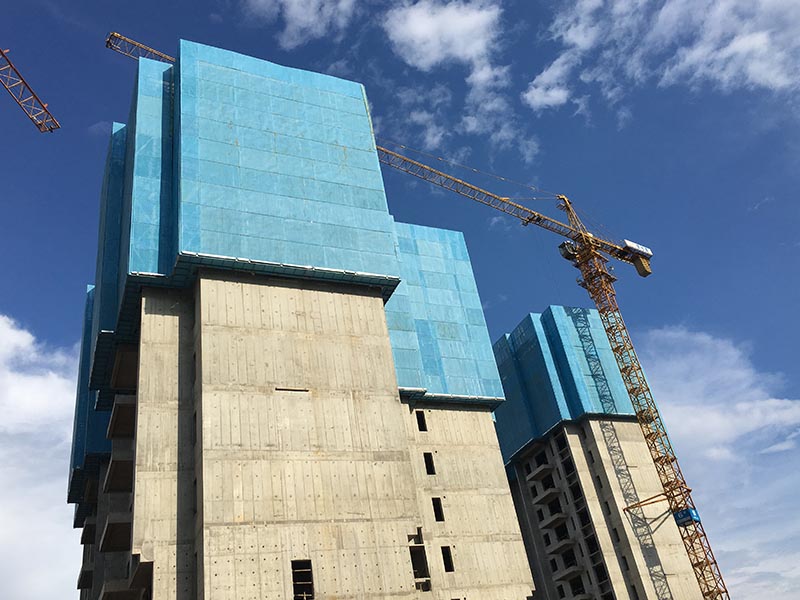
A self-climbing scaffolding system is a sophisticated and highly efficient solution for construction projects, particularly those involving high-rise buildings and complex structures. Unlike traditional scaffolding, which requires manual erection and dismantling, a self-climbing system utilizes hydraulic or electric mechanisms to ascend and descend along with the progress of construction. This innovative approach offers numerous key benefits in terms of safety, efficiency, cost-effectiveness, and quality, making it an increasingly popular choice for modern construction projects. This article will delve into the key benefits of a self-climbing scaffolding system, providing a comprehensive overview of its advantages in various aspects of construction.
Understanding the Self-Climbing Scaffolding System
Before exploring the benefits, it's important to understand the core components and functionality of a self-climbing scaffolding system:
- Climbing Mechanism: This is the heart of the system, typically employing hydraulic cylinders or electric hoists to lift the scaffolding vertically.[2][9]
- Anchoring System: The scaffolding is anchored to the building structure using specialized brackets and anchors, ensuring stability during climbing and operation.[4]
- Working Platforms: These provide safe and spacious areas for workers to perform their tasks, often equipped with guardrails and toeboards for fall protection.[4][6]
- Formwork Integration (Optional): Some self-climbing systems integrate directly with formwork, allowing for simultaneous climbing and concrete pouring.[2][12]
- Control System: A sophisticated control system manages the climbing process, ensuring synchronized movement and preventing overloads.[3][10]
Key Benefits of a Self-Climbing Scaffolding System
1. Enhanced Safety
Safety is a paramount concern in the construction industry, and self-climbing scaffolding systems offer significant advantages in this regard.
- Reduced Risk of Falls: The system eliminates the need for workers to manually climb up and down scaffolding or ladders, reducing the risk of falls.[12]
- Stable and Secure Platforms: Climbing scaffolds are generally much sturdier and more stable than traditional scaffolds.[6]
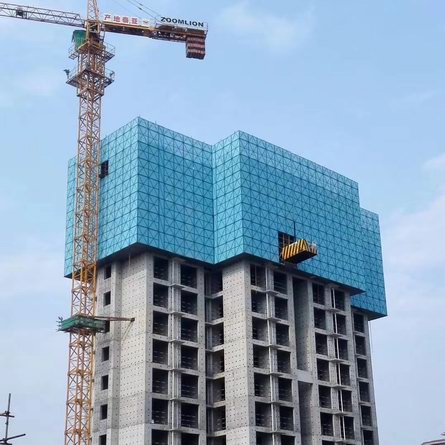
- Protective Nets: They are also often equipped with protective nets to reduce the risk of falling objects that could result in serious workplace accidents.[6]
- Form-Fit Connection: At all times, there is a form-fit connection between the scaffold and the structure.[4]
- Three-Section Side Guard: This, in combination with the working levels secured by a three-section side guard or closed walls, reduces the risk to employees many times over.[4]
- Intelligent Control System: The inclusion of a microcomputer intelligent control system further enhances safety measures by optimizing the operation of each self-climbing frame within the system.[3]
- Overload Detection: This intelligent control system monitors lifting speed, weight loadings, and adherence to standardized design operations. It automatically detects any overloading or underloading issues, providing timely alerts for necessary safety actions, preventing potential dangers on-site.[3]
2. Increased Efficiency and Productivity
Self-climbing scaffolding systems can significantly improve construction efficiency and productivity.
- Automatic Lifting: Automatic lifting to max within 30min, avoid setting up repeatedly[1].
- Faster Construction: Integrating climbing formworks speeds up the entire construction process, which, in turn, lowers the total production cost[5].
- Elimination of Cranes: Since it eliminates the need for cranes to reposition formwork, the process is faster and can often proceed in less time compared to traditional methods[7].
- Wider Work Area: By using either a crane-dependent or self-climbing scaffold system, your construction team will have more room to work and move around comfortably no matter how high off the ground they are.[6]
- Reduced Material Usage: Save material: reduce the usage of scaffolding[1].
3. Cost-Effectiveness
Although the initial investment in a self-climbing scaffolding system may be higher than traditional scaffolding, the long-term cost savings can be substantial.
- Reduced Labor Costs: The system eliminates the need for workers to manually climb up and down scaffolding or ladders, thus it can reduce the labor costs[12].
- Reduced Project Duration: Reduced project costs and duration[6].
- Less Labor Costs: Reduced construction time translates into lower labor costs and earlier project completion[7].
- Savings in Steel Material: Compared to conventional scaffolding system, applying GETO's self-climbing platform system to skyscrapers can help our clients to save 30% – 50% in cost (noted with 60% lower cost for steel material usage[10].
- Operational Cost Reduction: A 40% decrease in operational costs[3].
- Lower Electricity Consumption: An impressive 80% lower electricity consumption[3].
4. Improved Quality
- Precision of the self-climbing system: This ensures high-quality concrete finishes and consistent structural integrity.[7]
- High Quality Concrete Finishes: This precision reduces the likelihood of errors and rework.[7]
- Weather Independence: Self-climbing formwork is less affected by weather conditions since the formwork and work platforms are integral and move together, offering better protection for workers and materials.[7]
5. Versatility and Adaptability
- Suitable for Various Structures: Self-climbing formwork is ideal for high-rise buildings, skyscrapers, bridges, silos, and other tall structures[7].
- Repetitive Elements: Structures with repeated floor plans or identical vertical elements benefit from the repetitive efficiency of self-climbing formwork[7].
Applications of Self-Climbing Scaffolding Systems
Self-climbing scaffolding systems are particularly well-suited for:
- High-rise buildings [1, 7, 9, 10]
- Skyscrapers [7, 10]
- Bridges [7, 12]
- Silos[7]
- Other tall structures[7]
- Shear wall structures [1, 9]
- Industrial and civil (frame, shear wallstructure) high-rise buildings[10]
- Concrete structure taking the weight of the building and everything within[8]
Maintaining Safety in Self-Climbing Scaffolding Operations
To ensure the safe operation of self-climbing scaffolding systems, the following measures should be taken:
- Construction Plan: The construction plan, assembly and disassembly procedures and operating rules should be prepared before assembly of the self-climbing scaffold system[11].
- Technical Disclosure: Technical disclosure system for safety technologies must be made to the workers who assemble, use and dismantle in advance[11].
- Installation Platform: The installation platform should be set before the first floor installation, and it should have protective facilities to ensure the safety of construction personnel[11].
Safety and Intelligent Control
- Robust Steel Structure: Our Integrated Self-Climbing Platform prioritizes safety with its robust steel structure[3].
- Comprehensive Protection Settings: Fully-integrated operational and safety equipment, low-rise installation concept for high-rise applications, and comprehensive protection settings[3].
- Intelligent Control: The inclusion of a microcomputer intelligent control system further enhances safety measures by optimizing the operation of each self-climbing frame within the system[3].
Conclusion
A self-climbing scaffolding system offers a multitude of benefits that make it a superior choice for many construction projects, particularly those involving high-rise buildings and complex structures. Its enhanced safety features, increased efficiency, cost-effectiveness, improved quality, and versatility provide significant advantages over traditional scaffolding methods. By understanding these benefits and adhering to safety guidelines, construction professionals can leverage self-climbing scaffolding systems to create safer, more efficient, and more cost-effective working environments.
FAQ
1. What is a self-climbing scaffolding system?
A self-climbing scaffolding system is an automated scaffolding solution that uses hydraulic or electric mechanisms to ascend and descend along with the progress of construction [9, 12].
2. What are the main advantages of a self-climbing scaffolding system compared to traditional scaffolding?
The main advantages include enhanced safety, increased efficiency, cost-effectiveness, improved quality, and versatility [6, 7, 12].
3. Is a self-climbing scaffolding system suitable for all types of construction projects?
While versatile, self-climbing scaffolding systems are best suited for high-rise buildings, skyscrapers, bridges, silos, and other tall structures with repetitive elements [7, 10].
4. How does a self-climbing scaffolding system improve safety on a construction site?
It reduces the risk of falls, provides stable and secure platforms, incorporates protective nets, and often includes intelligent control systems with overload detection [3, 4, 6, 12].
5. What are some of the key components of a self-climbing scaffolding system?
Key components include the climbing mechanism, anchoring system, working platforms, and often formwork integration and a sophisticated control system [2, 4, 9, 12].
Citations:
[1] https://www.gzshuangma.com/powder-coated-automatic-self-climbing-scaffolding-system_p78.html
[2] https://www.forconstructionpros.com/concrete/equipment-products/forms/article/21940348/7-facts-on-selfclimbing-concrete-forming-systems
[3] https://www.getoformwork.com/industry-news-articles/self-climbing-platform-optimizing-construction-efficiency-and-safety/
[4] https://www.mb-spezialabbruch.com/en/5850/more-safety-through-hydraulically-self-climbing-scaffolding-systems/
[5] https://novaformworks.com/advantages-and-disadvantages-of-climbing-formworks/
[6] https://meva.net/en-us/climbing-scaffolding/
[7] https://www.zoloformwork.com/news/what-is-self-climbing-formwork.html
[8] https://www.forconstructionpros.com/concrete/equipment-products/concrete-materials/video/21940200/7-things-you-didnt-know-about-selfclimbing-systems
[9] https://www.youtube.com/watch?v=sol4R4tiwTU
[10] https://www.getoformwork.com/product/comprehensive-aluminium-formwork-system-6/
[11] https://www.linkedin.com/pulse/safety-notes-self-climbing-scaffold-maggie-mak-kitsen
[12] https://www.getoformwork.com/enterprise-news-articles/6-advantages-of-geto-hydraulic-self-climbing-formwork/