Content Menu
● Understanding the Basics of Ring Lock Scaffolding
>> Core Components
>> The Ring Lock Connection
● Advantages of Using Ring Lock Scaffolding Systems
● Ring Lock vs. Cuplock Scaffolding Systems
● Applications of Ring Lock Scaffolding Systems
● Safety Considerations When Using Ring Lock Scaffolding
● Step-by-Step Guide to Assembling a Ring Lock Scaffolding System
● Maintenance and Inspection of Ring Lock Scaffolding
● Conclusion
● FAQ About Ring Lock Scaffolding Systems
>> 1. What is the maximum height for a ring lock scaffolding system?
>> 2. Can ring lock scaffolding be used on uneven ground?
>> 3. Is ring lock scaffolding more expensive than traditional scaffolding?
>> 4. What safety certifications should I look for when purchasing ring lock scaffolding?
>> 5. How do I properly store ring lock scaffolding when it is not in use?
● Citations:
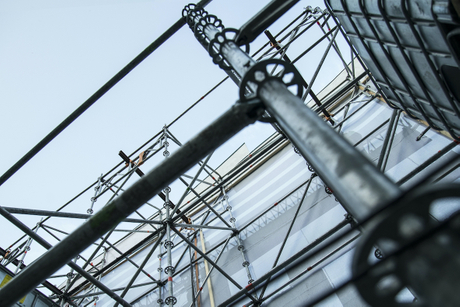
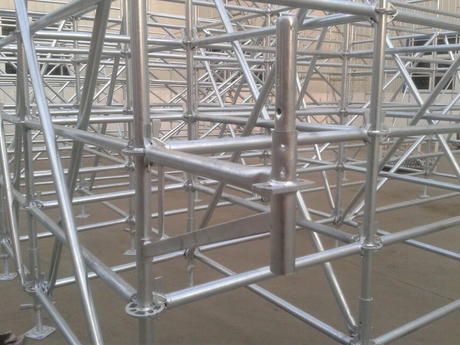
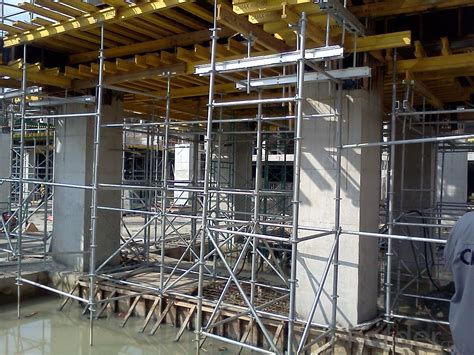
The ring lock scaffolding system stands as a versatile and efficient modular scaffolding solution, widely employed in the construction and industrial sectors[5]. This system distinguishes itself through an innovative design, utilizing horizontal and vertical components that interlock via robust rosette connectors, thereby establishing a secure and stable structure[5]. Known for its durability, ease of use, and rapid assembly, the ring lock system is a favored choice for construction projects where safety and efficiency are paramount[5].
Understanding the Basics of Ring Lock Scaffolding
Core Components
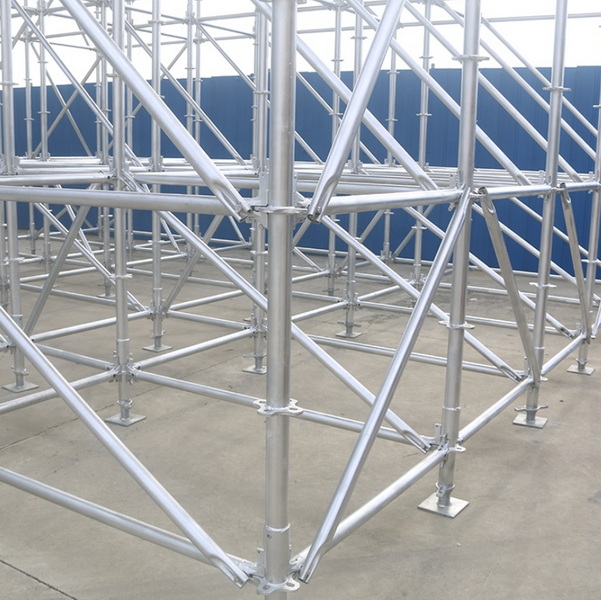
The ring lock scaffolding system comprises several key components that work together to create a safe and efficient scaffolding structure:
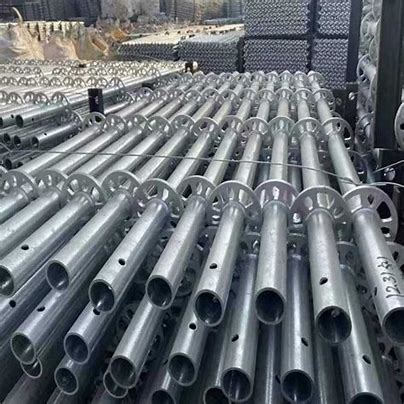
- Standards (Verticals): These are vertical tubes with rosettes (multi-directional connectors) welded at specific intervals[5]. These rosettes provide multiple connection points for other components.
- Ledgers (Horizontals): These horizontal tubes connect to the rosettes on the standards, providing horizontal support and creating the working platform[5].
- Braces (Diagonals): Diagonal braces are used to provide lateral stability to the scaffolding structure, preventing swaying and collapse[5].
- Platforms/Decks: These are the working surfaces of the scaffold, typically made of steel or wood, providing a safe and level area for workers to stand and move[8].
- Base Jacks/Screw Jacks: These adjustable bases are used to level the scaffolding on uneven ground[5].
- Toe Boards: Installed along the edges of platforms, toe boards prevent tools and materials from falling off the scaffold[3].
- Guardrails: Installed along the perimeter of the scaffold, guardrails provide fall protection for workers[3].
The Ring Lock Connection
The heart of the ring lock scaffolding system is its unique connection method. Rosettes, featuring eight openings, are pre-welded onto the standards at regular intervals[1]. These rosettes allow ledgers and braces to be connected at various angles, offering exceptional flexibility in adapting to different construction requirements[1].
The connection is achieved by inserting the end of the ledger or brace (fitted with a wedge or locking device) into the rosette opening and then securing it with a hammer blow[7]. This creates a strong, secure, and load-bearing connection[3].
Advantages of Using Ring Lock Scaffolding Systems
The ring lock scaffolding system offers numerous advantages over traditional scaffolding methods:
- Speed of Assembly and Disassembly: The modular design and simple connection method allow for quick and easy erection and dismantling[1][7]. This reduces labor costs and project timelines.
- Versatility: The system can be adapted to a wide range of applications, including straight, curved, and circular structures[1][3]. The rosette connectors allow for connections at various angles, providing flexibility in design.
- Safety: Ring lock scaffolding is engineered for maximum safety, with interlocking components that prevent unstable platforms[3]. Features like guardrails and toe boards provide fall protection[3].
- Load-Bearing Capacity: The system is designed to handle heavy loads, making it suitable for demanding construction and industrial applications[3].
- Durability: Made from high-strength steel, ring lock scaffolding is built to withstand harsh conditions and provide long-lasting performance[3].
- Reduced Labor Costs: The ease of assembly and disassembly translates to lower labor costs compared to traditional scaffolding methods[1][7].
- Minimized Errors: The prefabricated connection points reduce the risk of errors during assembly, ensuring a safer and more stable structure[7].
- Compliance: Ring lock scaffolding systems often meet or exceed safety certifications from organizations like OSHA and ANSI, helping companies meet compliance requirements[3].
Ring Lock vs. Cuplock Scaffolding Systems
While both ring lock and cuplock scaffolding systems are modular scaffolding solutions, there are key differences:
Feature | Ring Lock | Cuplock |
Connection Type | Rosette with wedge/locking device[1] | Metal cups to hold and lock beams, ledgers, and standards[1] |
Assembly | Generally faster and easier due to the rosette design[7] | Can be slightly more complex, requiring more precise alignment of cups[1] |
Versatility | High versatility due to multiple connection points on the rosette[3] | Good versatility, but may be less adaptable to complex geometries compared to ring lock[1] |
Weight | Typically lighter, making it easier to handle and transport[3] | Can be heavier than ring lock systems[3] |
Cost | May be slightly more expensive initially, but can offer long-term cost savings due to reduced labor[1] | Can be more cost-effective upfront, but may have higher labor costs[1] |
Applications of Ring Lock Scaffolding Systems
The ring lock scaffolding system is used in a wide variety of applications, including:
- Construction: For building construction, renovation, and demolition[5].
- Industrial Maintenance: For maintenance and repair work in factories, power plants, and refineries[1].
- Bridge Construction: For bridge construction, inspection, and repair[2].
- Shipbuilding: For shipbuilding and repair[1].
- Concerts and Events: For staging, lighting, and sound systems[2].
- Oil and Gas: For offshore platforms and onshore facilities[1].
- Mining: For access and support in mining operations.
Safety Considerations When Using Ring Lock Scaffolding
Safety is paramount when working with any scaffolding system. Here are some important safety considerations for ring lock scaffolding:
- Proper Training: Ensure that all workers involved in the assembly, disassembly, and use of the scaffolding are properly trained[3].
- Load Limits: Never exceed the load limits of the scaffolding system[3].
- Regular Inspections: Conduct regular inspections of the scaffolding to identify any damage or defects[3].
- Fall Protection: Always use fall protection equipment, such as harnesses and lanyards, when working at heights[3].
- Guardrails and Toe Boards: Ensure that guardrails and toe boards are properly installed on all working platforms[3].
- Weather Conditions: Avoid using scaffolding in high winds or other adverse weather conditions[3].
- Ground Conditions: Ensure that the ground is stable and level before erecting the scaffolding[3].
- Manufacturer's Instructions: Always follow the manufacturer's instructions for assembly, disassembly, and use of the scaffolding[3].
Step-by-Step Guide to Assembling a Ring Lock Scaffolding System
While specific assembly procedures may vary depending on the manufacturer and the specific application, here is a general step-by-step guide to assembling a ring lock scaffolding system:
1. Prepare the Ground: Ensure the ground is level and stable. Use base jacks to compensate for any unevenness[5].
2. Install Base Collars: Place base collars on the base jacks.
3. Erect Standards: Insert the standards into the base collars[5].
4. Connect Ledgers: Attach the ledgers to the rosettes on the standards, ensuring they are securely locked in place[5].
5. Install Braces: Connect the diagonal braces to the rosettes to provide lateral stability[5].
6. Add Platforms: Place the platforms on the ledgers to create the working surface[8].
7. Install Guardrails and Toe Boards: Install guardrails and toe boards along the edges of the platforms for fall protection[3].
8. Repeat: Continue adding levels as needed, following the same steps[5].
Maintenance and Inspection of Ring Lock Scaffolding
Regular maintenance and inspection are crucial to ensure the safety and longevity of your ring lock scaffolding system. Here are some key maintenance and inspection tasks:
- Visual Inspection: Regularly inspect all components for signs of damage, such as rust, cracks, or bends[3].
- Check Connections: Ensure that all connections are tight and secure[3].
- Lubrication: Lubricate moving parts, such as the locking devices on the ledgers and braces[3].
- Cleanliness: Keep the scaffolding clean and free of debris[7].
- Repair or Replace Damaged Components: Immediately repair or replace any damaged components[3].
- Record Keeping: Maintain records of all inspections and maintenance activities[3].
Conclusion
The ring lock scaffolding system represents a significant advancement in scaffolding technology. Its modular design, ease of assembly, versatility, and safety features make it an ideal choice for a wide range of construction and industrial applications[1][5]. By understanding the basics of the system, following proper assembly procedures, and implementing regular maintenance and inspection practices, you can ensure a safe and efficient working environment for your project.
FAQ About Ring Lock Scaffolding Systems
1. What is the maximum height for a ring lock scaffolding system?
Ring lock scaffolding can accommodate a wide range of heights, from single-level platforms up to structures over 200 feet high[3]. However, the maximum height will depend on the specific system, the load requirements, and local regulations. Always consult the manufacturer's specifications and local codes before erecting a scaffolding structure[3].
2. Can ring lock scaffolding be used on uneven ground?
Yes, ring lock scaffolding can be used on uneven ground[3]. Base jacks or screw jacks are used to adjust the height of the standards and compensate for variations in the ground level[5]. It is important to ensure that the base jacks are properly supported and that the scaffolding is level and stable[3].
3. Is ring lock scaffolding more expensive than traditional scaffolding?
The initial cost of ring lock scaffolding may be higher than traditional scaffolding[1]. However, the long-term cost savings due to reduced labor costs, increased efficiency, and improved safety can make it a more cost-effective solution overall[7].
4. What safety certifications should I look for when purchasing ring lock scaffolding?
When purchasing ring lock scaffolding, look for systems that meet or exceed safety standards set by organizations such as OSHA (Occupational Safety and Health Administration) and ANSI (American National Standards Institute)[3]. These certifications ensure that the scaffolding has been tested and meets specific safety requirements.
5. How do I properly store ring lock scaffolding when it is not in use?
When ring lock scaffolding is not in use, it should be stored in a dry, secure location to protect it from the elements and prevent damage[3]. Components should be stacked neatly and organized for easy access. Regular inspection and maintenance should be performed even during storage to ensure that the scaffolding is ready for use when needed[3].
Citations:
[1] https://www.totalcontec.com/what-is-ringlock-scaffolding-system/
[2] https://www.youtube.com/watch?v=rUq_iPVCkXg
[3] https://dss.net/top-5-benefits-of-ring-lock-scaffolding-systems/
[4] https://www.youtube.com/watch?v=2dw5Q53f6r8
[5] https://northscaffold.com/ring-system-1/
[6] https://www.youtube.com/watch?v=2t8lR3UOB6w
[7] https://www.scafom-rux.com/en/scaffolding-blog/5-reasons-to-use-a-ringlock-system-scaffold
[8] https://www.youtube.com/watch?v=LMAyZ20Ww10
[9] https://www.scafom-rux.com/en/scaffolding-blog/beginner-s-guide-to-scaffolding-types-the-ringlock-scaffold
[10] https://www.youtube.com/watch?v=TLTqU1Jce2k