Content Menu
● Introduction to Coupler Type Scaffolding
● Components of Coupler Type Scaffolding
● Types of Couplers in Coupler Type Scaffolding
>> 1. Swivel Couplers
>> 2. Right-Angle Couplers
>> 3. Sleeve Couplers
>> 4. Putlog Couplers
>> 5. Board Retaining Couplers
>> 6. Base Plate Couplers
● How Coupler Type Scaffolding Works
● Conclusion
● FAQ
>> 1. What are the main types of couplers used in coupler type scaffolding?
>> 2. How do swivel couplers contribute to coupler type scaffolding?
>> 3. What is the role of sleeve couplers in coupler type scaffolding?
>> 4. Why are right-angle couplers important in coupler type scaffolding?
>> 5. How does coupler type scaffolding enhance safety on construction sites?
● Citations:
Coupler type scaffolding is a versatile and widely used scaffolding system in the construction industry. It consists of steel tubes connected by various types of couplers, which provide a stable and secure structure for workers to access elevated areas safely. This article will delve into the mechanics of coupler type scaffolding, its components, types of couplers, and how it works.
Introduction to Coupler Type Scaffolding
Coupler type scaffolding, also known as tube and coupler scaffolding, is a robust system that offers superior stability and versatility. It is designed to meet the demands of complex architectural projects by providing a flexible framework that can be tailored to fit irregular building shapes.
Components of Coupler Type Scaffolding
The primary components of coupler type scaffolding include:
1. Scaffold Tubes: These are the core structural elements that provide the high-strength skeleton of the scaffold. They are used both vertically and horizontally to create the framework.
2. Coupler Clamps: These are the connectors that join the scaffold tubes together. They come in various types, each serving specific purposes to ensure safe and stable scaffolding structures.
3. Scaffold Fittings: These include a wide variety of specialized components such as girder couplers and board retaining couplers. They play a critical role in ensuring the structural integrity of the scaffolding by securing tubes and boards firmly in place.
Types of Couplers in Coupler Type Scaffolding
Couplers are essential for connecting scaffold tubes securely, ensuring the stability and safety of the scaffolding structure. Here are the main types of couplers used in coupler type scaffolding:
1. Swivel Couplers
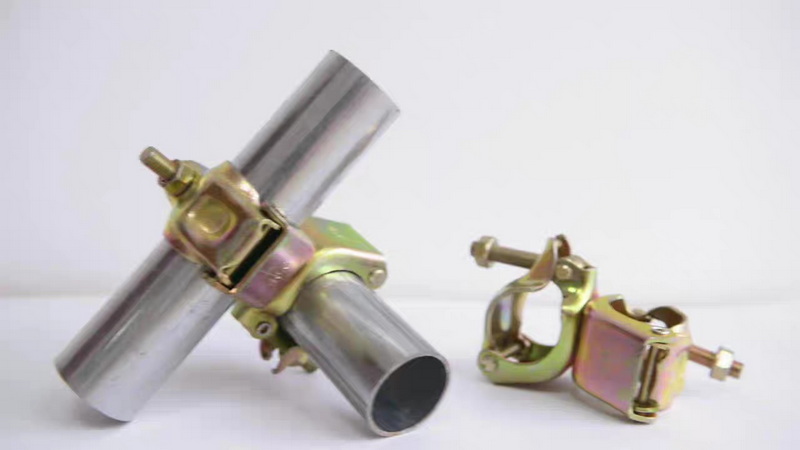
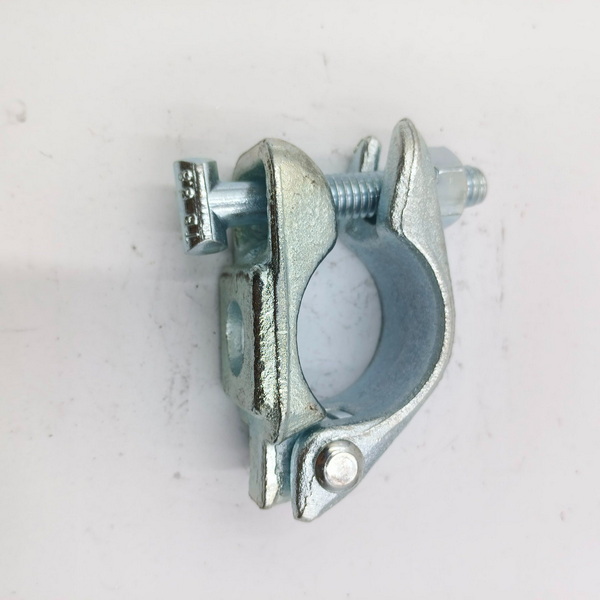
Swivel couplers are versatile connectors that allow scaffold tubes to be joined at any angle within a 360-degree range. They feature two clamps that can be tightened to secure the tubes firmly in place. Swivel couplers are particularly useful when constructing complex scaffold configurations that require flexibility and adaptability.
2. Right-Angle Couplers
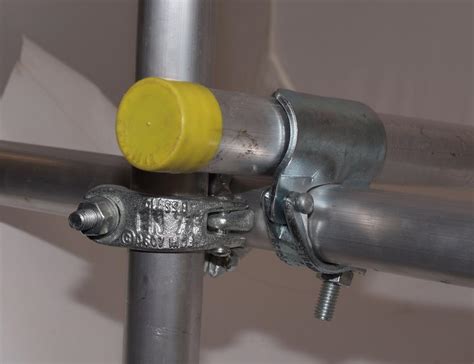
Right-angle couplers, also known as 90-degree couplers, are the most common type. They connect tubes at a right angle (90 degrees), creating strong, sturdy joints. These couplers are essential where tubes meet perpendicularly, ensuring the scaffolding remains firm and can support weight.
3. Sleeve Couplers
Sleeve couplers, also referred to as joiners or internal couplers, are employed to connect scaffold tubes end-to-end. These couplers slide over the tubes and are secured using bolts or pins, creating a robust connection. Sleeve couplers are commonly utilized when scaffolding requires longer spans or when two tubes need to be joined together to achieve the desired length.
4. Putlog Couplers
Putlog couplers, also known as single couplers or single right-angle couplers, serve the purpose of attaching transoms or putlogs to ledger tubes. With a single clamp mechanism, they effectively secure the putlog or transom tube to the ledger tube, providing stability and support. Putlog couplers are typically used in scaffolding configurations where a scaffold platform is constructed on one side of a structure, such as during brickwork.
5. Board Retaining Couplers
Board retaining couplers are used to secure scaffolding boards in place, preventing movement of the platforms. This ensures a stable working surface for workers.
6. Base Plate Couplers
Base plate couplers provide a flat bearing surface, stabilizing scaffolds at the base. They are crucial for ensuring the overall stability of the scaffolding structure.
How Coupler Type Scaffolding Works
Coupler type scaffolding works by combining scaffold tubes with coupler clamps to create a robust framework. The versatility of the couplers allows for adjustments, reinforcing safety and efficiency on-site. Here's a step-by-step guide on how to set up coupler type scaffolding:
1. Assembly of Scaffold Tubes: Scaffold tubes are erected vertically and horizontally to form the basic structure.
2. Connection with Couplers: The scaffold tubes are connected using various types of couplers based on the required configuration.
3. Securing Scaffold Fittings: Additional scaffold fittings such as board retaining couplers and base plate couplers are installed to ensure stability and safety.
4. Final Inspection: A thorough inspection is conducted to ensure all connections are secure and the scaffolding is stable.
Conclusion
Coupler type scaffolding is a reliable and adaptable system that plays a crucial role in the construction industry. Its versatility and strength make it ideal for various construction, maintenance, and restoration projects. By understanding the different types of couplers and how they are used, professionals can ensure the safe and efficient assembly of scaffolding structures.
FAQ
1. What are the main types of couplers used in coupler type scaffolding?
Coupler type scaffolding primarily uses swivel couplers, right-angle couplers, sleeve couplers, putlog couplers, board retaining couplers, and base plate couplers.
2. How do swivel couplers contribute to coupler type scaffolding?
Swivel couplers allow scaffold tubes to be connected at any angle, providing flexibility in creating complex scaffolding configurations.
3. What is the role of sleeve couplers in coupler type scaffolding?
Sleeve couplers are used to connect scaffold tubes end-to-end, extending the length of scaffold runs and creating robust connections.
4. Why are right-angle couplers important in coupler type scaffolding?
Right-angle couplers are essential for creating strong, sturdy joints where tubes meet perpendicularly, ensuring the scaffolding remains firm and can support weight.
5. How does coupler type scaffolding enhance safety on construction sites?
Coupler type scaffolding enhances safety by providing a stable and secure structure for workers to access elevated areas. The use of various couplers ensures that the scaffolding can withstand loads and maintain structural integrity.
Citations:
[1] https://www.linkedin.com/pulse/comprehensive-guide-types-couplers-scaffolding-abhishek-mishra
[2] https://www.youtube.com/watch?v=a5VG7k_boDs
[3] https://apacsafety.com/the-ultimate-guide-of-scaffolding-couplers/
[4] https://www.bbc.com/learningenglish/chinese/features/q-and-a/ep-200318
[5] https://scaffoldtype.com/tube-and-coupler-scaffolding/
[6] https://www.youtube.com/watch?v=NJd7ThUKaFA
[7] https://wslindia.com/types-of-scaffolding-couplers/
[8] https://patents.google.com/patent/CN101053134B/zh
[9] https://grsscaffolding.com/blog/scaffolding-couplers-types/
[10] https://www.youtube.com/watch?v=vEBTLNofcAY
[11] https://patents.google.com/patent/CN220420971U/en