Content Menu
● Introduction to H Frame Scaffolding
● Main Components of H Frame Scaffolding
>> 1. H Frames
>> 2. Cross Braces
>> 3. Horizontal Ledgers
>> 4. Base Plates and Adjustable Jacks
>> 5. Platforms (Decking)
>> 6. Guardrails and Toe Boards
>> 7. Couplers and Pins
● Key Features and Benefits
>> Ease of Assembly and Disassembly
>> Versatility
>> Durability and Strength
>> Safety
>> Cost-Effectiveness
>> Mobility
● Assembly and Disassembly Process
>> Step 1: Site Preparation
>> Step 2: Positioning Base Plates and Frames
>> Step 3: Connecting Horizontal Ledgers
>> Step 4: Installing Cross Braces
>> Step 5: Laying Platforms
>> Step 6: Adding Safety Features
>> Step 7: Inspection
>> Disassembly
● Applications and Usage Areas
>> Residential and Commercial Construction
>> Industrial Maintenance
>> Bridge and Infrastructure Projects
>> Healthcare and Institutional Buildings
>> Underground and Subway Construction
>> Event Staging and Temporary Structures
● Safety Considerations
>> Proper Training
>> Use of Personal Protective Equipment (PPE)
>> Regular Inspections
>> Load Limits
>> Secure Platforms
>> Guardrails and Toe Boards
>> Weather Conditions
● Comparison with Other Scaffolding Systems
● Maintenance and Durability
>> Cleaning
>> Inspection
>> Repair and Replacement
>> Storage
>> Lubrication
● Conclusion
● FAQ
>> 1. What materials are used to make H Frame scaffolding?
>> 2. How high can H Frame scaffolding be safely erected?
>> 3. Is H Frame scaffolding suitable for all types of construction projects?
>> 4. What safety features are essential for H Frame scaffolding?
>> 5. Can H Frame scaffolding be moved easily on a job site?
● Citations:
H Frame scaffolding is one of the most commonly used scaffolding systems in the construction industry worldwide. Recognizable by its distinctive "H"-shaped vertical frames, this modular scaffolding system offers a reliable, safe, and efficient platform for workers to perform tasks at various heights. Its design allows for quick assembly and disassembly, making it a preferred choice for many construction, maintenance, and repair projects.
Introduction to H Frame Scaffolding
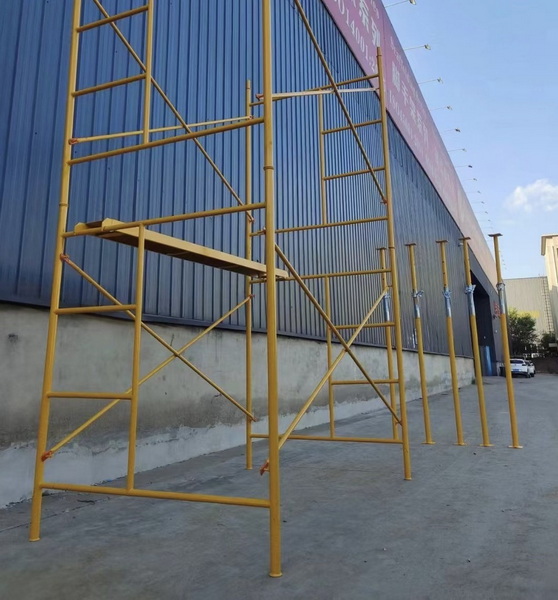
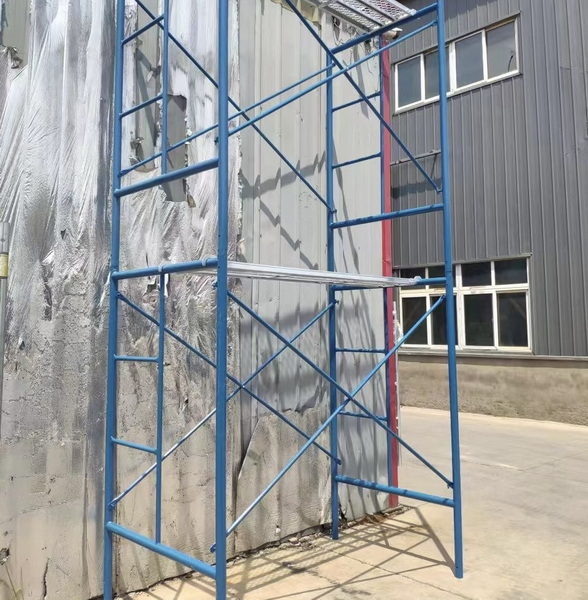
H Frame scaffolding, also known as facade scaffolding or frame scaffolding, is a type of supported scaffold system that uses prefabricated vertical frames shaped like the letter "H." These frames are connected by horizontal ledgers and diagonal cross braces to form a rigid, stable structure. The design is simple yet effective, allowing for rapid erection and dismantling, which saves time and labor costs on construction sites.
Typically made from steel or aluminum, H Frame scaffolding is designed to support workers, tools, and materials safely at various heights. It is widely used in residential, commercial, and industrial construction projects, as well as in maintenance and repair works.
Main Components of H Frame Scaffolding
Understanding the components of H Frame scaffolding is essential for proper assembly, use, and maintenance. The main parts include:
1. H Frames
The vertical frames are the backbone of the system. Each frame is shaped like an "H," with two vertical tubes connected by a horizontal crossbar. These frames come in various heights, commonly ranging from 5 feet (1.5 meters) to 10 feet (3 meters), allowing flexibility in scaffold height.
2. Cross Braces
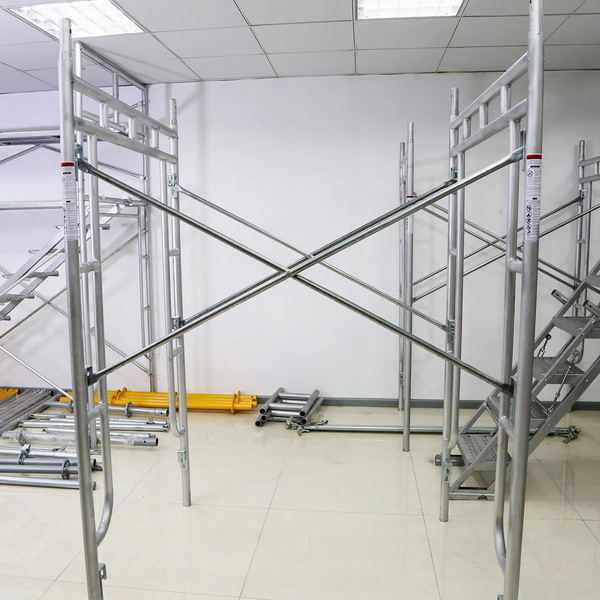
Diagonal braces connect the vertical frames, providing lateral stability and preventing the scaffold from swaying or collapsing. They are usually attached with pins or clips and are essential for the structural integrity of the scaffold.
3. Horizontal Ledgers
Ledgers are horizontal tubes that connect the vertical frames at different levels. They support the working platforms and help distribute loads evenly across the scaffold.
4. Base Plates and Adjustable Jacks
Base plates are flat metal plates placed under the vertical frames to distribute the load evenly on the ground. Adjustable jacks (also called screw jacks) allow for leveling the scaffold on uneven surfaces, ensuring stability.
5. Platforms (Decking)
Platforms are the working surfaces where laborers stand and place their tools and materials. They are typically made of wood planks, metal decking, or composite materials. Platforms must be strong, non-slip, and securely fastened to the ledgers.
6. Guardrails and Toe Boards
Safety components such as guardrails (handrails) and toe boards are installed on the edges of platforms to prevent falls and protect workers from dropping tools or materials.
7. Couplers and Pins
These are the connectors that secure the scaffold components together. Couplers join tubes at various angles, while pins lock frames and braces in place.
Key Features and Benefits
H Frame scaffolding offers numerous advantages that make it a popular choice on construction sites:
Ease of Assembly and Disassembly
The modular design with prefabricated frames and standardized connectors allows workers to erect and dismantle the scaffold quickly, often without the need for specialized tools or highly skilled labor. This efficiency reduces labor costs and project timelines.
Versatility
H Frame scaffolding can be adapted to various heights and configurations, making it suitable for a wide range of applications including plastering, painting, facade cladding, insulation, and general maintenance.
Durability and Strength
Constructed from high-quality steel or aluminum, often hot-dip galvanized to resist corrosion, H Frame scaffolding is built to withstand harsh weather conditions and heavy loads, ensuring long service life.
Safety
The system complies with international safety standards when properly assembled with guardrails, toe boards, and secure platforms. Its rigid frame design minimizes movement, providing a stable working environment.
Cost-Effectiveness
Compared to more complex scaffolding systems like ring lock or cup lock scaffolding, H Frame scaffolding is generally more affordable, especially for small to medium-sized projects.
Mobility
H Frame scaffolding can be fitted with caster wheels, allowing it to be moved easily on flat surfaces without dismantling, which is particularly useful for indoor projects or repetitive tasks.
Assembly and Disassembly Process
Step 1: Site Preparation
Before assembly, the ground must be leveled and cleared of debris. If the surface is uneven, adjustable jacks are used to level the scaffold.
Step 2: Positioning Base Plates and Frames
Base plates or screw jacks are placed on the ground to support the vertical frames. The H frames are then positioned vertically at the required intervals, usually 6 to 8 feet apart.
Step 3: Connecting Horizontal Ledgers
Horizontal ledgers are attached between the vertical frames at the desired working height. These ledgers support the platforms and provide lateral stability.
Step 4: Installing Cross Braces
Diagonal cross braces are connected to the frames to prevent lateral movement and increase rigidity.
Step 5: Laying Platforms
Platforms are placed on the horizontal ledgers to create the working surface. They must be securely fastened and checked for stability.
Step 6: Adding Safety Features
Guardrails and toe boards are installed around the platform edges to protect workers from falls and prevent tools or materials from falling.
Step 7: Inspection
A thorough inspection is conducted to ensure all components are properly connected, the scaffold is level, and safety features are in place.
Disassembly
The disassembly process is the reverse of assembly. Platforms, braces, ledgers, and frames are removed systematically, ensuring safety throughout.
Applications and Usage Areas
H Frame scaffolding is highly versatile and used in many industries and projects:
Residential and Commercial Construction
Ideal for building houses, apartment complexes, and commercial buildings, especially for facade work, painting, and plastering.
Industrial Maintenance
Used in factories, power plants, and refineries for equipment maintenance, inspection, and repair.
Bridge and Infrastructure Projects
Supports workers during bridge construction, repair, and inspection.
Healthcare and Institutional Buildings
Used in hospitals, schools, and government buildings for renovation and maintenance.
Underground and Subway Construction
Provides safe access in confined spaces for tunnel and station construction.
Event Staging and Temporary Structures
Sometimes adapted for temporary platforms in events or exhibitions.
Safety Considerations
Safety is paramount when working with scaffolding. Key safety practices include:
Proper Training
Workers must be trained in scaffold assembly, use, and dismantling procedures.
Use of Personal Protective Equipment (PPE)
Helmets, harnesses, non-slip footwear, and gloves should be worn.
Regular Inspections
Daily inspections for damage, loose connections, or wear are essential.
Load Limits
Never exceed the scaffold's maximum load capacity, including workers, tools, and materials.
Secure Platforms
Platforms must be fully decked, non-slip, and securely fastened.
Guardrails and Toe Boards
Always install guardrails and toe boards to prevent falls and falling objects.
Weather Conditions
Avoid scaffold use during high winds, heavy rain, or icy conditions.
Comparison with Other Scaffolding Systems
| Feature | H Frame Scaffolding | Ring Lock Scaffolding | Tube and Coupler Scaffolding |
| Assembly Speed | Fast and simple | Moderate | Slow and labor-intensive |
| Cost | More affordable | Higher cost | Variable, often higher |
| Height Limit | Up to ~30 feet (9 meters) | Can reach very high levels | Very flexible, can be very high |
| Mobility | Can be fitted with wheels | Less mobile | Less mobile |
| Safety | Requires additional safety features | High inherent stability | Depends on assembly quality |
| Versatility | Moderate | High | Very high |
H Frame scaffolding is best suited for small to medium projects where speed and cost are priorities. Ring lock scaffolding is preferred for large, complex, or very tall structures. Tube and coupler scaffolding offers maximum flexibility but requires skilled labor and more time.
Maintenance and Durability
Proper maintenance extends the life of H Frame scaffolding and ensures safety:
Cleaning
Remove dirt, mud, and debris regularly to prevent corrosion and slipping hazards.
Inspection
Check for rust, cracks, bent frames, or damaged components before and after use.
Repair and Replacement
Replace worn or damaged parts immediately. Minor rust can be treated with rust remover and protective coatings.
Storage
Store scaffolding components in a dry, covered area to protect from weather damage.
Lubrication
Apply lubricant to pins and moving parts to ensure smooth assembly.
Conclusion
H Frame scaffolding is a fundamental tool in the construction and maintenance industries, prized for its simplicity, versatility, and cost-effectiveness. Its modular design allows for rapid assembly and disassembly, making it ideal for a wide range of projects from residential buildings to industrial facilities. When combined with proper safety measures and regular maintenance, H Frame scaffolding provides a secure and efficient working platform that enhances productivity and protects workers.
Whether you are a contractor, site manager, or construction worker, understanding the features, assembly, and safety requirements of H Frame scaffolding is essential for successful project execution.
FAQ
1. What materials are used to make H Frame scaffolding?
H Frame scaffolding is typically made from high-quality steel or aluminum. Steel frames are often hot-dip galvanized to resist corrosion, while aluminum frames offer a lighter alternative with good strength.
2. How high can H Frame scaffolding be safely erected?
Generally, H Frame scaffolding is suitable for heights up to about 30 feet (9 meters). For taller structures, other scaffolding systems like ring lock scaffolding are recommended.
3. Is H Frame scaffolding suitable for all types of construction projects?
It is ideal for small to medium-sized projects such as residential buildings, facade work, and industrial maintenance. However, for very high or complex structures, other scaffolding types may be more appropriate.
4. What safety features are essential for H Frame scaffolding?
Guardrails, toe boards, non-slip platforms, secure locking mechanisms, and proper base support are critical for worker safety.
5. Can H Frame scaffolding be moved easily on a job site?
Yes, it can be fitted with caster wheels to allow mobility on flat surfaces, which is useful for indoor projects or repetitive tasks.
Citations:
[1] https://apacsafety.com/comprehensive-guide-to-h-frame-scaffolding/
[2] https://msafegroup.com/h-frame-scaffolding-systems-a-detailed-manual/
[3] https://www.gurbuziskele.com.tr/en/what-is-h-frame-scaffolding/
[4] https://suncorpscaffolding.com/h-frame-scaffolding-benefits-applications-and-safety-tips/
[5] https://www.osha.gov/etools/scaffolding/supported/frame
[6] https://www.youtube.com/watch?v=PD0G6zD0R4M
[7] https://github.com/LC1332/Luotuo-Silk-Magic-Book/blob/main/README.md
[8] https://www.gurbuziskele.com.tr/en/h-frame-scaffolding/
[9] https://www.youtube.com/watch?v=HqZ6cqqyBnQ
[10] https://www.youtube.com/watch?v=utWWhtZBT2o