Content Menu
● Introduction to BS Standard Scaffolding Tube Factories
● Overview of BS1139 and Key Specifications
● Step-by-Step Production Process
>> 1. Raw Material Selection
>> 2.Sustainability and Resource Efficiency
>> 3.Economic Benefits
● Innovations and Automation in BS Standard Scaffolding Tube Factories
>> Advanced Automation
>> Digital Quality Control
>> Customization and Flexibility
● Conclusion
● FAQ
>> 1. What materials are used in BS standard scaffolding tube factories?
>> 2. Why is hot-dip galvanizing important in the production process?
>> 3. How do factories ensure the quality of scaffolding tubes?
>> 4. What are the standard sizes produced in BS standard scaffolding tube factories?
>> 5. Can BS standard scaffolding tubes be customized for different projects?
The BS standard scaffolding tube factories are the backbone of safe, reliable, and durable scaffolding systems used in construction projects worldwide. These factories are responsible for producing steel tubes that meet the stringent requirements of the British Standard BS1139, ensuring that each tube delivers the necessary strength, consistency, and corrosion resistance demanded by modern construction and industrial environments.
Introduction to BS Standard Scaffolding Tube Factories
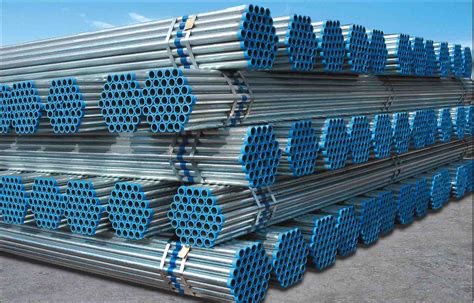
BS standard scaffolding tube factories play a crucial role in the global construction supply chain. These factories are equipped with advanced machinery and rigorous quality control systems to produce steel tubes that conform to the BS1139 standard. The tubes produced are the foundation of safe scaffolding systems, used in everything from residential construction to large-scale infrastructure projects.
Overview of BS1139 and Key Specifications
The BS1139 standard sets out the requirements for scaffolding tubes, including:
- Material: High-strength carbon steel (e.g., Q235B, Q345)
- Outer Diameter: 48.3 mm (±0.5 mm)
- Wall Thickness: 3.2 mm, 3.6 mm, 3.8 mm, or 4.0 mm
- Surface Treatment: Hot-dip galvanized for corrosion resistance
- Straightness: Deviation not exceeding 3 mm per meter
- Load Capacity: Must meet strict tensile and yield strength requirements
- Length: Standard lengths range from 0.3 m up to 6 m, with 6 m being most common
These specifications ensure that BS standard scaffolding tube factories deliver products that are interchangeable, safe, and durable for repeated use in demanding environments.
Step-by-Step Production Process
1. Raw Material Selection
- The process in BS standard scaffolding tube factories begins with the selection of high-quality steel coils, typically made from Q235B or Q345 carbon steel. The steel must meet strict chemical composition and mechanical property requirements to ensure the finished tubes' strength and ductility.
- The selected steel coils are uncoiled and fed into a tube mill, where they are shaped into a circular cross-section using a cold-forming process. This step ensures precise diameter and wall thickness, critical for compliance with BS1139.
- The edges of the formed steel strip are welded together, typically using Electric Resistance Welding (ERW), to create a continuous tube. The weld seam is then carefully inspected using non-destructive testing methods to ensure integrity and strength, as required by the BS1139 standard.
- After welding, the tubes pass through sizing rolls to achieve the precise outer diameter and wall thickness. Straightening machines ensure the tubes meet the strict straightness tolerances of BS1139 (not exceeding 3 mm deviation per meter).
- The continuous tube is then cut into standard lengths, usually 6 meters, but can be customized from 0.3 m to 6 m depending on customer requirements. The ends are trimmed to ensure smoothness and uniformity.
- To provide corrosion resistance, the tubes undergo hot-dip galvanizing. They are immersed in a bath of molten zinc, creating a protective coating at least 85μm thick, as mandated by BS1139. This step is critical for ensuring the tubes' longevity in outdoor and humid environments.
BS standard scaffolding tube factories implement rigorous quality control at every stage:
- Dimensional checks: Diameter, wall thickness, and straightness are measured.
- Mechanical testing: Tensile and yield strength are tested to ensure compliance.
- Galvanizing inspection: The zinc coating's thickness and adhesion are verified, often with a bend test.
- Pressure and load testing: Simulated load tests ensure tubes meet or exceed safety requirements.
- Third-party certification: Many factories undergo independent audits for international certification (e.g., SGS, BV).
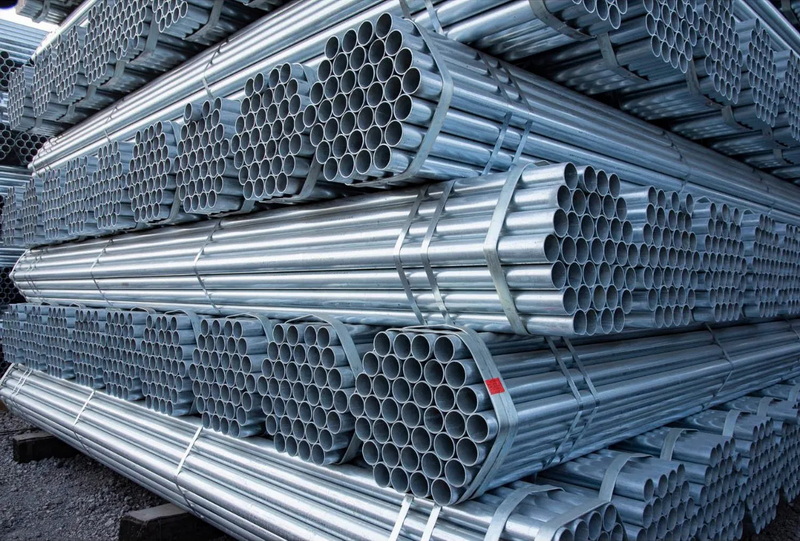
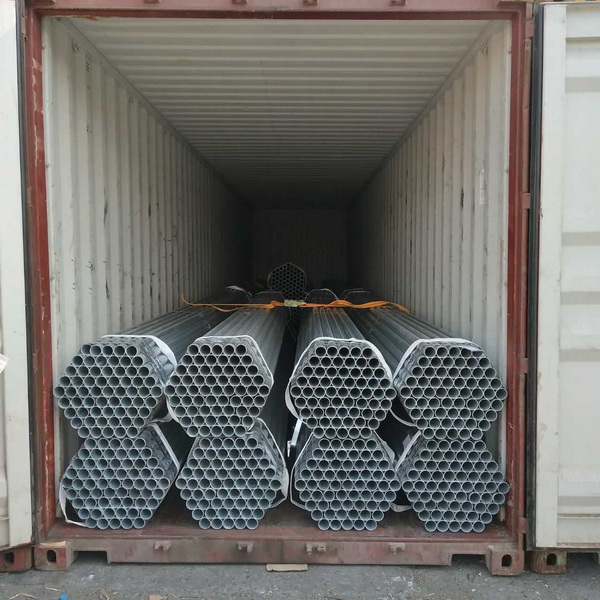
The finished tubes are bundled, often wrapped with tarpaulin or placed in containers for protection during shipping. Each bundle is labeled with size, grade, and batch number for traceability, and is ready for delivery to construction sites worldwide.
2.Sustainability and Resource Efficiency
BS standard scaffolding tube factories are increasingly focused on sustainability. By using recycled steel and optimizing energy consumption, these factories reduce their environmental footprint. Hot-dip galvanizing extends the life of each tube, reducing the need for frequent replacements and minimizing waste.
3.Economic Benefits
Mass production and automation in these factories lower the cost per unit, making high-quality scaffolding affordable for global markets. Efficient logistics and packaging further reduce costs and environmental impact.
Innovations and Automation in BS Standard Scaffolding Tube Factories
Advanced Automation
Modern BS standard scaffolding tube factories utilize robotics and computerized control systems for precise manufacturing. Automated tube mills, robotic welders, and digital inspection stations ensure consistent quality and high production speeds.
Digital Quality Control
Factories are adopting Industry 4.0 technologies, including real-time monitoring, data analytics, and automated defect detection. These innovations reduce human error, increase efficiency, and ensure every tube meets or exceeds BS1139 standards.
Customization and Flexibility
With advanced machinery, factories can quickly switch between different tube sizes, wall thicknesses, and surface treatments, catering to diverse project requirements worldwide.
Conclusion
The production process in BS standard scaffolding tube factories is a meticulously controlled sequence of steps designed to ensure every tube meets the rigorous demands of the BS1139 standard. From the selection of high-quality steel to the final hot-dip galvanizing and thorough quality checks, each stage is essential for delivering scaffolding tubes that are strong, durable, and safe for use in construction projects worldwide. The combination of advanced manufacturing technology, strict adherence to standards, and comprehensive testing guarantees that the tubes produced are fit for repeated use in the harshest environments.
As the industry evolves, BS standard scaffolding tube factories are embracing digitalization, automation, and sustainable practices, ensuring that their products remain at the forefront of safety, quality, and environmental responsibility. Whether for towering skyscrapers, bridges, or industrial facilities, the tubes produced in these factories are a testament to the precision and reliability required in modern construction.
FAQ
1. What materials are used in BS standard scaffolding tube factories?
BS standard scaffolding tube factories primarily use high-strength carbon steel such as Q235B or Q345, which offer excellent tensile and yield strength, meeting the requirements of BS1139.
2. Why is hot-dip galvanizing important in the production process?
Hot-dip galvanizing provides a thick, durable zinc coating that protects the steel tubes from corrosion, ensuring a long service life even in harsh outdoor or humid environments.
3. How do factories ensure the quality of scaffolding tubes?
Quality is ensured through continuous dimensional checks, mechanical strength testing, weld seam inspection, galvanizing thickness verification, and often third-party certification to international standards.
4. What are the standard sizes produced in BS standard scaffolding tube factories?
Tubes are typically produced with an outer diameter of 48.3 mm and wall thicknesses of 3.2 mm, 3.6 mm, 3.8 mm, or 4.0 mm. Standard lengths are usually 6 meters, but custom lengths from 0.3 m to 6 m are also available.
5. Can BS standard scaffolding tubes be customized for different projects?
Yes, factories can produce tubes in various lengths, wall thicknesses, and with specific surface treatments to meet the unique requirements of different construction projects.