Content Menu
● Introduction to Cuplock Scaffolding and Its Components
● Main Components of Cuplock Scaffolding:
● Overview of the Production Process in Cuplock Scaffolding Factories
>> 1. Raw Material Preparation
>> 2. Tube Cutting and Straightening
>> 3. Thread Rolling
>> 4. Welding of Cups and Accessories
>> 5. Drilling and Punching
>> 6. Surface Treatment (Galvanizing or Painting)
>> 7. Quality Control and Testing
>> 8. Packaging and Dispatch
● Machinery Used in Cuplock Scaffolding Factories
● Advantages of Cuplock Scaffolding System Production
● Additional Production Details and Innovations
>> Automated Production Lines
>> Customization and Special Orders
>> Environmental and Safety Practices
● Conclusion
● FAQ
>> 1. What materials are used in cuplock scaffolding production?
>> 2. How are the cups welded onto the standards?
>> 3. What surface treatments are applied to cuplock scaffolding components?
>> 4. How is quality ensured in cuplock scaffolding factories?
>> 5. What machinery is essential in a cuplock scaffolding factory?
Cuplock scaffolding has become one of the most popular modular scaffolding systems worldwide due to its ease of assembly, strength, and versatility. The production of cuplock scaffolding components requires precision engineering and strict quality control to ensure safety and durability on construction sites. This article provides a comprehensive overview of the production process in cuplock scaffolding factories, detailing each manufacturing step, the machinery involved, quality standards, and finishing processes.
Introduction to Cuplock Scaffolding and Its Components
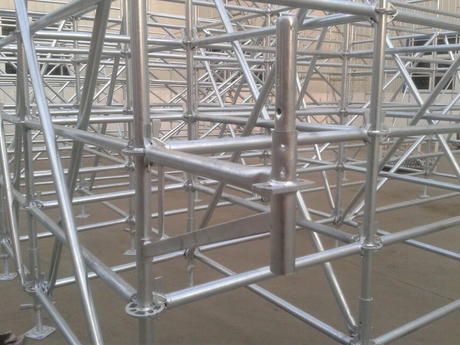
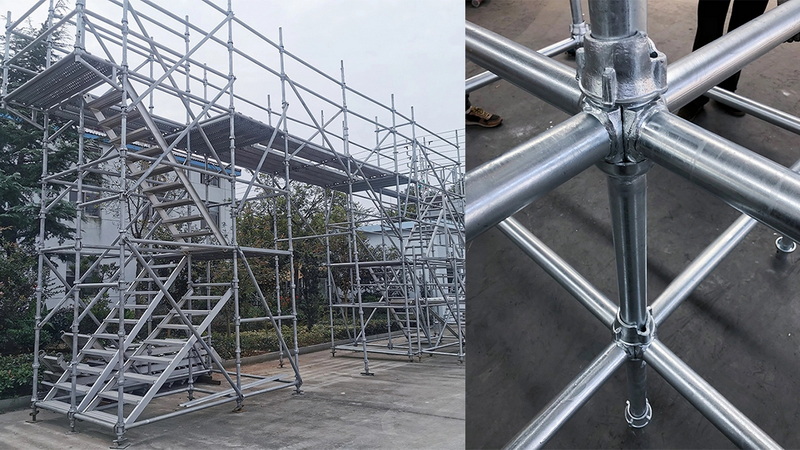
Cuplock scaffolding is characterized by a unique locking mechanism that connects up to four horizontal tubes to a single vertical standard via a cup-like joint. This design enables quick assembly without loose bolts or clips, making it efficient and safe.
Main Components of Cuplock Scaffolding:
- Standards (Verticals): Vertical tubes with fixed lower cups and rotating upper cups.
- Ledgers (Horizontals): Tubes with forged blade ends that fit into the cups on standards.
- Transoms: Horizontal tubes used to support working platforms.
- Base Jacks: Adjustable supports for leveling the scaffold.
- Accessories: Including spigot pins, board supports, handrails, and braces.
Overview of the Production Process in Cuplock Scaffolding Factories
The production of cuplock scaffolding components involves multiple stages, from raw material preparation to final inspection and packaging. The key processes include:
1. Raw Material Preparation
2. Tube Cutting and Straightening
3. Thread Rolling
4. Welding of Cups and Accessories
5. Drilling and Punching
6. Surface Treatment (Galvanizing or Painting)
7. Quality Control and Testing
8. Packaging and Dispatch
1. Raw Material Preparation
Cuplock scaffolding factories start with high-quality steel tubes, typically with an outer diameter (OD) of 48.3 mm and wall thickness ranging from 3.2 mm to 4.0 mm. The steel must comply with international standards such as EN 12810 or BS1139.
- Steel pipes are procured in coils or straight lengths.
- Chemical composition and mechanical properties are tested to ensure compliance.
- Tubes are inspected for surface defects before processing.
2. Tube Cutting and Straightening
The steel tubes are cut to specified lengths (usually from 0.5m to 3m for standards) using automated pipe cutting machines.
- Pipe Cutting Machine: Ensures precise and clean cuts to length.
- Pipe Straightening Machine: Removes bends or warps to maintain straightness within tolerance.
3. Thread Rolling
Thread rolling machines create threads on components such as base jacks and props.
- Tie Rod Thread Rolling Machine: Produces threads on tie rods used in props.
- Three Roll Thread Rolling Machine: Used for base jack and prop threading.
Thread rolling is a cold-forming process that strengthens the threads without cutting the material.
4. Welding of Cups and Accessories
The unique cuplock system requires precise welding of the fixed lower cup and the rotating upper cup onto the standards.
- Standard Cuplock Welding Machine: Automates welding of cups onto vertical tubes.
- Ledger Welding Machine: Welds forged blade ends onto ledger tubes.
- Base Jack Welding Machine: Welds components of base jacks.
- Prop Welding Machines: For inner and outer prop parts.
Welding quality is critical and must comply with standards such as EN 1090 and ISO 3834.
5. Drilling and Punching
After welding, tubes undergo drilling and punching to create holes for spigot pins and other accessories.
- Multidrilling Machine: Drills multiple holes with precision.
- Prop Punching Machine: Punches holes in props for locking mechanisms.
These operations are CNC controlled to ensure accuracy and repeatability.
6. Surface Treatment (Galvanizing or Painting)
To protect scaffolding components from corrosion, surface treatment is essential.
- Hot-Dip Galvanizing: The most common treatment, providing a thick, durable zinc coating.
- Pre-plating Treatment: Includes cleaning, degreasing, and pickling before galvanizing.
- Post-plating Treatment: Inspection and finishing after galvanizing.
- Painting: Some factories offer powder coating or painting for specific customer requirements.
Galvanized scaffolding components can last over 20 years, even in harsh environments.
7. Quality Control and Testing
Cuplock scaffolding factories implement rigorous quality control at every stage:
- Dimensional Checks: Verify tube diameter, length, and straightness.
- Weld Inspection: Visual and ultrasonic testing for weld integrity.
- Mechanical Testing: Tensile strength, hardness, and flattening tests.
- Coating Thickness Measurement: Ensures galvanizing meets standards.
- Load Testing: Simulated load tests to verify structural performance.
ISO 9001 and CE certifications are common among reputable cuplock scaffolding factories.
8. Packaging and Dispatch
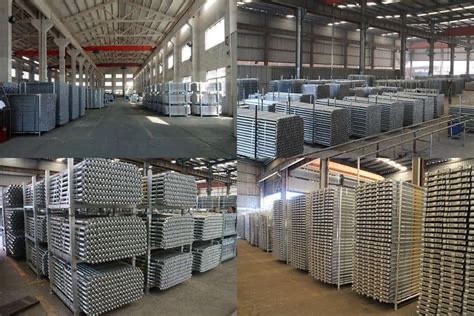
Finished components are bundled, labeled, and packaged for shipment.
- Components are often palletized for easy handling.
- Protective wrapping prevents damage during transport.
- Documentation includes test reports and certificates for traceability.
Machinery Used in Cuplock Scaffolding Factories
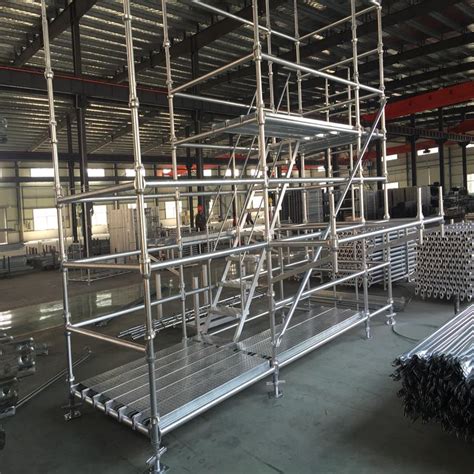
According to Sohal Welding Works, essential machines include:
- Pipe cutting machine
- Thread rolling machines (tie rod, three-roll)
- Welding machines for base jacks, ledgers, standards, and props
- Multidrilling and punching machines
- Pipe straightening machine
- Power press machines
- Scaffolding painting conveyor
- Tool sharpening machines for cutters, taps, and drills
Advantages of Cuplock Scaffolding System Production
- Modular Design: Prefabricated components reduce onsite assembly time.
- High Strength: Welded cups provide robust connections.
- Versatility: Components can be adapted for various structures, including curved and complex shapes.
- Durability: Hot-dip galvanizing ensures long service life.
- Safety: Compliance with international standards guarantees worker safety.
Additional Production Details and Innovations
Automated Production Lines
Modern cuplock scaffolding factories increasingly adopt automated production lines to enhance efficiency and consistency. Automated welding robots, CNC drilling machines, and robotic painting systems minimize human error and speed up production.
Customization and Special Orders
Factories often provide customized solutions for clients, including special lengths of standards, unique accessories, or coatings tailored for specific environments such as marine or chemical plants.
Environmental and Safety Practices
Leading cuplock scaffolding factories implement environmentally friendly practices such as wastewater treatment in galvanizing, recycling steel scraps, and ensuring worker safety through training and protective equipment.
Conclusion
The production process in cuplock scaffolding factories is a complex, multi-step operation requiring advanced machinery, skilled labor, and strict quality management. From raw material preparation to welding, galvanizing, and final inspection, every stage is designed to ensure the highest standards of safety, durability, and performance.
Cuplock scaffolding's unique locking mechanism and modular components make it a preferred choice globally. By understanding the production process, buyers and contractors can appreciate the quality and reliability behind these scaffolding systems.
FAQ
1. What materials are used in cuplock scaffolding production?
High-quality structural steel tubes with an outer diameter of 48.3 mm and wall thickness between 3.2 mm to 4.0 mm are used, complying with EN 12810 and BS1139 standards.
2. How are the cups welded onto the standards?
Automated welding machines perform precise welding of fixed lower cups and rotating upper cups onto vertical tubes, ensuring strong and durable joints.
3. What surface treatments are applied to cuplock scaffolding components?
Hot-dip galvanizing is the most common treatment, providing corrosion resistance. Some factories also offer powder coating or painting.
4. How is quality ensured in cuplock scaffolding factories?
Through dimensional checks, weld inspections, mechanical testing, coating thickness measurement, and load testing, following ISO 9001 and CE certification standards.
5. What machinery is essential in a cuplock scaffolding factory?
Key machines include pipe cutting, thread rolling, welding machines for various components, multidrilling and punching machines, pipe straightening, and painting conveyors.