Content Menu
● Why Scaffold Tower Size Matters
● Platform Height vs. Working Height
● Factors to Consider When Choosing Scaffold Tower Size
● Standard Scaffold Tower Dimensions and Configurations
>> Height
>> Width
>> Length
● How to Calculate the Scaffold Tower Height You Need
>> Step 1: Measure the Highest Work Point
>> Step 2: Subtract Your Standing Reach
>> Step 3: Choose the Nearest Standard Platform Height
● Width and Length: Single vs. Double Width Towers
>> Single-Width Towers
>> Double-Width Towers
● Sizing Examples for Common Projects
● Safety Standards and Height Limits
>> Maximum Heights
>> Height-to-Base Ratio
>> Load Capacity
● Advanced Tips: Adjusting for Uneven Ground and Special Situations
● Additional Considerations: Materials, Accessories, and Storage
>> Materials
>> Accessories
>> Storage
● Innovations in Scaffold Tower Design
● Environmental and Regulatory Compliance
● Conclusion
● FAQ
>> 1. What is the difference between platform height and working height?
>> 2. How high can a scaffold tower go?
>> 3. What width scaffold tower do I need?
>> 4. Can I change the height of my scaffold tower after purchase?
>> 5. Are scaffold towers safe to use on uneven ground?
Selecting the right size scaffold tower is crucial for safety, efficiency, and cost-effectiveness in any construction, maintenance, or DIY project. With a wide range of heights, widths, and configurations available, understanding how to determine the ideal scaffold tower size can help you work smarter and safer. This comprehensive guide covers everything you need to know about scaffold tower sizing, including key definitions, industry standards, real-world examples, and practical tips.

Why Scaffold Tower Size Matters
A scaffold tower is more than just a temporary platform—it's a critical safety structure that must be tailored to your project's unique requirements. Choosing a tower that's too small can make work unsafe or impossible, while an oversized tower can be cumbersome, expensive, and difficult to maneuver. The right size ensures stability, maximizes productivity, and complies with safety regulations.
Platform Height vs. Working Height
Understanding scaffold tower sizing starts with two essential terms:
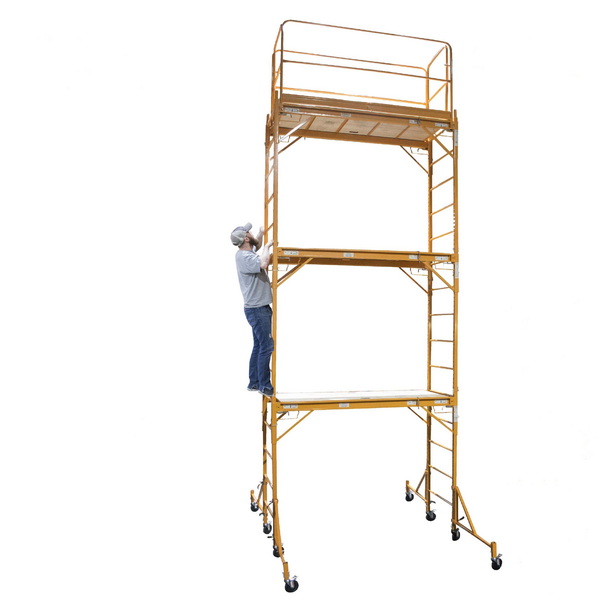
- Platform Height: The vertical distance from the ground to the top platform where a worker stands.
- Working Height: The maximum height a worker can safely reach, usually calculated as platform height plus 2 meters (the average reach of a standing person).
| Term | Definition | Example (12m Tower) |
| Platform Height | Height to the top platform | 12 meters (39 feet) |
| Working Height | Platform height + 2 meters (worker's reach) | 14 meters (46 feet) |
Factors to Consider When Choosing Scaffold Tower Size
Selecting the right scaffold tower size involves evaluating several key factors:
- Project Requirements: What is the highest point you need to reach? Are you working on a single-story or multi-story building?
- Work Site Environment: Is the work indoors or outdoors? Outdoor towers face wind and weather, which affect safe maximum heights.
- Space Constraints: How much room is available at the site? Narrow spaces may require single-width towers.
- Load Capacity: How many workers, tools, and materials will be on the platform at once?
- Access Needs: Will you need to move the tower frequently or work over obstacles?
- Regulatory Compliance: Are there local or national standards that limit tower height or require tie-ins and stabilizers?
Standard Scaffold Tower Dimensions and Configurations
Scaffold towers come in a variety of standard sizes to suit different tasks.
Height
- Platform Height: Ranges from 1.2 meters (3'11") for small jobs to 12 meters (39') or more for industrial applications.
- Working Height: Typically 2 meters higher than platform height.
Width
- Single-Width Towers: 0.7–0.9 meters (2'3"–2'11"), ideal for tight spaces and indoor use.
- Double-Width Towers: 1.2–1.5 meters (4'–5'), providing more room for workers and materials.
Length
- Standard Lengths: 1.8 meters (6') to 2.5 meters (8'), with some towers offering up to 3 meters (10').
| Type | Width (approx.) | Length (approx.) | Platform Height Range | Working Height Range |
| Single-Width | 0.7–0.9 m | 1.8–2.5 m | 1.2–12 m | 3.2–14.2 m |
| Double-Width | 1.2–1.5 m | 1.8–2.5 m | 1.2–12 m | 3.2–14.2 m |
How to Calculate the Scaffold Tower Height You Need
Step 1: Measure the Highest Work Point
Determine the height you need to reach, such as the top of a wall, ceiling, or gutter.
Step 2: Subtract Your Standing Reach
Most people can reach about 2 meters above the platform they stand on. Subtract this from your target height to find the required platform height.
Example Calculation:
- Target work height: 6 meters (e.g., second-story gutter)
- Worker's reach: 2 meters
- Required platform height: 6m – 2m = 4m
Step 3: Choose the Nearest Standard Platform Height
Select a scaffold tower with a platform height equal to or just above your calculated requirement. For a 6-meter working height, a 4-meter platform height tower is suitable.

Width and Length: Single vs. Double Width Towers
Single-Width Towers
- Best for: Narrow spaces, indoor use, access through doorways.
- Typical width: 0.7–0.9 meters.
- Platform: Usually one per level.
Double-Width Towers
- Best for: Larger projects, outdoor use, when more space is needed for tools and materials.
- Typical width: 1.2–1.5 meters.
- Platform: Two per level, allowing more workers and equipment.
Sizing Examples for Common Projects
| Project Type | Recommended Platform Height | Working Height | Tower Width |
| Interior painting | 2–3 m | 4–5 m | Single-width |
| Exterior window repair | 4–5 m | 6–7 m | Double-width |
| Gutter cleaning (2-story) | 4–5 m | 6–7 m | Double-width |
| Roof repairs (2–3 story) | 6–8 m | 8–10 m | Double-width |
| Warehouse maintenance | 8–12 m | 10–14 m | Double-width |
Safety Standards and Height Limits
Maximum Heights
- Indoor Use: Up to 12 meters (39') platform height for most standard towers.
- Outdoor Use: Typically limited to 8 meters (26') free-standing due to wind risk; up to 12 meters if tied to a structure.
- DIY Towers: Often limited to 5–7 meters for safety and ease of use.
Height-to-Base Ratio
- General Rule: Maximum platform height should not exceed 3–4 times the smallest base width without anchoring.
- Stabilizers: Required for tall or narrow towers to prevent tipping.
Load Capacity
- Typical rating: 150 kg (330 lbs) per platform for DIY towers; up to 950 kg (2,094 lbs) for industrial towers.
Advanced Tips: Adjusting for Uneven Ground and Special Situations
- Adjustable Legs: Use towers with adjustable legs for minor unevenness; avoid slopes over 5 degrees.
- Outriggers/Stabilizers: Always install for added stability, especially at greater heights.
- Modular Extensions: Many towers allow you to add sections to increase height as needed, but never exceed manufacturer specifications.
- Storage and Transport: Consider the packed size and weight of the tower for ease of storage and movement.
Additional Considerations: Materials, Accessories, and Storage
Materials
Scaffold towers are made from various materials, each with unique advantages:
- Aluminum: Lightweight, rust-resistant, and easy to transport—ideal for frequent setup and takedown.
- Steel: Heavier but offers superior strength and durability, often used for industrial or long-term projects.
- Fiberglass (GRP): Non-conductive, making it the safest choice for electrical work or environments with high voltage.
Accessories
- Toe Boards: Prevent tools and materials from falling off the platform.
- Guardrails: Essential for worker safety at height.
- Ladders or Stairways: Integrated for safe access to upper levels.
- Bracing Kits: Provide extra stability, especially on taller towers.
Storage
- Compact Design: Many towers are designed to fold or break down into manageable sections for easy storage in vans or small spaces.
- Weather Protection: Store towers in dry, covered areas to prevent corrosion and extend lifespan.
Innovations in Scaffold Tower Design
Recent years have seen significant advancements in scaffold tower technology:
- Quick-Lock Systems: Allow for faster assembly and disassembly without tools, reducing setup time.
- Color-Coded Components: Simplify assembly by making it easy to identify matching parts.
- Self-Leveling Bases: Automatically adjust to minor ground irregularities, enhancing safety.
- Integrated Safety Features: Built-in guardrails, anti-slip platforms, and locking casters are now standard on many models.
Environmental and Regulatory Compliance
Using scaffold towers in compliance with local regulations and environmental standards is crucial. Many regions require adherence to specific safety codes and certifications, such as OSHA standards in the United States or EN standards in Europe. Ensuring compliance not only promotes safety but also avoids legal penalties. Additionally, responsible disposal and recycling of scaffold components at the end of their life cycle contribute to environmental sustainability.
Conclusion
Choosing the correct size scaffold tower is a balance of safety, practicality, and project requirements. By understanding the difference between platform height and working height, assessing your work environment, and following safety standards, you can select a tower that meets your needs and keeps your team safe. Always consult manufacturer guidelines and local regulations, and never compromise on stability or load limits. With the right scaffold tower, you'll work more efficiently and confidently at any height.
FAQ
1. What is the difference between platform height and working height?
Platform height is the distance from the ground to the top platform where you stand. Working height is platform height plus your reach (typically 2 meters), representing the highest point you can safely work at.
2. How high can a scaffold tower go?
Standard scaffold towers can reach platform heights of 10–12 meters (33–39 feet) indoors. Outdoor towers are usually limited to 8 meters free-standing, or 12 meters if tied to a structure.
3. What width scaffold tower do I need?
Single-width towers (0.7–0.9 meters) are ideal for tight spaces and indoor use, while double-width towers (1.2–1.5 meters) offer more space for workers and materials, suitable for larger or outdoor projects.
4. Can I change the height of my scaffold tower after purchase?
Yes, many scaffold towers are modular and allow you to add or remove sections to adjust the height. Always follow the manufacturer's instructions and never exceed the recommended maximum height.
5. Are scaffold towers safe to use on uneven ground?
Scaffold towers with adjustable legs can be used on slightly uneven ground, but avoid slopes over 5 degrees. Always use stabilizers and ensure the base is secure before climbing.