Content Menu
● Introduction
● The Role of Ladders in Scaffolding Systems
● Main Types of Ladders Used in Scaffolding Systems
>> 1. Straight Ladders (Single Ladders)
>> 2. Extension Ladders
>> 3. Platform Ladders
>> 4. Hook-On and Attachable Ladders
>> 5. Built-In Frame Ladders
● Specialized Ladder Scaffolding Systems
>> Ladder Jack Scaffolding
>> Mobile Ladder Scaffolds
>> Trestle Ladder Scaffolds
● Ladder Materials and Design Considerations
>> Common Materials:
>> Design Considerations:
● Safety Guidelines for Using Ladders in Scaffolding
● Inspection and Maintenance of Ladders in Scaffolding
● Ladder Access Gates and Safety Enhancements
● Training and Worker Competency
● Conclusion
● FAQ
>> 1. What is the safest type of ladder for scaffolding systems?
>> 2. Can I use a regular household ladder in scaffolding systems?
>> 3. How should a ladder be positioned in a scaffolding system?
>> 4. What are the inspection requirements for ladders in scaffolding?
>> 5. Are there specific ladders for different scaffolding systems?
Ladders are an essential component of scaffolding systems, providing safe and reliable access to elevated work platforms across construction, maintenance, and industrial settings. The variety and adaptability of ladders in scaffolding systems are crucial for ensuring both productivity and worker safety.
Introduction
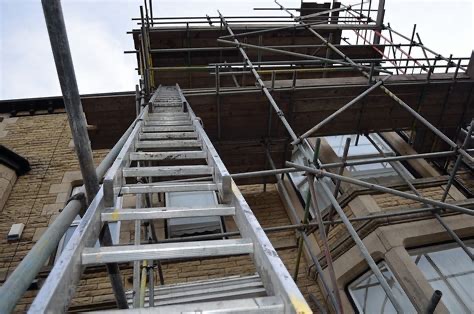
Scaffolding systems are indispensable for accessing work at heights, but their effectiveness and safety depend heavily on the type of ladder used for access. The right ladder in scaffolding ensures workers can safely ascend and descend, transport tools, and perform tasks efficiently. With numerous ladder types and configurations available, understanding their use in scaffolding systems is critical for any construction professional or site manager.
The Role of Ladders in Scaffolding Systems
Ladders in scaffolding systems serve as the primary means of access between ground level and working platforms. They are strategically positioned at designated access points to allow workers to move safely between levels without climbing scaffold frames or crossbraces, which is both unsafe and non-compliant with regulatory standards.
Properly installed ladders in scaffolding systems:
- Provide safe, stable access to all scaffold levels
- Reduce the risk of falls and injuries
- Ensure compliance with OSHA and other safety regulations
- Increase efficiency by allowing smooth movement of personnel and materials
Main Types of Ladders Used in Scaffolding Systems
Various ladder types are integrated into scaffolding systems, each suited for specific applications and scaffold configurations. Here are the most common types:
1. Straight Ladders (Single Ladders)
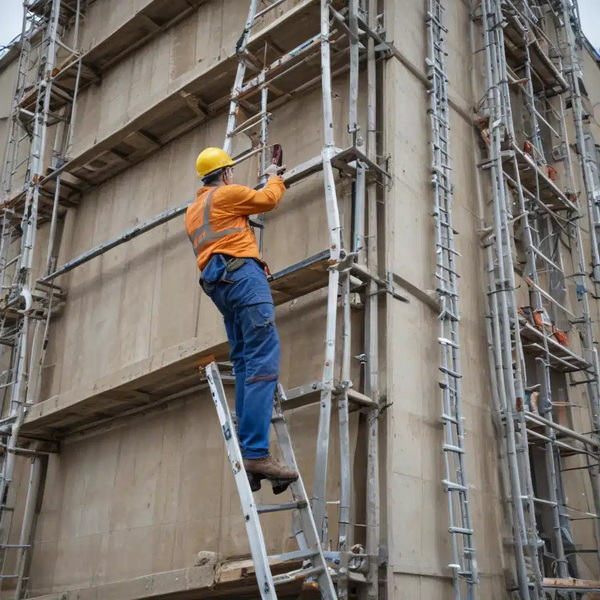
Straight ladders are non-adjustable, single-section ladders that lean against the scaffold structure. They are simple, lightweight, and widely used for direct access to platforms. These ladders must be secured at the top and bottom and extend at least three feet above the landing platform for safe transition.
Key Features:
- Non-adjustable length (typically 4–30 feet)
- One climbable side
- Require level ground support
- Used for quick access to lower scaffold levels
2. Extension Ladders
Extension ladders consist of two or more sections that slide to adjust the ladder's length, making them ideal for reaching higher platforms. They must be secured and set at a safe angle (typically 75–80 degrees) to ensure stability.
Key Features:
- Adjustable length for various heights
- Require secure placement and overlap between sections
- Commonly used for exterior scaffolding access
3. Platform Ladders
Platform ladders are self-supporting and feature a platform at the top, providing a stable surface for extended tasks. While not as common as straight or extension ladders in scaffolding, they are useful for specific jobs requiring stability and tool handling.
Key Features:
- Built-in platform with guardrails
- Hinged for easy storage
- Suitable for long-duration tasks on lower levels
4. Hook-On and Attachable Ladders
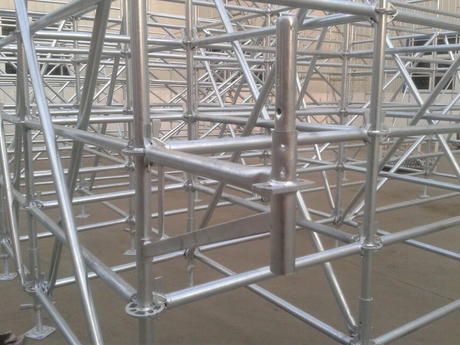
These ladders are specifically designed to attach directly to the scaffold structure using hooks or clamps. Hook-on ladders are popular in modular systems like ringlock, cuplock, and kwikstage scaffolding.
Key Features:
- Securely attach to scaffold frames or horizontals
- Prevent movement or slippage
- Available in steel or aluminum
5. Built-In Frame Ladders
Some scaffolding frames are manufactured with integrated ladder rungs, allowing workers to climb the frame itself. These are common in frame scaffolding systems and are designed to meet safety standards for rung spacing and strength.
Key Features:
- Rungs built into the scaffold frame
- No separate ladder required
- Used in walk-through or combo frames
Specialized Ladder Scaffolding Systems
In addition to standard ladders, several specialized scaffolding systems incorporate ladders as a core component:
Ladder Jack Scaffolding
Ladder jack scaffolding uses two or more straight or extension ladders as supports, with brackets (jacks) holding a work platform between them. This system is cost-effective and ideal for short-term or light-duty tasks such as painting or siding.
Key Features:
- Quick setup and removal
- Adjustable platform height
- Not suitable for heavy loads or high elevations
Mobile Ladder Scaffolds
Mobile ladder scaffolds (rolling scaffolds) have integrated ladders and are mounted on casters for easy movement. These are ideal for tasks requiring frequent repositioning, such as maintenance or interior finishing.
Key Features:
- Built-in ladder access
- Lockable wheels for stability
- Larger platforms with guardrails
Trestle Ladder Scaffolds
Trestle scaffolds use trestle ladders (self-supporting, double-sided ladders) as supports for a platform. These are often used indoors for tasks up to 5 meters high.
Key Features:
- Portable and easy to set up
- Suitable for low to medium heights
Ladder Materials and Design Considerations
The material and design of a ladder in scaffolding systems directly affect its safety, durability, and suitability for specific applications.
Common Materials:
- Steel: Offers high load capacity and durability; often used for hook-on and built-in ladders in modular scaffolding systems.
- Aluminum: Lightweight and corrosion-resistant; preferred in some kwikstage and frame scaffolding systems for ease of handling.
- Fiberglass: Used in environments where electrical insulation is required, though less common in heavy-duty scaffolding.
Design Considerations:
- Rung Spacing: Must comply with safety standards (typically 12 inches apart) for safe climbing.
- Width: Sufficient for safe ascent and descent, usually 16–18 inches wide.
- Attachment: Ladders must be securely fastened to prevent movement; hook-on or clamp systems are preferred.
- Load Rating: Must support the combined weight of workers, tools, and materials; check manufacturer specifications.
- Weather Resistance: Ladders exposed to outdoor elements should be made from corrosion-resistant materials and coatings.
Safety Guidelines for Using Ladders in Scaffolding
Safety is paramount when using any ladder in scaffolding systems. Key guidelines include:
- Secure Placement: Ladders must be placed on stable, level ground and secured at both ends to prevent slipping or tipping.
- Proper Angle: Set ladders at a 75–80 degree angle for optimal stability.
- Three-Point Contact: Always maintain three points of contact (two hands and one foot, or two feet and one hand) when climbing.
- Extension Above Platform: Ladders should extend at least three feet above the landing platform to allow safe transition.
- Inspection: Regularly inspect ladders for damage, wear, or defects before each use.
- Weight Limits: Never exceed the ladder's rated capacity; distribute weight evenly.
- No Improvised Access: Never use crossbraces or scaffold frames as ladders.
- Fall Protection: Use guardrails, midrails, toeboards, and personal fall arrest systems as required by regulations.
- Clear Access: Keep the area around the base and top of ladders free from obstructions, debris, and tripping hazards.
Inspection and Maintenance of Ladders in Scaffolding
Regular inspection and maintenance of ladders in scaffolding systems are critical for preventing accidents and ensuring compliance.
Inspection Checklist:
- Check for structural integrity (no cracks, bends, or rust)
- Ensure all rungs and steps are secure and slip-resistant
- Verify locking mechanisms and clamps are functional
- Confirm ladders are properly attached to the scaffold
- Ensure ladders are free from grease, oil, or other slip hazards
- Document inspections and repairs in a log for accountability
Maintenance Tips:
- Clean ladders regularly to prevent buildup of debris
- Lubricate moving parts as recommended by the manufacturer
- Replace damaged or worn components immediately
- Store ladders in a dry, secure location when not in use
Ladder Access Gates and Safety Enhancements
Ladder access gates are an increasingly common safety enhancement in modern scaffolding systems. These self-closing, lockable gates are installed at ladder openings to prevent accidental falls and unauthorized access. They are especially important in high-traffic areas or where multiple trades are working simultaneously.
Benefits of Ladder Access Gates:
- Prevent accidental falls through ladder openings
- Ensure only authorized personnel can access scaffold platforms
- Reinforce compliance with OSHA and international safety standards
- Provide a visual reminder of access control and site safety
When selecting a ladder access gate, ensure it is compatible with your scaffold system and meets all regulatory requirements for self-closing and latching features.
Training and Worker Competency
Proper training is essential for anyone using a ladder in scaffolding systems. Workers should be trained to:
- Identify the correct ladder type for each task and scaffold configuration
- Inspect ladders before use and report defects
- Use ladders safely, maintaining three points of contact and proper positioning
- Recognize hazards such as electrical lines, poor weather, or unstable surfaces
- Understand the importance of ladder access gates and other safety enhancements
Regular refresher training and on-site supervision help reinforce safe practices and reduce the risk of accidents.
Conclusion
The type of ladder used in scaffolding systems is a critical factor in ensuring safe, efficient, and compliant work at heights. From straight and extension ladders to hook-on, built-in, and ladder jack systems, each type serves specific needs and scaffold configurations. Material selection, secure attachment, proper angle, and regular inspection are all essential for maximizing safety. By understanding the various types of ladders in scaffolding systems and adhering to best practices, construction professionals can protect workers, improve productivity, and meet regulatory requirements. Safety enhancements like ladder access gates and comprehensive worker training further strengthen the safety culture on any jobsite.
FAQ
1. What is the safest type of ladder for scaffolding systems?
The safest ladder in scaffolding is one specifically designed for scaffold access, such as hook-on or built-in frame ladders, which securely attach to the structure and comply with safety standards for rung spacing, load rating, and attachment.
2. Can I use a regular household ladder in scaffolding systems?
No. Only ladders designed and rated for scaffold use should be used. Regular household ladders may not meet the required safety, load, and attachment standards, increasing the risk of accidents.
3. How should a ladder be positioned in a scaffolding system?
Ladders should be placed at a 75–80 degree angle, secured at both ends, and extend at least three feet above the platform. The bottom rung should be no more than two feet above the ground or scaffold support level.
4. What are the inspection requirements for ladders in scaffolding?
Ladders must be inspected before each shift and after any incident that could affect their integrity. Inspections should check for structural damage, secure attachment, clean rungs, and functional locking mechanisms.
5. Are there specific ladders for different scaffolding systems?
Yes. Different scaffolding systems (e.g., ringlock, cuplock, frame scaffolding) often require specific ladder types, such as hook-on ladders, built-in frame ladders, or straight ladders with clamps. Always use ladders recommended by the scaffold manufacturer.