Content Menu
● Introduction to Tube and Clamp Scaffolding
● Key Components of Tube and Clamp Scaffolding
● History of Tube and Clamp Scaffolding
>> Early Developments
>> Modern Era
● Advantages of Tube and Clamp Scaffolding
● Disadvantages of Tube and Clamp Scaffolding
● Safety Considerations
● Applications of Tube and Clamp Scaffolding
● Innovations in Tube and Clamp Scaffolding
● Environmental Impact
● Cost Considerations
● Training and Certification
● Future Developments
● Case Studies
● Conclusion
● FAQ
>> 1. When was tube and clamp scaffolding invented?
>> 2. What are the main components of tube and clamp scaffolding?
>> 3. What are the advantages of using tube and clamp scaffolding?
>> 4. How does tube and clamp scaffolding compare to modular scaffolding?
>> 5. What are common applications of tube and clamp scaffolding?
● Citations:
Tube and clamp scaffolding, also known as tube and coupler scaffolding, has a rich history that dates back to the early 20th century. This type of scaffolding revolutionized the construction industry by providing a more durable and versatile alternative to traditional wooden scaffolds.
Introduction to Tube and Clamp Scaffolding
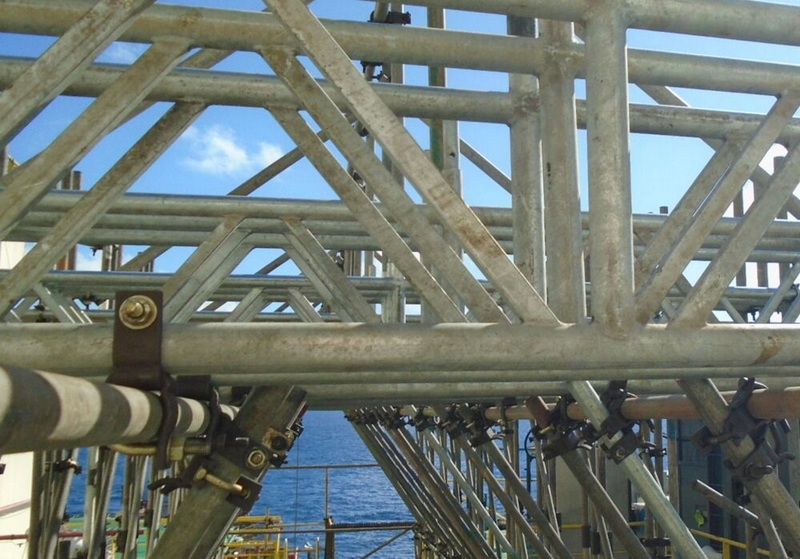
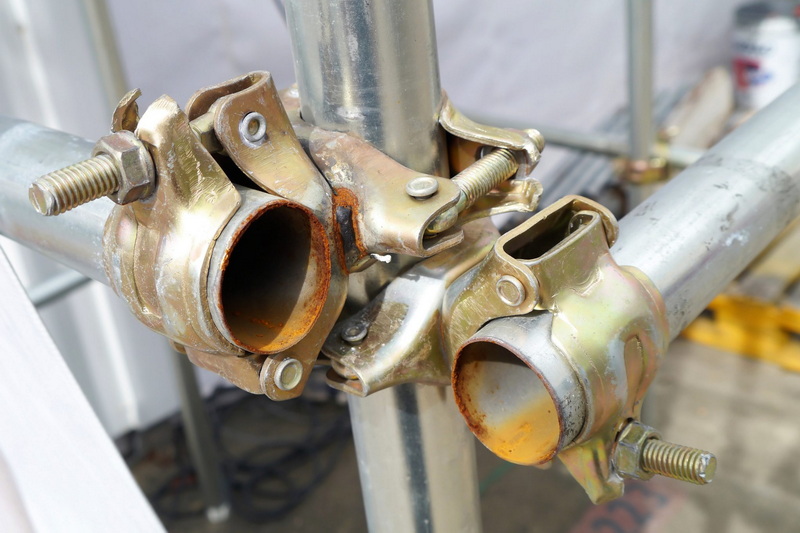
Tube and clamp scaffolding consists of steel or aluminum tubes connected by clamps or couplers. This design allows for a high degree of flexibility and customization, making it suitable for complex construction projects. The invention of tube and clamp scaffolding is attributed to the innovations of Daniel Palmer-Jones and his brother David, who introduced standardized fixings to secure metal poles more effectively than rope knots.
Key Components of Tube and Clamp Scaffolding
1. Tubes: These are the primary structural elements, available in various lengths to accommodate different heights and configurations. They are typically made from steel or aluminum, providing strength and durability.
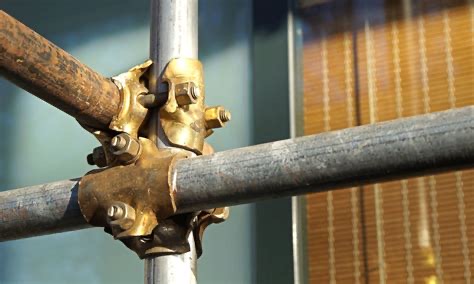
2. Clamps/Couplers: These are used to connect the tubes together, forming the framework of the scaffold. There are different types of clamps, such as right-angle clamps and swivel clamps, which provide stability and flexibility.
3. Standards: These are the vertical tubes that act as the main support for the scaffold.
4. Ledgers: These are horizontal tubes that connect the standards, providing lateral support.
5. Transoms: These are smaller tubes that run perpendicular to the ledgers, adding stability and providing a surface for platforms.
History of Tube and Clamp Scaffolding
The history of scaffolding dates back thousands of years, with evidence of early scaffolding structures used in ancient civilizations such as Greece and Egypt[1][5]. However, the modern version of tube and clamp scaffolding began to take shape in the early 20th century.
Early Developments
In the late 19th and early 20th centuries, wooden scaffolding was common but often prone to collapse under its own weight[6]. The introduction of steel tubing in the early 20th century marked a significant improvement, offering a lighter yet more durable alternative[7].
Daniel Palmer-Jones and his brother David are credited with inventing the "Scaffixer" in either 1907 or 1910, a coupling device that replaced rope knots and revolutionized scaffolding construction[1][2]. This innovation led to the development of the "Universal Coupler" in 1919, which became the industry standard for connecting scaffolding tubes[1][3].
Modern Era
The use of tube and clamp scaffolding became widespread in the mid-20th century, especially after World War II, when standardized frame systems were introduced[1]. This period saw significant advancements in metallurgy, allowing for the production of stronger and more versatile scaffolding components[1].
Advantages of Tube and Clamp Scaffolding
- Flexibility: Tube and clamp scaffolding can be customized to fit complex building designs, making it suitable for a wide range of projects.
- Durability: Made from high-strength materials, these scaffolds can withstand harsh environmental conditions and support heavy loads.
- Efficient Storage: Due to its modular design, tube and clamp scaffolding requires less space for storage compared to other types of scaffolding.
Disadvantages of Tube and Clamp Scaffolding
- Time and Labor Intensive: Erecting tube and clamp scaffolding can be more time-consuming and labor-intensive compared to modular scaffolding systems.
- Complex Assembly: The versatility of tube and clamp scaffolding also means that its assembly can be complex, requiring skilled labor.
Safety Considerations
Safety is paramount when using tube and clamp scaffolding. Ensuring that all components are securely fastened and that the scaffold is regularly inspected for damage or wear is crucial. Additionally, workers should be trained in the proper assembly and use of tube and clamp scaffolding to prevent accidents.
Applications of Tube and Clamp Scaffolding
Tube and clamp scaffolding is widely used in construction, maintenance, and repair projects. Its versatility makes it suitable for both small-scale residential projects and large-scale commercial or industrial projects.
Innovations in Tube and Clamp Scaffolding
Recent innovations have focused on improving the efficiency and safety of tube and clamp scaffolding systems. For example, the development of advanced materials has led to lighter yet stronger scaffolding components, reducing the effort required for assembly and disassembly. Additionally, digital tools and software are being used to optimize scaffold design and ensure compliance with safety regulations.
Environmental Impact
The environmental impact of tube and clamp scaffolding is generally minimal compared to other construction materials. Since it is reusable and can be stored efficiently, it reduces waste and the need for frequent replacements. However, the production process for steel and aluminum tubes does have environmental implications, such as energy consumption and resource extraction.
Cost Considerations
The cost of tube and clamp scaffolding can vary based on the size of the project, the materials used, and the complexity of the design. While it may be more expensive upfront compared to some other scaffolding options, its reusability and durability make it a cost-effective choice in the long term.
Training and Certification
Proper training is essential for the safe and efficient use of tube and clamp scaffolding. Workers should undergo comprehensive training that covers assembly, disassembly, and safety protocols. Many countries require certification for scaffolding professionals, ensuring that they meet specific standards of competence.
Future Developments
Looking ahead, advancements in technology are expected to further enhance the efficiency and safety of tube and clamp scaffolding. For instance, the integration of AI and robotics could automate certain aspects of scaffold assembly, reducing labor costs and improving precision. Additionally, the development of sustainable materials could mitigate the environmental impact of scaffold production.
Case Studies
Several notable construction projects have successfully utilized tube and clamp scaffolding to overcome complex design challenges. For example, in historic building renovations, tube and clamp scaffolding allows for precise access to intricate architectural details without causing damage to the structure.
Conclusion
Tube and clamp scaffolding has a rich history that reflects the evolution of construction techniques and materials. From its invention in the early 20th century to its widespread use today, this type of scaffolding continues to be a versatile and essential tool in the construction industry. While it presents some challenges in terms of assembly time and complexity, its benefits make it a preferred choice for many projects. As technology advances, innovations in scaffold design and materials are likely to further enhance the efficiency and safety of tube and clamp scaffolding systems.
FAQ
1. When was tube and clamp scaffolding invented?
Tube and clamp scaffolding began to take shape in the early 20th century, with significant contributions from Daniel Palmer-Jones and his brother David, who invented the "Scaffixer" in either 1907 or 1910 and later developed the "Universal Coupler" in 1919[1][2].
2. What are the main components of tube and clamp scaffolding?
The main components include steel or aluminum tubes, clamps or couplers, standards, ledgers, and transoms. These components work together to form a stable and customizable scaffold structure.
3. What are the advantages of using tube and clamp scaffolding?
The advantages include flexibility in design, durability, and efficient storage. Tube and clamp scaffolding can be easily customized to fit complex building shapes and requires less space for storage compared to other types.
4. How does tube and clamp scaffolding compare to modular scaffolding?
Tube and clamp scaffolding offers more flexibility in design but is generally more time-consuming to assemble. Modular scaffolding, on the other hand, is quicker to erect but has fixed connection points, limiting its adaptability.
5. What are common applications of tube and clamp scaffolding?
Tube and clamp scaffolding is commonly used in construction, maintenance, and repair projects. Its versatility makes it suitable for both residential and large-scale commercial or industrial projects.
Citations:
[1] https://en.wikipedia.org/wiki/Scaffolding
[2] https://www.avontus.com/blog/history-of-scaffolding/
[3] https://7baysscaffolding.co.uk/the-history-of-scaffolding/
[4] https://www.scafom-rux.com/en/scaffolding-blog/the-tube-and-clamp-scaffold-why-this-traditional-scaffolding-type-is-still-popular-today
[5] https://shop.leachs.com/blogs/news/scaffolders-day-why-january-14th-is-a-significant-day-to-recognise-our-scaffolding-heroes
[6] https://www.stivesscaffolding.com/history-of-scaffolding
[7] https://scaffoldersforum.com/threads/the-history-of-scaffolding.2089/
[8] https://scaffoldingrentalandsales.com/blog/the-evolution-of-scaffolding/