Content Menu
● Introduction to Cuplock System Scaffolding
● Key Components of Cuplock Scaffolding
● Benefits of Cuplock System Scaffolding
>> Speed and Efficiency
>> Safety and Stability
>> Cost-Effectiveness
>> Environmental Benefits
● Applications of Cuplock System Scaffolding in India
>> High-Rise Construction Projects
>> Infrastructure Projects
>> Industrial Construction
>> Maintenance and Renovation Projects
● Export of Cuplock Scaffolding from India
● Future Prospects
● Challenges and Opportunities
>> Training and Safety Programs
>> Technological Innovations
● Conclusion
● FAQ
>> 1. What is Cuplock scaffolding?
>> 2. Why is Cuplock scaffolding popular in India?
>> 3. What are the main components of Cuplock scaffolding?
>> 4. Where is Cuplock scaffolding commonly used?
>> 5. Is Cuplock scaffolding exported from India?
● Citations:
The Cuplock system scaffolding has become a cornerstone in India's construction industry, offering a versatile, efficient, and safe solution for various projects. Developed in the early 1970s by SGB (Scaffolding Great Britain), this modular scaffolding system has gained worldwide popularity due to its ease of assembly, stability, and cost-effectiveness. In this article, we will delve into the reasons behind its popularity in India, exploring its design, benefits, applications, and future prospects.
Introduction to Cuplock System Scaffolding
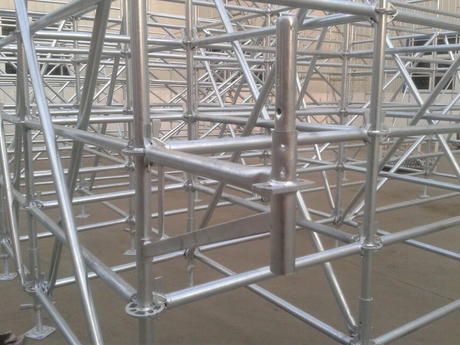
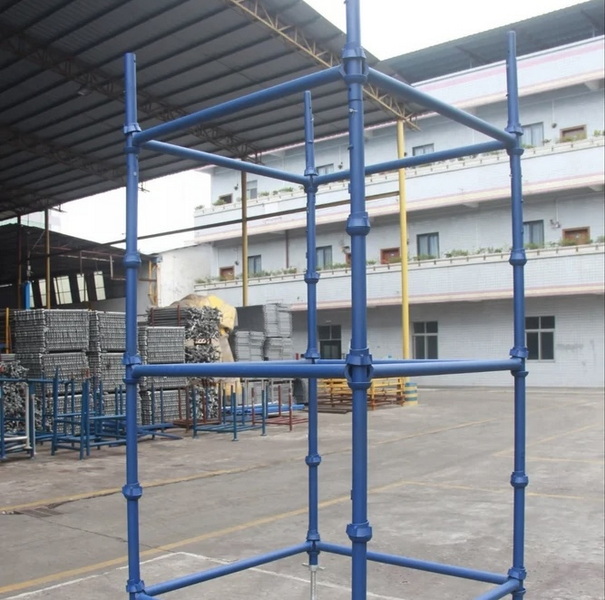
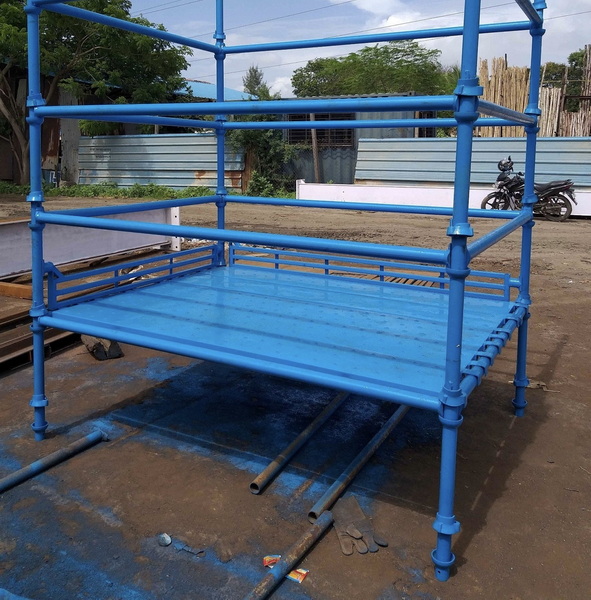
Cuplock scaffolding is a type of modular scaffolding system that consists of vertical standards with cups welded at regular intervals and horizontal ledgers that connect to these standards using a unique locking mechanism. This mechanism allows for quick and secure assembly without the need for nuts and bolts, making it a preferred choice for construction projects where speed and efficiency are crucial.
Key Components of Cuplock Scaffolding
- Vertical Standards: Made from high-grade steel tubes, these are the main uprights of the scaffolding structure.
- Ledgers: Horizontal tubes that connect to the vertical standards using the cuplock mechanism.
- Cups: These are the locking devices that secure the ledgers to the standards.
- Braces: Provide additional stability to the structure.
- Transoms: Support the scaffold boards and ensure a stable working platform.
Benefits of Cuplock System Scaffolding
Speed and Efficiency
The modular design and self-locking mechanism of Cuplock scaffolding allow for rapid assembly and dismantling, reducing labor costs and project timelines. This is particularly beneficial in India, where construction projects often face tight deadlines. For instance, in large-scale infrastructure projects, the ability to quickly erect scaffolding can significantly accelerate the construction process, allowing for faster completion and earlier project delivery.
Safety and Stability
The secure locking mechanism provides enhanced stability and load-bearing capacity, reducing the risk of accidents and ensuring the safety of workers and materials at height. This is critical in high-rise construction projects common in Indian cities. The stability of Cuplock scaffolding also allows for the safe installation of heavy machinery and materials, further enhancing project efficiency.
Cost-Effectiveness
The streamlined assembly process and reusable components offer cost savings over time compared to traditional scaffolding methods. This makes Cuplock scaffolding an economical choice for long-term projects. Additionally, the durability of Cuplock components means they can be reused multiple times, reducing the need for frequent replacements and lowering overall project costs.
Environmental Benefits
Cuplock scaffolding is also environmentally friendly as it minimizes waste and reduces the carbon footprint associated with frequent material replacements. This aligns with India's growing focus on sustainable construction practices.
Applications of Cuplock System Scaffolding in India
Cuplock scaffolding is widely used in various construction applications across India:
High-Rise Construction Projects
It provides a secure platform for workers to construct buildings, supporting activities like bricklaying, concrete pouring, and installing fixtures. The multiple levels and strong base of Cuplock scaffolding support workers and materials in high-rise projects. For example, in cities like Mumbai and Delhi, Cuplock scaffolding is often used in skyscraper construction, providing a stable and efficient working platform for workers.
Infrastructure Projects
Cuplock scaffolding supports the construction of bridges and tunnels, allowing workers to safely access and install beams, columns, and other structures. Its stability is important for infrastructure that requires high-strength support. In projects like the Mumbai Metro or the Delhi-Mumbai Expressway, Cuplock scaffolding plays a crucial role in facilitating the construction of complex infrastructure.
Industrial Construction
It is used to build refineries, power plants, and factories, handling the heavy loads of industrial construction. Workers can safely install pipes, tanks, and machinery at various heights. For instance, in the construction of large-scale industrial facilities, Cuplock scaffolding provides the necessary support for heavy equipment installation.
Maintenance and Renovation Projects
Cuplock scaffolding is ideal for high-rise buildings undergoing maintenance or renovation, providing a stable platform for tasks like replacing windows or painting walls. Its ease of assembly and disassembly makes it suitable for short-term projects where scaffolding needs to be erected and dismantled quickly.
Export of Cuplock Scaffolding from India
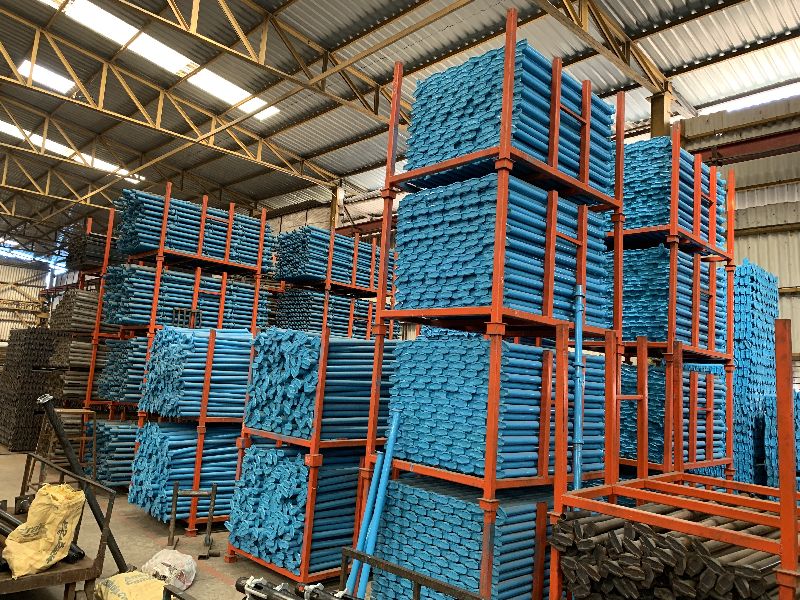
India is the largest exporter of Cuplock scaffolding globally, with significant shipments to countries like Qatar, Kuwait, and Saudi Arabia. This highlights the quality and reliability of Indian-made Cuplock scaffolding systems. The export market for Cuplock scaffolding from India is driven by its competitive pricing, high-quality manufacturing standards, and the ability to meet large-scale demand efficiently.
Future Prospects
As India continues to grow its construction sector, the demand for Cuplock scaffolding is expected to rise, both domestically and internationally. The government's focus on infrastructure development and urbanization will further boost the demand for efficient and safe scaffolding solutions. Additionally, advancements in technology and manufacturing processes are likely to enhance the durability and efficiency of Cuplock scaffolding, making it an even more attractive option for construction projects worldwide.
Challenges and Opportunities
Despite its popularity, Cuplock scaffolding faces challenges such as competition from other scaffolding systems and the need for skilled labor to assemble and dismantle it efficiently. However, these challenges also present opportunities for innovation and training programs that can further enhance the efficiency and safety of Cuplock scaffolding.
Training and Safety Programs
To address the need for skilled labor, training programs are being implemented to ensure that workers are proficient in assembling and dismantling Cuplock scaffolding safely and efficiently. These programs not only improve project timelines but also reduce the risk of accidents, aligning with India's focus on workplace safety.
Technological Innovations
Advancements in materials and design are expected to improve the durability and efficiency of Cuplock scaffolding. For example, the use of advanced steel alloys can enhance the load-bearing capacity and lifespan of the scaffolding components. Additionally, digital tools and software can streamline the planning and execution of scaffolding installation, further optimizing project timelines.
Conclusion
Cuplock system scaffolding has become a preferred choice in India due to its efficiency, safety, and cost-effectiveness. Its versatility and stability make it suitable for a wide range of construction projects, from high-rise buildings to infrastructure and industrial developments. As India continues to grow its construction sector, the demand for Cuplock scaffolding is expected to rise, both domestically and internationally.
FAQ
1. What is Cuplock scaffolding?
Cuplock scaffolding is a modular scaffolding system that uses vertical standards and horizontal ledgers connected by a unique locking mechanism, allowing for quick assembly and disassembly.
2. Why is Cuplock scaffolding popular in India?
Cuplock scaffolding is popular in India due to its speed, safety, and cost-effectiveness, making it ideal for the country's fast-paced construction environment.
3. What are the main components of Cuplock scaffolding?
The main components include vertical standards, ledgers, cups, braces, and transoms.
4. Where is Cuplock scaffolding commonly used?
It is commonly used in high-rise construction, infrastructure projects, industrial construction, and maintenance or renovation projects.
5. Is Cuplock scaffolding exported from India?
Yes, India is the largest exporter of Cuplock scaffolding, with major exports to countries like Qatar, Kuwait, and Saudi Arabia.
Citations:
[1] https://www.volza.com/p/cuplock-scaffolding/export/export-from-india/
[2] https://www.youtube.com/watch?v=ojYR6MRAoEI
[3] https://www.alibaba.com/showroom/cuplock-scaffolding-design.html
[4] https://primesteeltech.co.in/cuplock-scaffolding-system-a-comprehensive-study.html
[5] https://www.youtube.com/watch?v=-ScFRrK-FKo
[6] https://www.indiamart.com/proddetail/cuplock-scaffolding-supporting-systems-23976165188.html
[7] https://www.linkedin.com/pulse/cuplock-system-decking-infill-advantages-origin-abhishek-mishra
[8] https://www.youtube.com/watch?v=QSKy3RkmKs8
[9] https://primesteeltech.co.in/cuplock-scaffolding-systems-benefits-components-applications-explained.html