Content Menu
● What Is An Aluminum Telescoping Scaffold Plank?
● Why Use Aluminum Telescoping Scaffold Planks?
● Step-by-Step Guide: How to Adjust an Aluminum Telescoping Scaffold Plank
>> Step 1: Inspect the Plank Before Use
>> Step 2: Unlock the Plank
>> Step 3: Extend or Retract to Desired Length
>> Step 4: Lock the Plank Securely
>> Step 5: Attach the Plank to Scaffold or Ladder
>> Step 6: Final Safety Check
● Tips for Safe Adjustment and Use
● Common Issues and Troubleshooting
● Applications of Aluminum Telescoping Scaffold Planks
● Advantages Over Fixed-Length Planks
● Maintenance and Care
● Environmental Impact and Sustainability
● Conclusion
● FAQ
>> 1. How do you unlock and adjust the length of an aluminum telescoping scaffold plank?
>> 2. What is the typical load capacity of aluminum telescoping scaffold planks?
>> 3. Can aluminum telescoping scaffold planks be used with any ladder or scaffold?
>> 4. How do I ensure the plank is securely locked at the desired length?
>> 5. How should I maintain my aluminum telescoping scaffold plank?
Aluminum telescoping scaffold planks have revolutionized the way professionals and DIYers work at height by offering adjustable, lightweight, and durable platforms. These planks provide flexibility in length, ease of transport, and reliable safety features, making them a popular choice for scaffolding and ladder setups. This detailed guide explains how to adjust an aluminum telescoping scaffold plank, covering step-by-step instructions, safety tips, common issues, and practical applications.
What Is An Aluminum Telescoping Scaffold Plank?
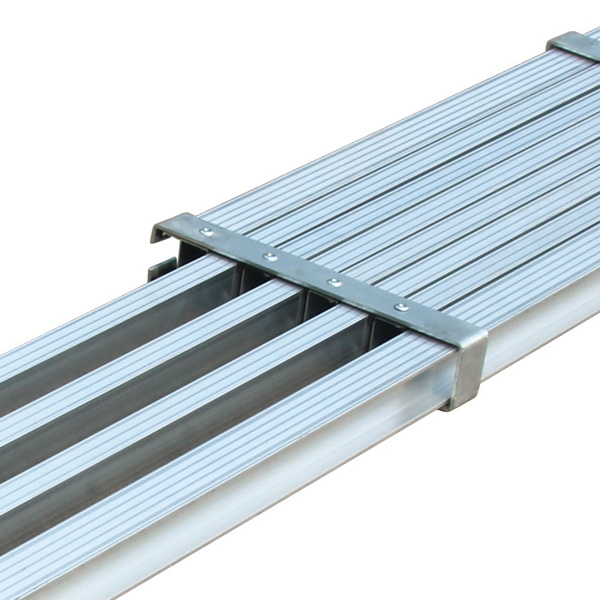
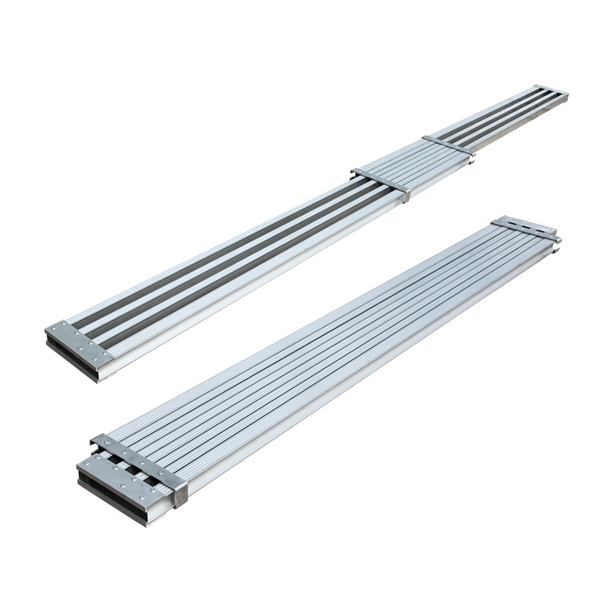
An aluminum telescoping scaffold plank is a work platform made from high-grade aluminum that can extend or retract to various lengths. Unlike fixed-length planks, these planks slide within themselves and lock securely at the desired length, making them adaptable to different scaffold widths or ladder setups.
Key characteristics include:
- Adjustable length: Typically available in ranges such as 6–9 ft, 8–13 ft, or 9–15 ft.
- Lightweight: Aluminum construction reduces weight, easing handling.
- High load capacity: Often rated to hold between 250 lbs and 500 lbs.
- Non-slip surface: Grooved or textured to prevent slipping.
- Locking mechanisms: Secure the plank at the chosen length and attach firmly to ladder rungs or scaffold frames.
Why Use Aluminum Telescoping Scaffold Planks?
- Versatility: Adjust length to fit various scaffold widths or ladder configurations.
- Portability: Lightweight and compact when retracted for easy transport.
- Durability: Corrosion-resistant aluminum withstands harsh environments.
- Safety: Locking hooks and anti-slip surfaces enhance worker safety.
- Cost-effective: Reduces the need for multiple fixed-length planks.
Step-by-Step Guide: How to Adjust an Aluminum Telescoping Scaffold Plank
Adjusting an aluminum telescoping scaffold plank is straightforward but requires attention to safety and proper technique.
Step 1: Inspect the Plank Before Use
- Check for visible damage such as dents, cracks, or bent sections.
- Ensure locking mechanisms and wing bolts are intact and functional.
- Verify the plank's rated load capacity suits your task.
Step 2: Unlock the Plank
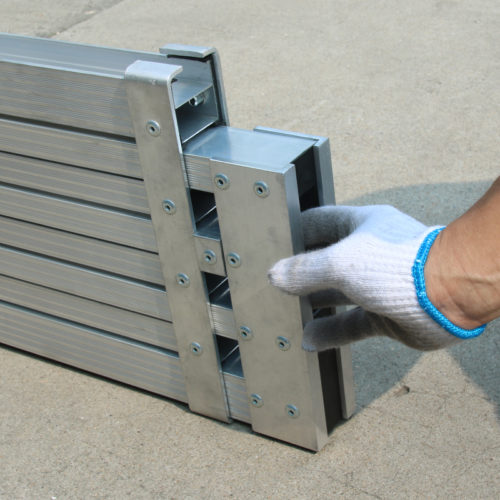
- Locate the locking mechanism, typically wing bolts or pins along the sides.
- Loosen or unscrew the wing bolts to free the sliding inner plank.
- Some models have a detent or latch button that must be pressed to release the inner section.
Step 3: Extend or Retract to Desired Length
- Hold the plank firmly and slide the inner section out or in.
- Extend the plank to the length required for your scaffold or ladder setup.
- Many planks adjust in 12-inch increments, allowing precise length settings.
Step 4: Lock the Plank Securely
- Tighten the wing bolts or re-engage the locking pins to secure the plank at the chosen length.
- Ensure the locking mechanism clicks or holds firmly to prevent accidental movement.
- Double-check that both sides are locked evenly to maintain plank stability.
Step 5: Attach the Plank to Scaffold or Ladder
- Hook the plank's locking hooks onto the ladder rungs or scaffold frame.
- Confirm the hooks are fully engaged and locked in place.
- Some planks have nylon sticky straps or additional fasteners to enhance attachment security.
Step 6: Final Safety Check
- Test the plank by applying light pressure to ensure it does not shift or slide.
- Confirm the plank is level and stable.
- Make sure the plank is not extended beyond the manufacturer's maximum length.
Tips for Safe Adjustment and Use
- Never exceed the maximum extension length. Overextending can cause plank instability.
- Always lock both sides securely. Uneven locking can lead to plank twisting or failure.
- Use planks rated for your weight and tools. Check manufacturer specifications.
- Avoid sudden impacts or dropping the plank. Aluminum can dent or weaken.
- Store the plank retracted in a dry place to prolong lifespan.
- Regularly inspect for wear and tear, especially on locking components.
Common Issues and Troubleshooting
| Issue | Cause | Solution |
| Plank won’t slide smoothly | Dirt or debris in sliding mechanism | Clean sliding rails and lubricate lightly |
| Locking mechanism won’t engage | Misaligned holes or damaged pins | Realign sections; replace damaged parts |
| Plank feels unstable when locked | Wing bolts not tightened evenly | Tighten bolts securely on both sides |
| Hooks don’t fit ladder rungs | Incorrect plank model or ladder type | Use compatible plank or ladder; check specs |
| Plank bends under load | Overloading or damaged plank | Do not exceed load limit; replace plank if damaged |
Applications of Aluminum Telescoping Scaffold Planks
- Painting and drywall installation: Walk back and forth easily without moving ladders.
- Window cleaning and repairs: Adjust plank length for different window widths.
- Electrical and lighting installation: Secure platforms for overhead work.
- Roofing and siding: Safe access for working along building exteriors.
- General maintenance: Versatile platforms for various elevated tasks.
Advantages Over Fixed-Length Planks
| Feature | Aluminum Telescoping Scaffold Plank | Fixed-Length Scaffold Plank |
| Length Flexibility | Adjustable, fits multiple widths | Fixed, requires multiple sizes |
| Storage and Transport | Compact when retracted | Bulky, fixed size |
| Weight | Lightweight aluminum | Heavier (wood or steel) |
| Setup Time | Quick length adjustment | May require swapping planks |
| Cost Efficiency | Reduces need for multiple planks | May require purchasing many |
Maintenance and Care
- Clean after use: Remove dirt, paint, or debris to prevent damage.
- Lubricate sliding parts: Use light oil or silicone spray sparingly.
- Inspect locking mechanisms: Replace worn or damaged pins and bolts.
- Store properly: Keep dry and protected from extreme weather.
- Avoid overloading: Follow weight ratings to prevent bending or failure.
Environmental Impact and Sustainability
Aluminum telescoping scaffold planks contribute positively to sustainability efforts. Aluminum is highly recyclable, and the durable nature of these planks reduces the need for frequent replacements, minimizing waste. Additionally, their lightweight design reduces transportation fuel consumption, lowering carbon emissions associated with logistics.
Conclusion
Adjusting an aluminum telescoping scaffold plank is a simple yet critical process that ensures safety and versatility on the job site. By following the steps to unlock, extend, lock, and securely attach the plank, workers can create stable and adjustable platforms for a wide range of tasks. These planks combine lightweight aluminum construction with robust locking mechanisms and non-slip surfaces, making them ideal for both professional and DIY use. Proper maintenance and adherence to safety guidelines will maximize the lifespan and reliability of your aluminum telescoping scaffold plank.
FAQ
1. How do you unlock and adjust the length of an aluminum telescoping scaffold plank?
Loosen the wing bolts or press the detent button to release the sliding inner plank, then slide it to the desired length before locking it securely with the wing bolts or pins.
2. What is the typical load capacity of aluminum telescoping scaffold planks?
Load capacities vary by model but generally range from 250 lbs to 500 lbs, sufficient for one or two workers plus tools.
3. Can aluminum telescoping scaffold planks be used with any ladder or scaffold?
They are designed to be compatible with many multi-position ladders and scaffolding systems but always check manufacturer compatibility and safety guidelines.
4. How do I ensure the plank is securely locked at the desired length?
Make sure wing bolts or locking pins are fully tightened and engaged on both sides evenly to prevent plank movement or twisting.
5. How should I maintain my aluminum telescoping scaffold plank?
Clean regularly, lubricate sliding parts lightly, inspect locking mechanisms, store in a dry place, and avoid exceeding load limits.