Content Menu
● What is Cuplock Scaffolding?
● Core Components of Cuplock Scaffolding Standard
● How to Identify a Genuine Cuplock Scaffolding Standard?
>> 1. Examine the Material Quality
>> 2. Check the Locking Mechanism
>> 3. Inspect the Markings and Traceability Codes
>> 4. Verify Dimensions and Intervals
>> 5. Assess the Finish and Coating
>> 6. Look for Manufacturer Documentation
● Additional Factors to Consider When Identifying Genuine Cuplock Scaffolding Standards
>> 7. Weight and Handling
>> 8. Welding Quality
>> 9. Compatibility with Other Systems
● Best Practices to Ensure Authenticity on Site
● Advantages of Using Genuine Cuplock Scaffolding Standards
● Conclusion
● FAQ
>> 1. What makes cuplock scaffolding safer than traditional scaffolding?
>> 2. How can I verify the quality of a cuplock standard?
>> 3. What are the standard sizes for cuplock scaffolding standards?
>> 4. Can cuplock scaffolding be used for circular or irregular structures?
>> 5. How fast is cuplock scaffolding to assemble compared to other systems?
● Citations:
Cuplock scaffolding has become a cornerstone in modern construction due to its modular design, ease of assembly, and robust safety features. However, with its widespread use, ensuring the authenticity and quality of cuplock scaffolding standards is crucial for safety and performance on site. This comprehensive guide will explore how to identify a genuine cuplock scaffolding standard, its components, features, and best practices for verification.

What is Cuplock Scaffolding?
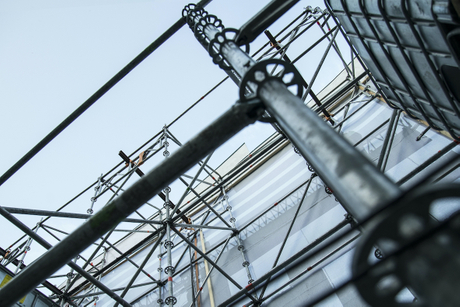
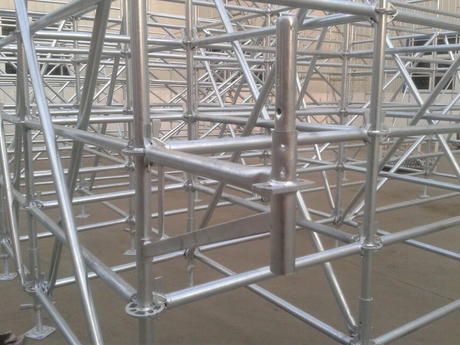
Cuplock scaffolding is a modular scaffolding system that uses a unique locking mechanism involving cups and blades to connect vertical standards and horizontal ledgers securely. This system is favored for its speed of assembly, versatility, and structural strength, making it suitable for various construction applications including facades, formwork support, staircases, and birdcages.
Core Components of Cuplock Scaffolding Standard
- Standards (Verticals): Made from high-grade steel tubes, typically 48.3mm in diameter and 3.2mm thick, with fixed lower cups and rotating top cups spaced at 0.5m intervals. They incorporate a spigot at the top for vertical connection and provisions for locking pins.
- Ledgers (Horizontals): Connect between standards using the cup and blade locking system.
- Transoms: Provide intermediate support for scaffold boards.
- Diagonal Braces: Provide transverse and longitudinal stability.
- Base Plates: Support the standards and connect to jacks or ground support.
How to Identify a Genuine Cuplock Scaffolding Standard?
1. Examine the Material Quality
Genuine cuplock standards are made from high-grade steel, commonly S275 JRH grade, with a tube diameter of 48.3mm and thickness of 3.2mm. The steel should have consistent mechanical properties such as yield strength around 275 N/mm² and tensile strength between 370-530 N/mm². The surface treatment is usually hot-dip galvanized or fully painted to prevent corrosion and extend durability.
The material quality directly influences the scaffold's load-bearing capacity and longevity. Inferior steel or thinner tubes can lead to structural failures, posing serious safety risks on site. Therefore, always request material certificates or mill test reports from the supplier to verify the steel grade.
2. Check the Locking Mechanism
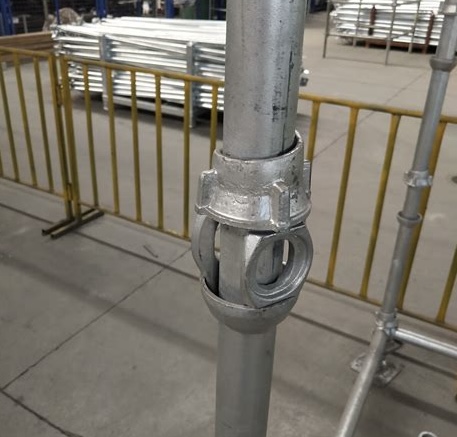
The hallmark of cuplock scaffolding is its unique cup and blade locking system. Each vertical standard features fixed lower cups and a rotating top cup that locks the horizontal ledgers by twisting over the blades. The top cup has a limited position pin that ensures the ledger locks tightly without excessive movement.
- The locking cup should rotate smoothly and securely lock the ledger blade with a simple hammer blow or hand twist.
- There should be no nuts, bolts, or wedges involved in the locking process, distinguishing it from other scaffolding systems.
- The cup's thickness and blade dimensions must be consistent to ensure a tight fit and prevent accidental disengagement.
This simple yet effective locking system minimizes assembly time and reduces the risk of human error during scaffold erection.
3. Inspect the Markings and Traceability Codes
Authentic cuplock scaffolding components are marked with traceability codes or serial numbers. These codes identify the manufacturer, batch, and compliance with safety standards such as EN 12810 and EN 12811, which govern scaffolding design and performance in Europe.
- Look for laser-etched or stamped markings on the standards and ledgers.
- Traceability allows for quality control and accountability, especially in large projects.
- Components without markings should be treated with caution as they may be counterfeit or substandard.
4. Verify Dimensions and Intervals
- Standards typically come in lengths from 1.0m to 3.0m with cup intervals every 0.5m.
- Ledgers and transoms should fit precisely into the cups without excessive play.
- The spigot length on top of the standard should be about 150mm to allow vertical stacking.
- Base plates should comply with EN 74 standards, measuring approximately 150mm x 150mm x 5mm with a spigot diameter of 38mm.
Precise dimensions ensure compatibility between components and structural integrity. Deviations can cause instability and unsafe conditions.
5. Assess the Finish and Coating
A genuine cuplock standard will have a consistent finish, either hot-dip galvanized or high-quality paint coating. The finish should be uniform without peeling, rust spots, or uneven coating, which can indicate substandard manufacturing.
- Hot-dip galvanizing provides superior corrosion resistance, especially in outdoor or marine environments.
- Painted finishes are often used for indoor applications or where aesthetics are important.
- Avoid scaffolding with visible rust or damaged coatings as it compromises safety.
6. Look for Manufacturer Documentation
Authentic cuplock scaffolding suppliers provide detailed user manuals, technical specifications, and certification documents. These documents describe the system's components, assembly procedures, load capacities, and safety guidelines.
- Documentation should include compliance certificates with relevant standards.
- Assembly manuals help ensure proper use and reduce the risk of accidents.
- Warranty information is also a sign of a reputable manufacturer.
Additional Factors to Consider When Identifying Genuine Cuplock Scaffolding Standards
7. Weight and Handling
Genuine cuplock standards have a consistent weight per meter, typically around 4.0 kg/m for the standard tube thickness and diameter. If the components feel unusually light or heavy, it may indicate material substitution or manufacturing defects.
8. Welding Quality
The cups are welded to the vertical standards. Inspect the welds for uniformity, penetration, and absence of cracks or porosity. Poor welding can cause premature failure under load.
9. Compatibility with Other Systems
While cuplock scaffolding is designed as a standalone system, many sites use mixed scaffolding types. Genuine cuplock standards have precise dimensions and locking mechanisms that generally do not fit other systems, preventing unsafe hybrid assemblies.
Best Practices to Ensure Authenticity on Site
- Purchase from Reputable Suppliers: Always buy cuplock scaffolding from certified manufacturers or authorized distributors who provide traceability and certification.
- Conduct Regular Inspections: Check all components for wear, damage, or corrosion before use. Replace any parts that do not meet standards.
- Verify Compliance: Ensure all components meet relevant standards such as EN 12810/12811 or equivalent local regulations.
- Training: Educate workers on the correct assembly and inspection procedures to identify counterfeit or substandard parts.
- Documentation: Maintain records of purchase, inspection, and maintenance for accountability.
Advantages of Using Genuine Cuplock Scaffolding Standards
- Safety: Authentic cuplock scaffolding meets rigorous safety standards, reducing the risk of accidents.
- Durability: High-quality materials and coatings extend the lifespan of the scaffolding.
- Efficiency: The modular design and quick locking mechanism speed up assembly and dismantling.
- Versatility: Suitable for a wide range of applications and adaptable to complex structures.
- Cost-Effectiveness: Although initial costs may be higher, genuine cuplock scaffolding reduces downtime and maintenance expenses.
Conclusion
Identifying a genuine cuplock scaffolding standard involves careful examination of material quality, locking mechanisms, dimensional accuracy, surface finish, and traceability markings. The unique cup and blade locking system, high-grade steel construction, and compliance with international standards distinguish authentic cuplock scaffolding from inferior imitations. Utilizing genuine cuplock scaffolding ensures safety, durability, and efficiency on construction sites, making it a trusted choice worldwide.
By following the guidelines outlined in this article—checking materials, locking mechanisms, markings, dimensions, and finishes—you can confidently select and use cuplock scaffolding standards that meet the highest quality and safety benchmarks. Always remember that investing in genuine components is an investment in the safety and success of your construction projects.
FAQ
1. What makes cuplock scaffolding safer than traditional scaffolding?
Cuplock scaffolding uses a unique cup and blade locking system that securely locks components without nuts or bolts, reducing assembly errors and increasing structural stability.
2. How can I verify the quality of a cuplock standard?
Check for high-grade steel material specifications, proper cup and blade locking function, traceability codes, compliance with EN standards, and a uniform galvanized or painted finish.
3. What are the standard sizes for cuplock scaffolding standards?
Common standard lengths range from 1.0m to 3.0m with a diameter of 48.3mm and tube thickness of 3.2mm. Cups are spaced at 0.5m intervals along the standard.
4. Can cuplock scaffolding be used for circular or irregular structures?
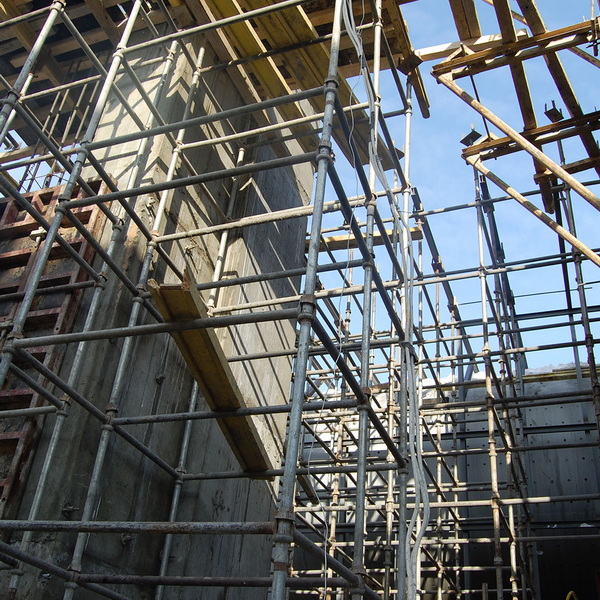
Yes, cuplock scaffolding is versatile and can be configured into circular scaffolds, cantilever frames, stair towers, and birdcages, adapting to complex construction needs.
5. How fast is cuplock scaffolding to assemble compared to other systems?
Cuplock scaffolding can be assembled 30%-50% faster than traditional scaffolding systems due to its simple locking mechanism and fewer components.
Citations:
[1] https://www.scafom-rux.com/en/scaffolding-blog/beginner-s-guide-to-scaffolding-types-the-cuplock-modular-scaffold
[2] https://www.huennebeck.com/uploads/files/cuplok_system_scaffold_user_guide_en_2015-05-29.pdf
[3] https://aaitscaffold.com/wp-content/uploads/2024/02/Cuplock-Product-Manual-AAIT-24-01-2024.pdf
[4] https://www.seawayscaffold.com/Portals/0/Documents/manuals/Scaffold/Cup%20Lock%20Technical%20Manual.pdf
[5] https://www.affixscaffolding.com/wp-content/uploads/2022/03/Affix-Cuplock-Manual.pdf
[6] https://www.youtube.com/watch?v=wBKilb9ALEY
[7] https://www.alibaba.com/showroom/cuplock-scaffolding-design.html
[8] https://www.unitechscaff.com/Cuplock-Scaffolding-Size-And-Standard-A-Comprehensive-Guide-id44025086.html
[9] https://www.wm-scaffold.com/cup-lock-scaffold.html
[10] https://jumplyscaffolding.com/what-is-cuplock-scaffolding/
[11] https://www.youtube.com/watch?v=ojYR6MRAoEI
[12] https://www.youtube.com/watch?v=l7SdKkdbeU4
[13] https://www.youtube.com/watch?v=2FbwLFj1aFY
[14] https://www.youtube.com/watch?v=v4VvsCDIGUw