Content Menu
● Introduction to Cuplock Scaffolding
● Key Components
● Installation Process
● Choosing the Right Size for Your Project
● Advanced Installation Techniques
>> Stair Access and Ladders
>> Cantilevered Platforms
>> Specialized Components
● Maintenance and Dismantling
>> Regular Maintenance
>> Dismantling
● Conclusion
● FAQ
>> 1. What are the standard sizes for cuplock scaffolding components?
>> 2. How do you ensure stability in cuplock scaffolding?
>> 3. What safety precautions should be taken during installation?
>> 4. How do you calculate the amount of cuplock scaffolding needed?
>> 5. Can cuplock scaffolding be customized?
● Citations:
Cuplock scaffolding is a versatile and widely used system in construction projects due to its ease of assembly, strength, and adaptability. Understanding the standard sizes and proper installation techniques is crucial for ensuring safety and efficiency on site. This article will guide you through the process of installing cuplock scaffolding using standard sizes, highlighting key components, and providing visual aids to enhance comprehension.
Introduction to Cuplock Scaffolding
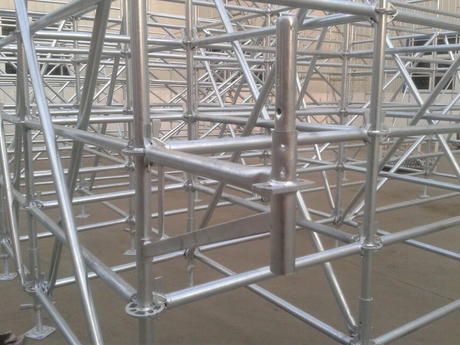
Cuplock scaffolding is characterized by its unique circular cup-node point, allowing up to four horizontally connected scaffolds in a single installation. This feature makes it one of the fastest and safest systems available. The components include standards (verticals), ledgers (horizontals), transoms, and braces, all designed to work together seamlessly.
Key Components
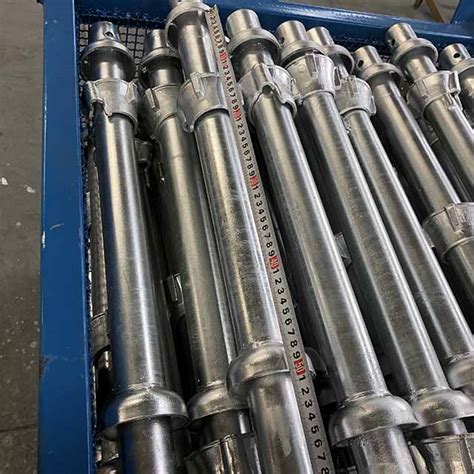
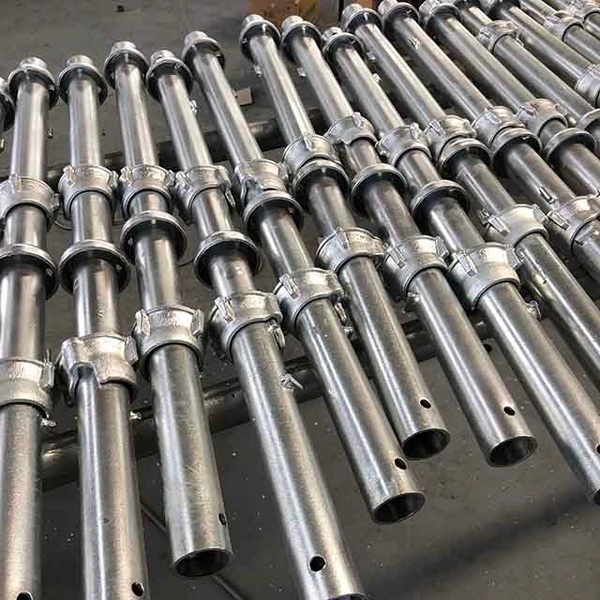
- Standards (Verticals): These are the backbone of the cuplock system, typically with outer diameters of 48.3 mm and lengths ranging from 0.5 to 3 meters. They are made from high-quality steel, such as Q235 or Q345, and are available in various surface treatments like hot dip galvanized.
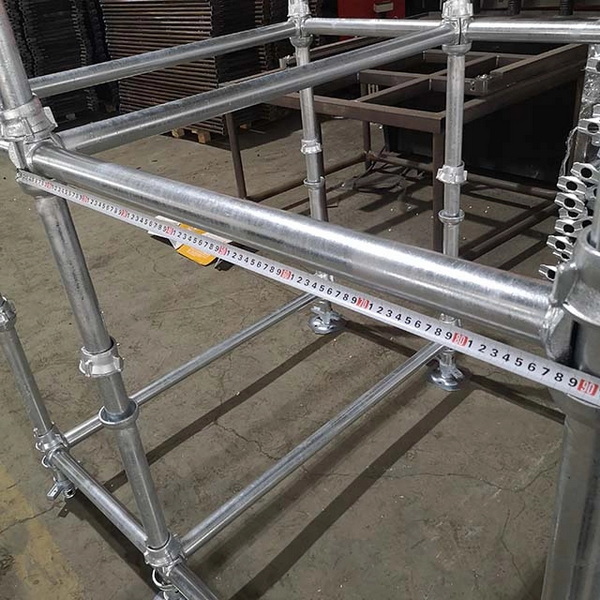
- Ledgers (Horizontals): These define the width or length of the scaffold platform, with common lengths of 0.6, 1.2, 1.8, and 2.4 meters. The diameter usually matches that of the standards for consistency.
- Transoms: These support the decking or boards and often have the same length options as ledgers. The spacing between transoms is critical for determining the load capacity of the working platform.
- Braces: These provide additional strength and support to the scaffold, enhancing stability and safety.
Installation Process
Installing cuplock scaffolding involves several key steps:
1. Planning and Preparation:
- Determine the layout and height of the scaffolding based on project requirements.
- Ensure the ground is stable and level.
- Gather all necessary components and tools.
2. Erecting the Standards:
- Place base plates on the ground and secure them with screws or bolts.
- Insert the vertical standards into the base plates, ensuring they are aligned and leveled. Use wedge pins or captive wedges to lock the joints securely.
3. Installing Ledgers:
- Place ledger beams into the cups on the standards at the desired height.
- Ensure they are aligned correctly and connect securely using captive wedges or other locking mechanisms.
4. Adding Additional Levels:
- Repeat the process of installing standards and ledgers for each additional level required.
- Ensure all connections are secure and aligned properly.
5. Installing Diagonal Braces:
- Install diagonal braces between the standards to enhance stability and strength.
- Secure them using captive wedges or other suitable connectors.
6. Installing Scaffold Planks:
- Lay scaffold planks across the ledger beams to create a safe working platform.
- Ensure they are securely placed and fastened to prevent movement.
7. Safety Checks:
- Inspect all connections, joints, and components to ensure they are properly installed and secure.
- Look for any signs of damage or weakness and make necessary adjustments or repairs before use.
Choosing the Right Size for Your Project
Selecting the appropriate dimensions for cuplock scaffolding involves considering several factors:
- Project Height and Area: Evaluate the height and area the scaffolding must cover. For taller structures, ensure standards can be securely connected, and choose ledger lengths that provide the required platform area.
- Load Requirements: Consider the weight of workers, equipment, and materials the scaffold needs to support. This will influence the spacing of transoms and the overall design of the scaffold.
- Site Conditions: Account for any site-specific conditions, such as uneven ground or obstacles, that may affect the scaffold layout. Adjustable base jacks and varying ledger lengths can help accommodate these conditions.
Advanced Installation Techniques
Stair Access and Ladders
- Stair Access: Installing stair access provides a safer and more efficient way for workers to ascend and descend the scaffold. Ensure stair units are securely attached to the scaffold structure.
- Ladders: When using ladders, ensure they are securely tied to the scaffold and extend at least three feet above the platform for safe access.
Cantilevered Platforms
- Cantilevered Platforms: These are used when additional reach is needed beyond the main scaffold structure. Ensure they are properly supported and secured to prevent collapse.
Specialized Components
- Corner Pieces: These are used to create smooth transitions around corners, maintaining structural integrity and safety.
- Adjustable Base Jacks: These allow for adjustments on uneven surfaces, ensuring stability and levelness.
Maintenance and Dismantling
Regular Maintenance
- Inspections: Regularly inspect the scaffold for any signs of wear or damage. Address issues promptly to maintain safety.
- Cleaning: Keep the scaffold clean and free from debris to prevent accidents and ensure smooth operation.
Dismantling
- Reverse Installation Steps: Dismantle the scaffold by reversing the installation steps, ensuring all components are safely removed and stored.
Conclusion
Cuplock scaffolding offers a versatile and efficient solution for construction projects, providing a safe and stable working platform when installed correctly using standard sizes. By understanding the components, installation process, and factors influencing size selection, you can ensure your scaffolding meets project needs while adhering to safety standards.
FAQ
1. What are the standard sizes for cuplock scaffolding components?
Cuplock scaffolding components come in a range of sizes. Standards typically range from 0.5 to 3 meters in length, while ledgers are commonly 0.6, 1.2, 1.8, and 2.4 meters long. The diameter of both standards and ledgers is usually about 48.3 mm.
2. How do you ensure stability in cuplock scaffolding?
Stability is ensured by using diagonal braces and securing all connections with captive wedges or other locking mechanisms. Additionally, the base plates must be level and firmly anchored to the ground.
3. What safety precautions should be taken during installation?
Safety is paramount during installation. Ensure all workers wear appropriate PPE, and conduct thorough safety checks before allowing access to the scaffolding. Regular inspections should also be performed during use.
4. How do you calculate the amount of cuplock scaffolding needed?
Calculating the amount of cuplock scaffolding involves assessing the project area, height, and load requirements. This can be done by a trained scaffolding engineer or using specialized software.
5. Can cuplock scaffolding be customized?
Yes, cuplock scaffolding can be customized to fit specific project needs. Manufacturers can produce components based on customer drawings or samples, allowing for tailored solutions.
Citations:
[1] https://www.hunanworld.com/news/how-to-install-cuplock-scaffolding
[2] https://primesteeltech.co.in/what-size-are-cuplock-scaffolds.html
[3] https://www.sparsteel.com/blog/cuplock-scaffolding-types-uses-and-benefits/
[4] https://primesteeltech.co.in/how-do-you-install-cuplock-scaffolding.html
[5] https://www.rscaffolding.com/product-detail/cuplock-scaffolding-standards/
[6] https://www.alibaba.com/showroom/cuplock-scaffolding-design.html
[7] https://www.huennebeck.com/uploads/files/cuplok_system_scaffold_user_guide_en_2015-05-29.pdf
[8] https://www.wm-scaffold.com/cuplock-scaffolding-standard.html